Divine lineages · 20

Aboriginal Australian Mythology

Mythic realm
Australia
Age remembered
the Dreaming, oral traditions tens of millennia old
Names preserved
10

Aboriginal Australian mythology has no single pantheon: it is a web of narratives held by hundreds of peoples speaking more than two hundred languages, with oral lineages reaching back tens of millennia — among the oldest continuous religious traditions on earth. Its core framework is what different peoples call Tjukurpa, Altyerre, or Wangarr, rendered in English as the Dreaming: ancestral beings woke from beneath a flat, sleeping earth and walked it as great serpents, kangaroos, emus, and people, raising ranges and sinking waterholes as they went, their tracks becoming the songlines that cross the continent before they lay down into rock and sky. The crucial point is tense — the Dreaming never ended. The ancestors remain in the landforms they became, and the land itself is the primary text.

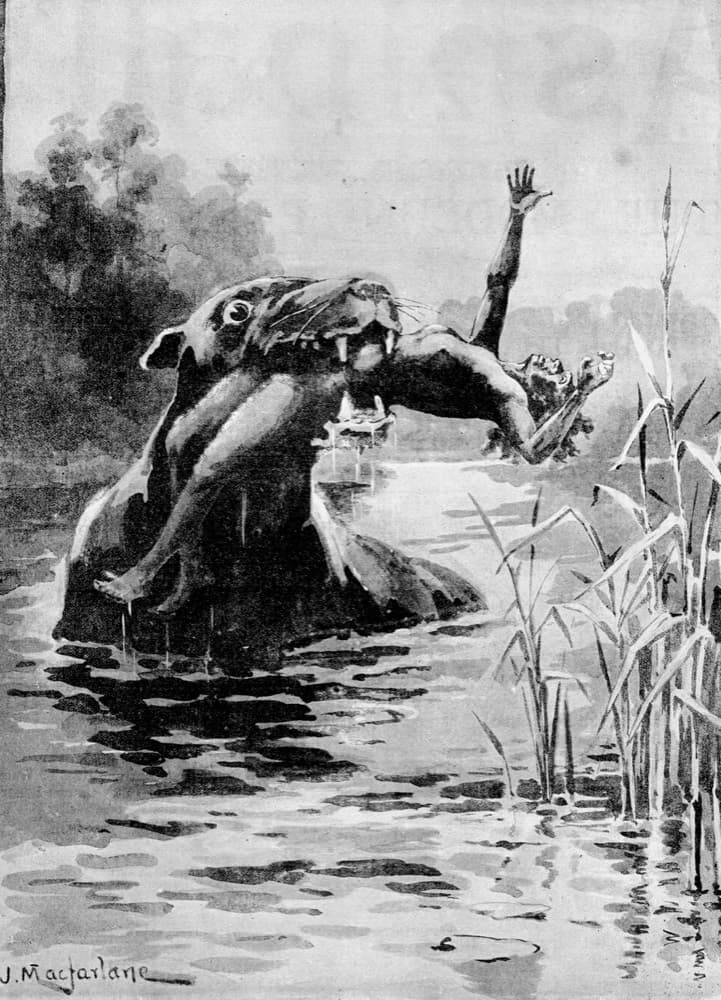
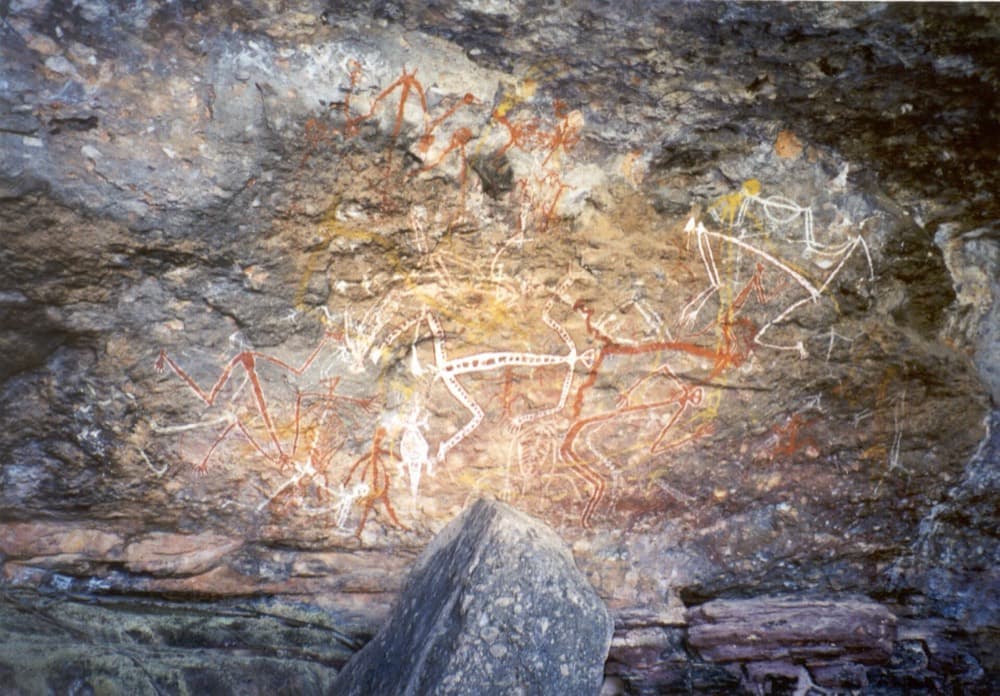
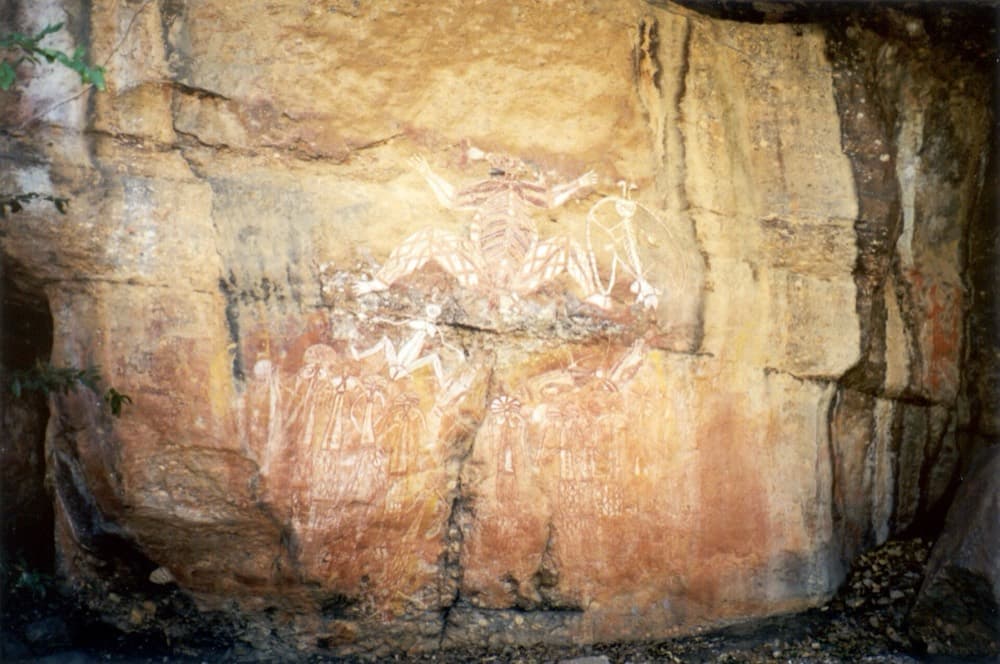
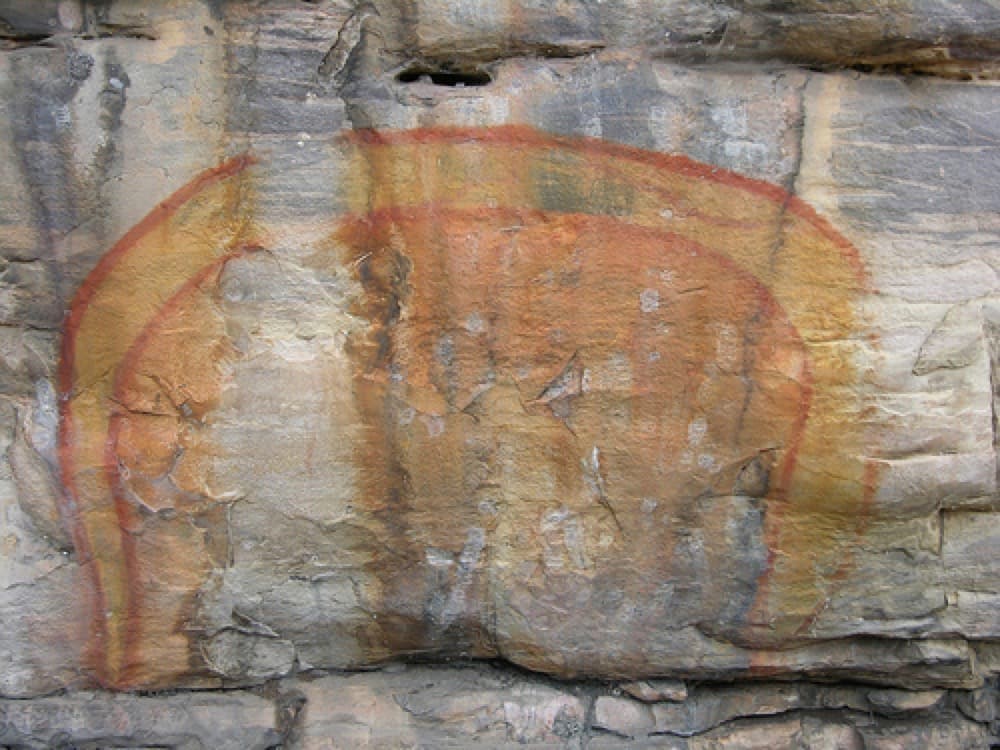
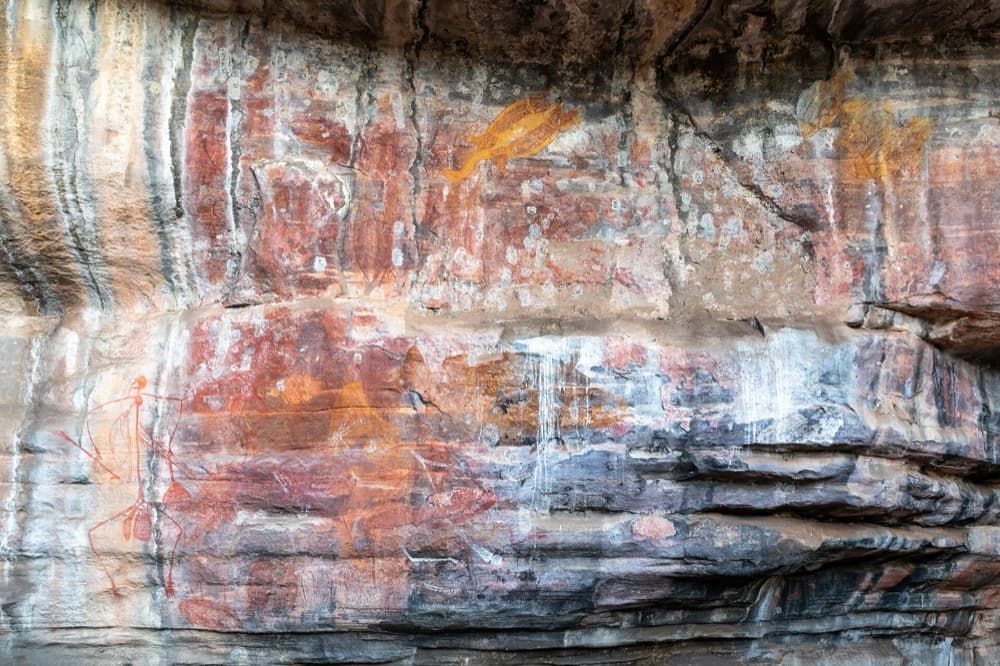
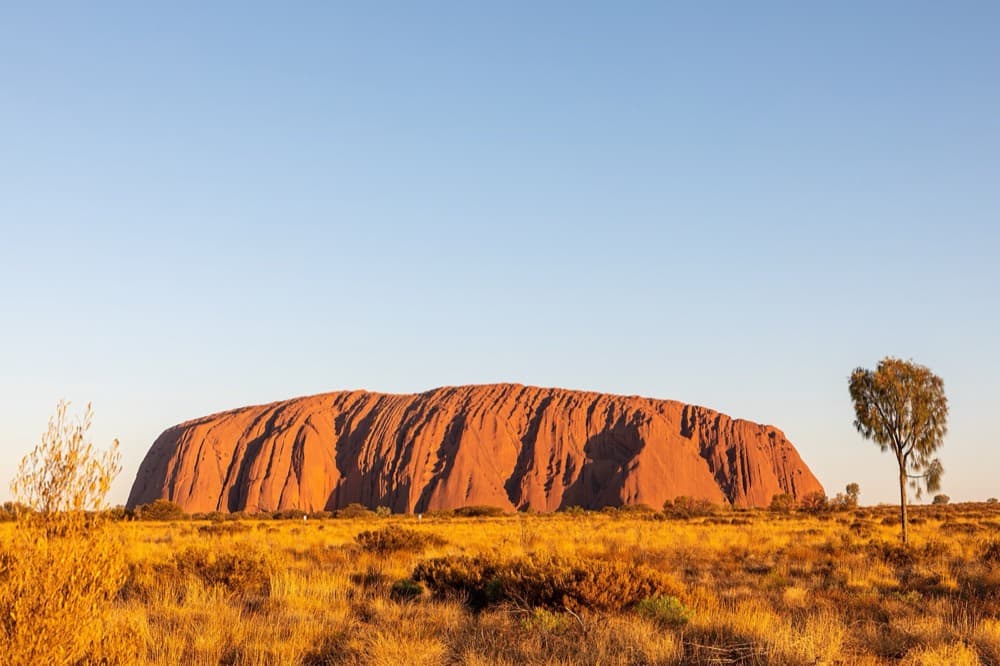
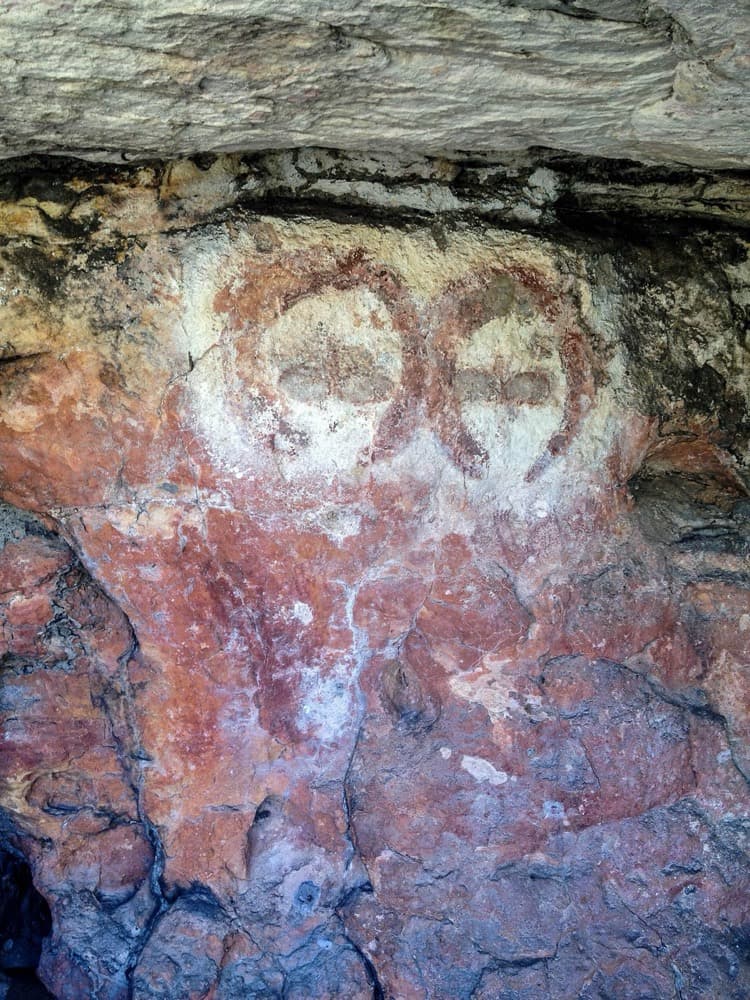
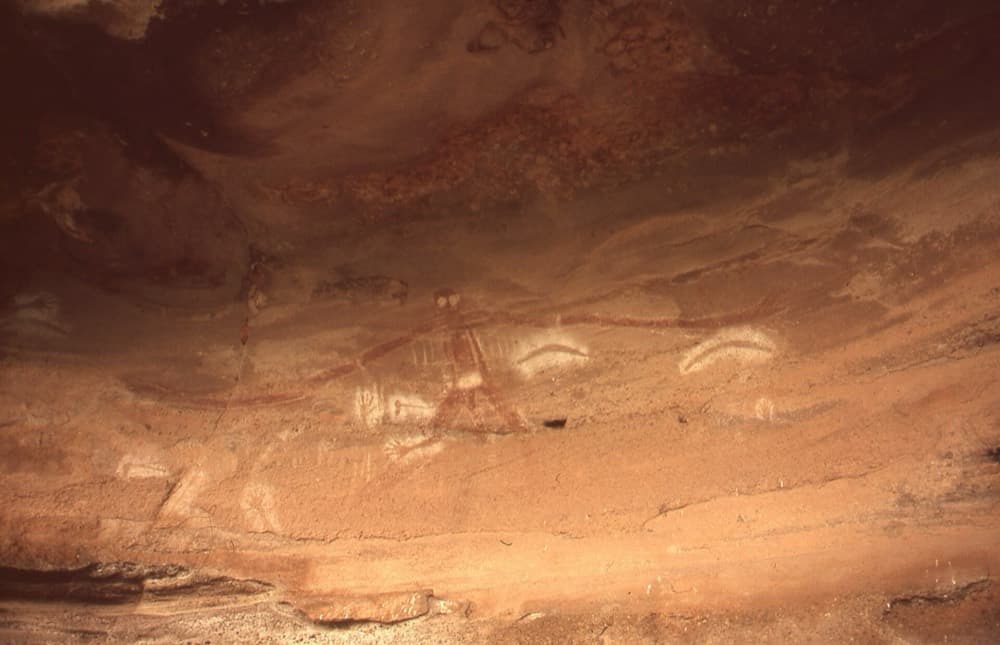
There is no central scripture. The record is threefold: songs, dances, and designs bound to specific country; rock art galleries in Arnhem Land and the Kimberley, painted and repainted over thousands of years and still tended today; and the ethnographies and story collections set down from the late nineteenth century by observers such as Spencer and Gillen, A. W. Howitt, and K. Langloh Parker. The narratives are fiercely regional — the Lightning Man Namarrkon and the reed-thin Mimih spirits in western Arnhem Land, the mouthless rain-bringing Wandjina in the Kimberley, the sky father Baiame and the waterhole-dwelling bunyip in the south-east, every gully of Uluru read as the record of Kuniya the python woman's battle — while a few great motifs, the Rainbow Serpent and the Seven Sisters above all, cross language boundaries and span the continent.

This is a living tradition. Knowledge is layered: public tellings exist alongside restricted ceremonial knowledge reserved for the initiated, and particular designs may only be painted by particular families. This collection records only the public layer, and names the specific peoples each story belongs to wherever possible — in this tradition, who has the right to tell a story matters as much as the story itself.

Return by the star-path

CHRONICLE OF ORIGINS · A LIVING SCROLL

Aboriginal Australian Mythology

The Formless Deep1 / 7

Before the ancestors woke

A flat plain with no places in it

Tellings differ from country to country, but they tend to open the same way. The first earth was a flat plain: no ranges, no rivers, no place that could be named or told apart from any other. In the Arrernte account T. G. H. Strehlow published in Aranda Traditions in 1947, darkness lay over the ground like a thicket nothing could push through, and the ancestral beings slept beneath the crust of it. At Ilbalintja the bandicoot ancestor Karora lay asleep in the soil below the soak, a living pole swaying above him, its skin like the skin of a man.

THOSE WHO APPEAR
VARIANTS, FRAGMENTS & ANCIENT SOURCES

"Aboriginal Australia" is not one people. Before colonisation the continent held hundreds of language groups and more than 250 languages, each with its own account of how things began, and those accounts do not add up to a single book of creation. The sequence below is a scaffold the editors built from published material out of many different countries so that it can be set beside the other traditions in this atlas. It is nobody's authorised version, and an elder from any one of those nations is entitled to say "that is not how we tell it" and be right.

The phrase "the Dreaming" is itself an artefact of translation. Arrernte people say Altyerre — Spencer and Gillen wrote it Alcheringa in 1899 and glossed it "dream times" — Pitjantjatjara say Tjukurpa, Warlpiri say Jukurrpa, Yolngu say Wangarr, and the Kimberley has Ngarrangkarni and Bugarrigarra among others. Linguists have long argued that the link between altyerre and the verb "to dream" does not hold etymologically, but the English word stuck, and Aboriginal people now use it when speaking English. The harder problem is tense. Stanner coined "everywhen" in 1953 for a Dreaming that has no past tense: the ancestors are still in the rock and water they became, and ceremony is the way into it. Laying the material out as a timeline running from a beginning to a present is a concession to the format of this atlas, and the format contradicts the thing it is describing.

The provenance of the sources has to be stated as well. Almost every written record from the 1890s to the mid-twentieth century comes from non-Aboriginal ethnographers — Spencer and Gillen (1899), Howitt (1904), Langloh Parker (1905), Strehlow (1947) — each with his own filter. How much of the "All-Father" figure that Howitt and Parker describe, Baiame and Daramulun, took its shape after missionary contact has been argued over for a century and is still not settled. The Strehlow case is sharper: some of the Aranda material he published is knowledge that, in its own country, passes only to initiated men, and he printed it. Where his records are used here, only the openly circulated narrative layer is drawn on. The Rainbow Serpent, likewise, is not one god: the term is Radcliffe-Brown's umbrella coinage of 1926, and each people's serpent has its own name and its own story. The Wandjina belong to the Worrorra, Ngarinyin and Wunambal of the Kimberley, and to no one else.

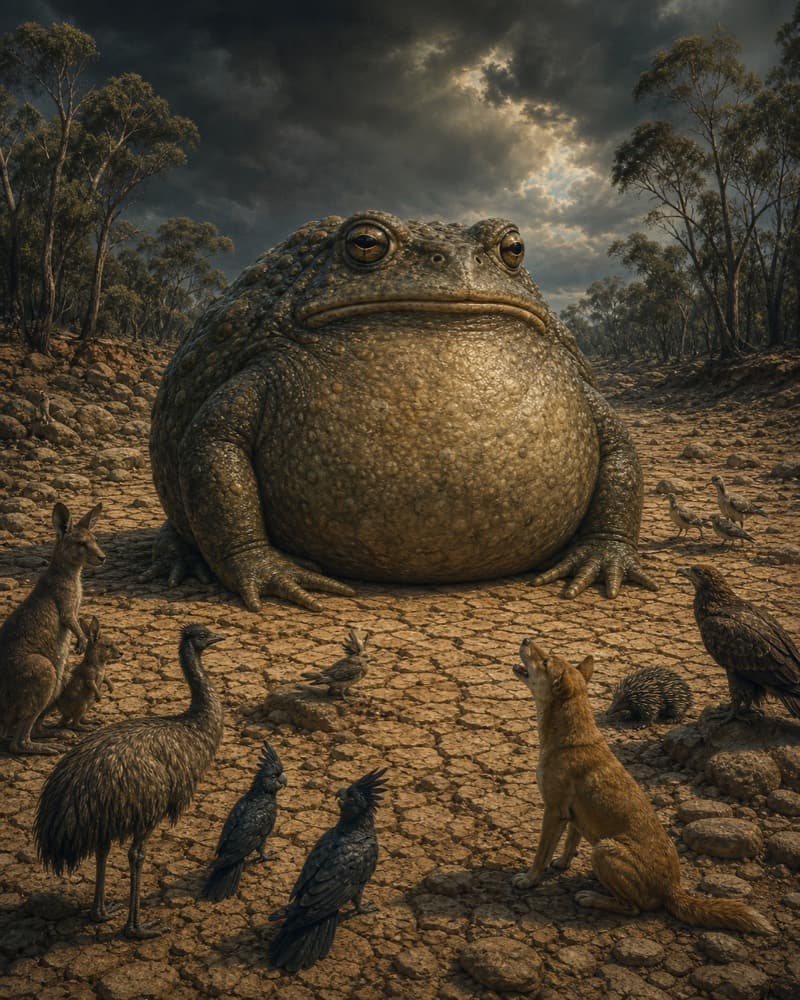
What follows keeps to the layer that has long been public and that communities themselves tell to outsiders in schools and on country — for instance the Kuniya and Liru narrative published by Anangu with Uluru-Kata Tjuta National Park. Nothing restricted to initiates is included: no ceremonial procedure, no site prohibitions, no material held back for those with the standing to hear it. Two absences are worth naming. There is no separation of sky and earth in this material: the sky is simply there from the start, and it is country too, with owners of its own; nothing has to be split or propped up. And there is no flood that drowns the continent — droughts and floods like Tiddalik's are local events with local consequences.

Drawn fromBaldwin Spencer and F. J. Gillen, The Native Tribes of Central Australia (1899) and The Arunta (1927); A. W. Howitt, The Native Tribes of South-East Australia (1904); K. Langloh Parker, The Euahlayi Tribe (1905); T. G. H. Strehlow, Aranda Traditions (1947); A. R. Radcliffe-Brown, "The Rainbow-Serpent Myth of Australia", Journal of the Royal Anthropological Institute (1926); W. E. H. Stanner, "The Dreaming" (1953, collected in White Man Got No Dreaming, 1979); Ronald M. and Catherine H. Berndt, The World of the First Australians (1964); Howard Morphy, Ancestral Connections (1991); Deborah Bird Rose, Nourishing Terrains (1996); Duane Hamacher with Elders, The First Astronomers (2022); the public Tjukurpa material published by Anangu with Uluru-Kata Tjuta National Park

Names within the leaves

10