THE STORY & ITS AFTERLIVES
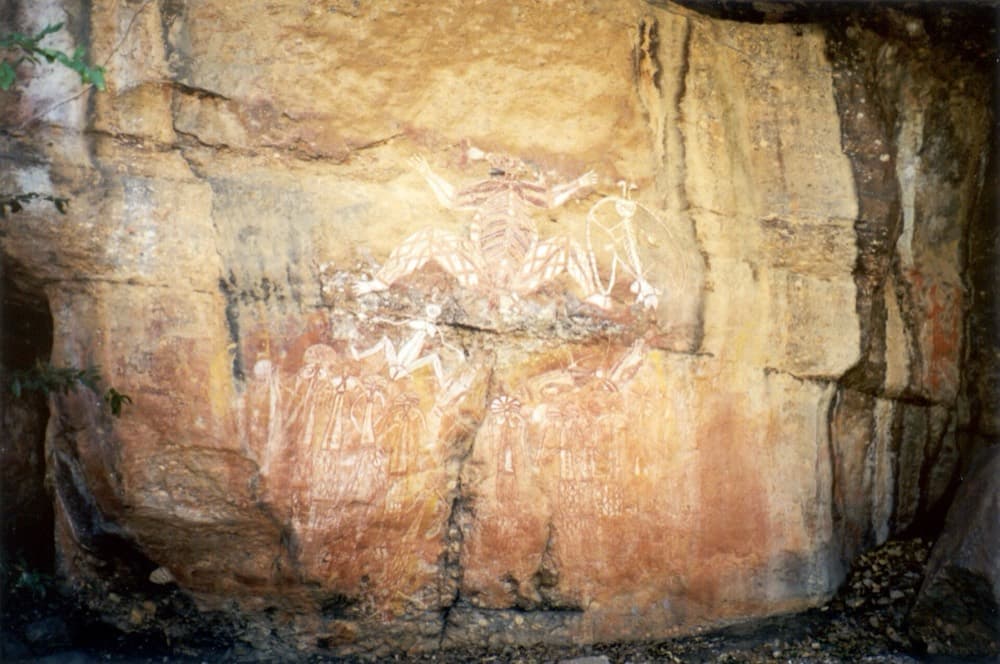
A Wandjina is unmistakable: a white face and body, two large dark eyes set close beside the nose, a head ringed by one or more radiating bands — traditionally read as cloud, lightning, and ceremonial feathers — and no mouth. Kimberley custodians explain that the Wandjina command rain and lightning, and that with mouths their power would be unbounded and the rain would never stop. Painted at life size and larger in the sandstone shelters of the north-west Kimberley, they belong to the Worrorra, Ngarinyin, and Wunambal peoples, who together form the Wanjina-Wunggurr community, each family keeping its own galleries.
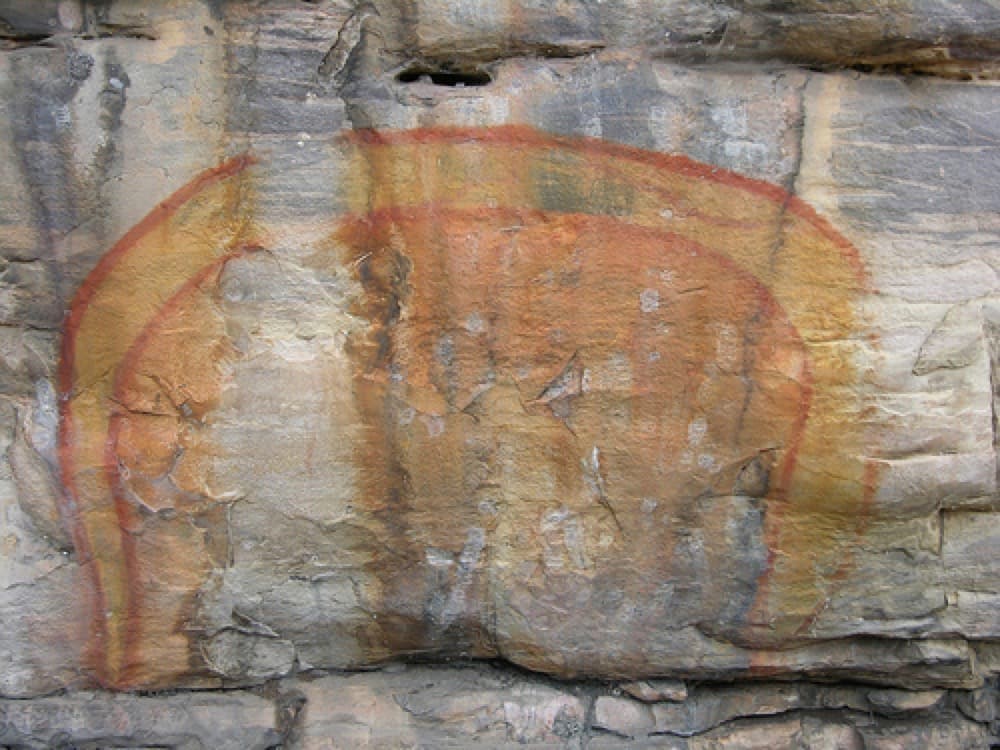
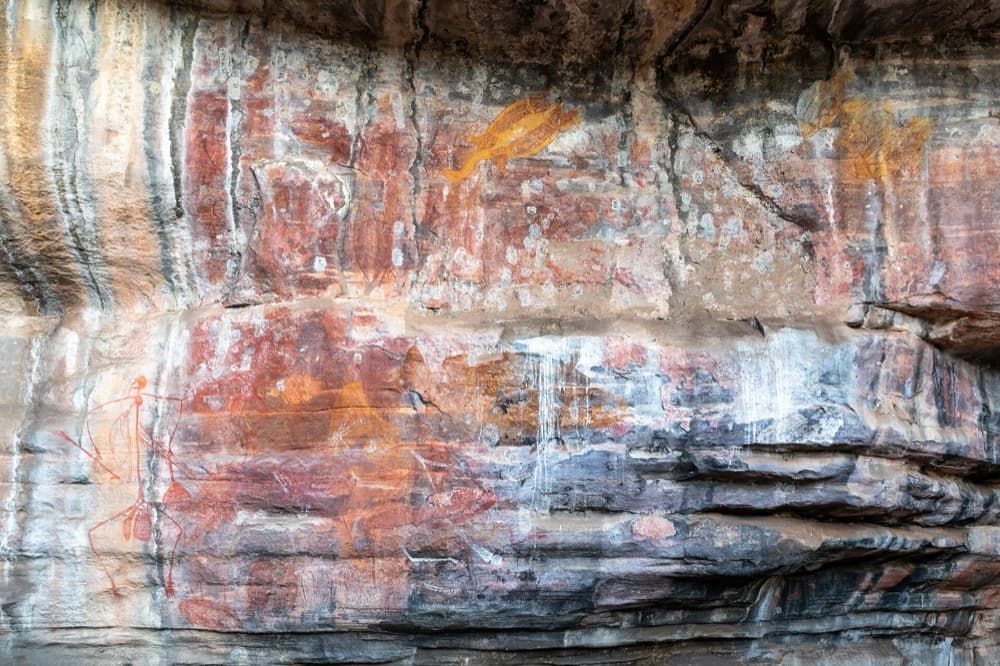
In traditional narrative the Wandjina came from the clouds and the sea in the Dreaming, shaped the country, laid down the rules of marriage and sharing, and finally lay down into the rock, leaving their images and their power in the stone. They are linked to the Wunggurr serpents of the deep waterholes, and together they guarantee the coming of the monsoon and the increase of plants and animals. At the end of the dry season, authorised elders refresh the paintings — an act of care that is also a responsibility for bringing rain, and the reason these galleries are called living paintings.
The explorer George Grey saw Wandjina paintings in the Glenelg River country in 1838 and introduced the "staring, great-eyed figures" to European readers in his 1841 journals, prompting baseless speculation about foreign visitors. A giant Wandjina image rose over the stadium at the Sydney 2000 opening ceremony; unauthorised commercial and graffiti uses of the image, by contrast, have drawn formal protests from the Kimberley peoples, under whose law only certain families may paint a Wandjina.