THE STORY & ITS AFTERLIVES
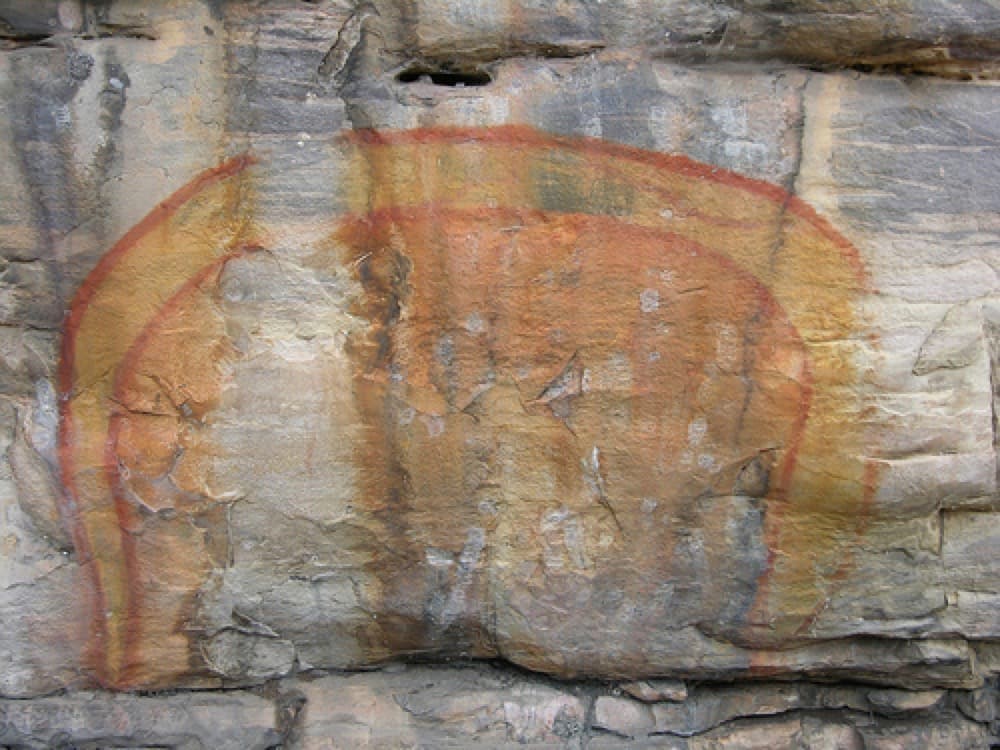
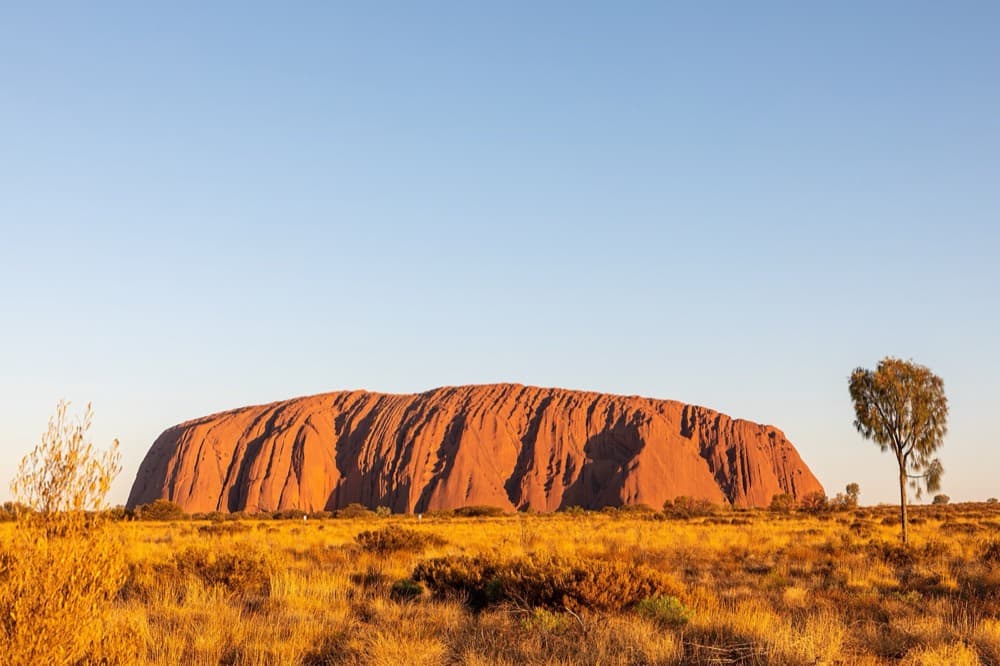
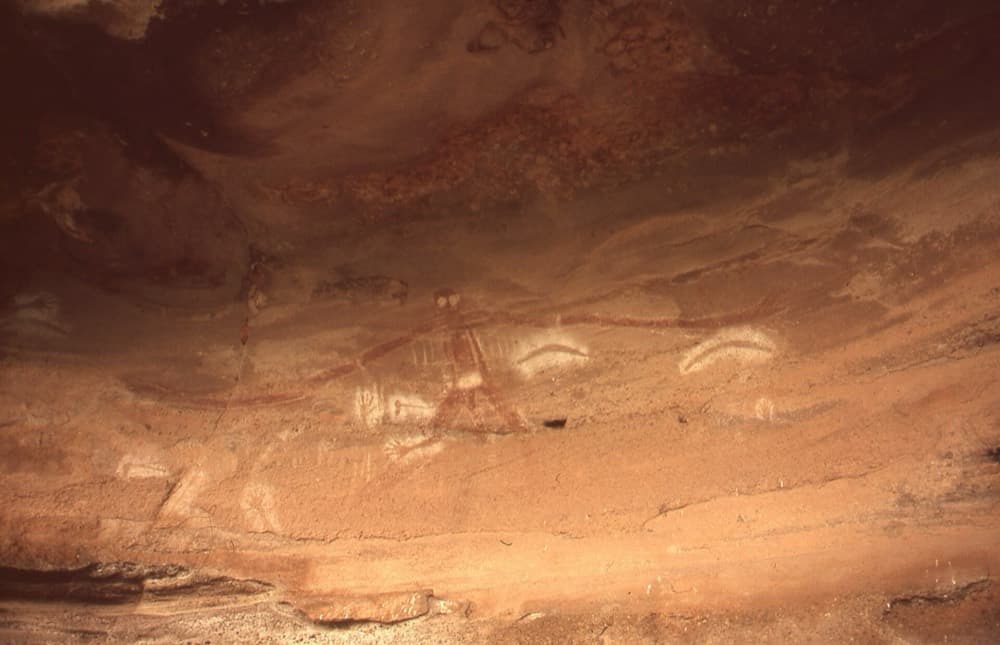
"The Dreaming" is the English rendering of concepts each people names in its own language: Altyerre among the Arrernte of the Central Desert, Tjukurpa among the Pitjantjatjara, Wangarr among the Yolngu. The translation dates to 1899, when Spencer and Gillen glossed the Arrernte word Alcheringa as "dream times" — imprecise, but it stuck. The narratives it covers share a shape: the first earth lay flat and asleep until ancestral beings — kangaroo, emu, great serpents, the Seven Sisters — woke from beneath it and walked, hunted, fought, and loved. Where they travelled, ranges rose and waterholes sank; when they finished, they lay down into rock, tree, and star, their tracks becoming the songlines that cross the continent.
What sets the Dreaming apart from a "mythic age" is its tense: it has not ended. The anthropologist W. E. H. Stanner coined the word "everywhen" in 1953 to capture this — the ancestors remain in the landforms they became, and the land itself is the primary text. Each person inherits particular Dreamings through birthplace and kinship, and with them the duty to look after that country, what may be hunted, and what must be avoided. The narratives function at once as law, map, and title: after the Mabo decision of 1992, Australian courts came to accept songlines and Dreaming narratives as evidence in native title claims.
Dreaming knowledge is layered. One stratum is told openly to children and outsiders; another passes only to the initiated in ceremony. Everything recorded in this atlas belongs to the public layer.