THE STORY & ITS AFTERLIVES
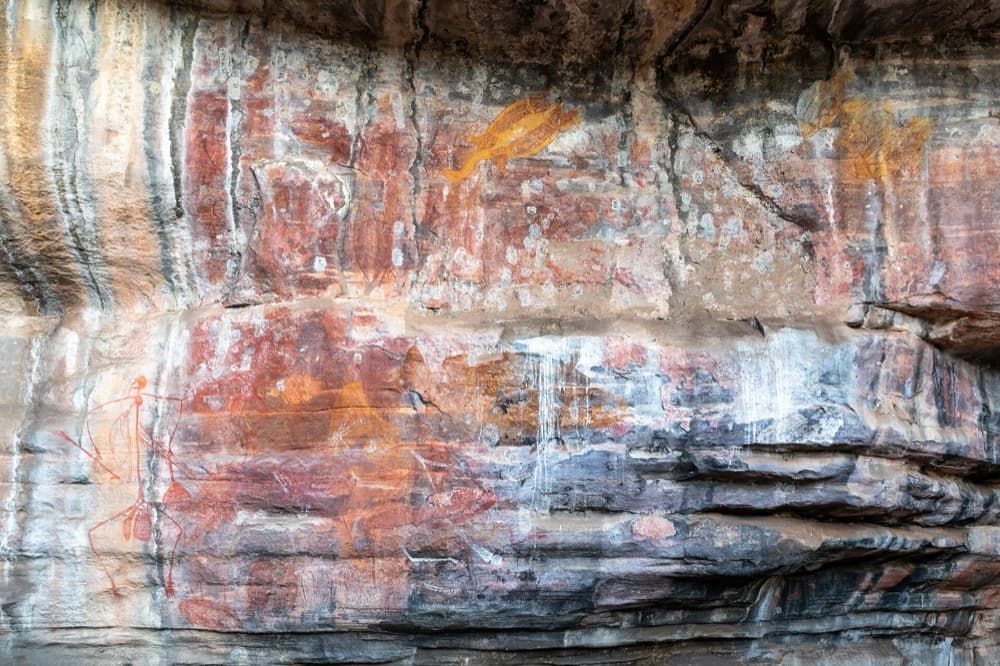
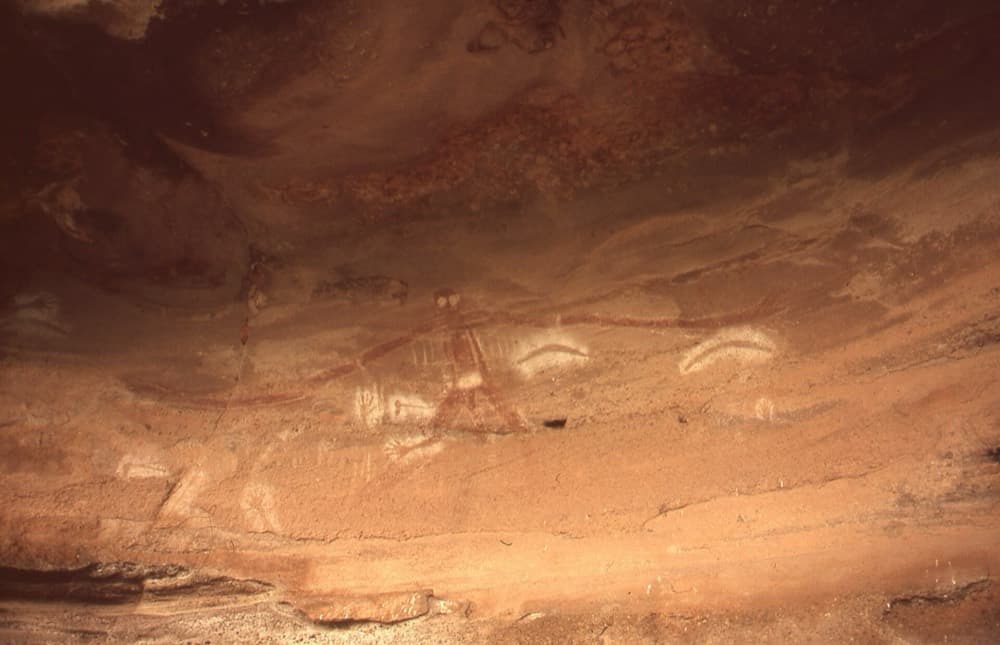
In the Tjukurpa of the Pitjantjatjara and Yankunytjatjara, the sisters are called Kungkarangkalpa. In the Dreaming a man named Wati Nyiru desired them, but under kinship law he stood in the wrong relation to them and could not marry. Nyiru is a shapeshifter: he lay in wait along their route as a rock, a tree, or tempting food, and again and again the sisters saw through the disguise and fled, their flight leaving waterholes, caves, and dunes across the desert. The rock shelter of Walinynga (Cave Hill) in northern South Australia holds famous public paintings of the pursuit. Cornered at last at the edge of the sea, the sisters leapt into the sky and became the Pleiades; Nyiru followed and became bright stars of Orion, still trailing them westward through the winter night.
Versions of the narrative run along the songline across language boundaries: the Martu of Western Australia call the sisters Minyipuru, and Gamilaraay and neighbouring peoples of the south-east tell of the Meamei sisters and the coming of frost. Sky and story lock together — the pre-dawn rising of the Pleiades keys seasonal rules in each region. Astronomers often cite the tradition when discussing the depth of Australian oral astronomy: like the Greeks, and independently of them, desert peoples read the same cluster as sisters pursued.
In 2017 the National Museum of Australia mounted Songlines: Tracking the Seven Sisters, an exhibition led by desert elders that retraced the chase through a replica rock shelter, monumental acrylic paintings, and immersive media — the largest public telling to date, its catalogue now the standard open reference.