THE STORY & ITS AFTERLIVES
Mimih spirits are so thin they are almost transparent, their limbs slender as reeds; Bininj elders say they are too frail to go out in a strong wind, and must retreat into the crevices of the Arnhem Land plateau, where a breath can open and close the sandstone. They live much as the first people did — hunting, keeping fires, marrying, painting — only on a slighter scale. The traditional attitude is wary respect: mimih are not malicious on the whole, but they love tricks, and someone walking the stone country alone at night may be lured into a crevice and never find the way back.
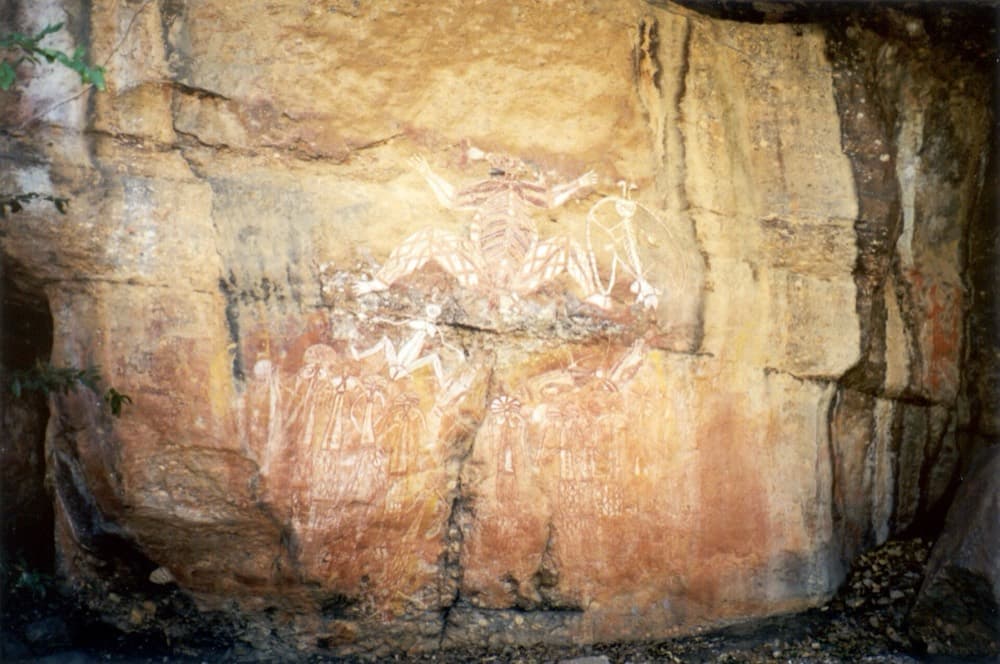
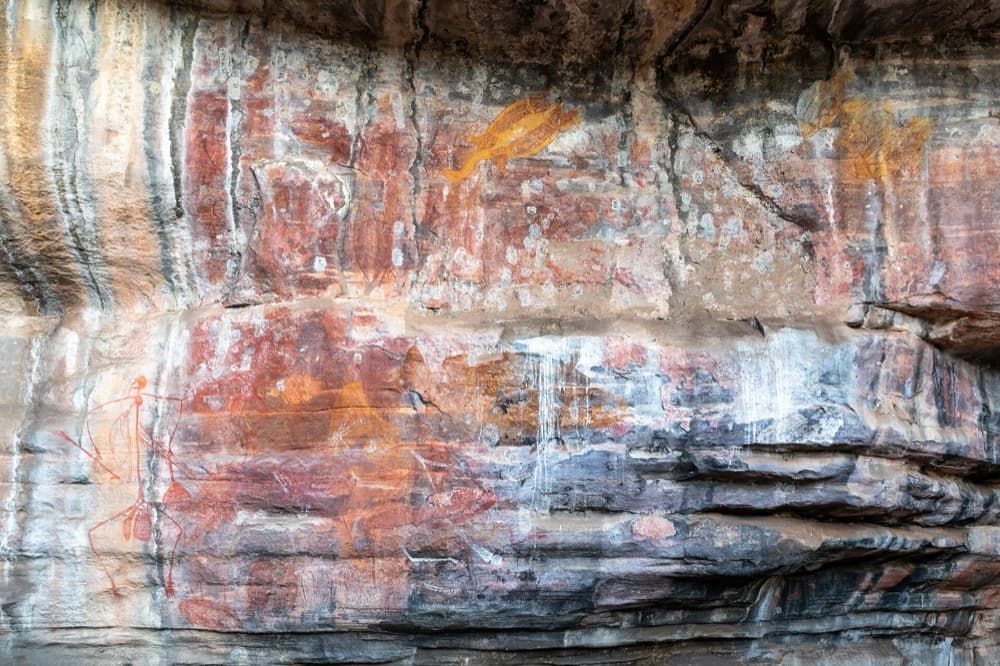
In Bininj narrative the mimih were the first teachers. When humans arrived they knew nothing of fire, of how to butcher a kangaroo, or of painting on rock; the mimih taught them each art in turn. The slender running red-ochre figures on the plateau walls — the early stratum archaeologists call dynamic figures — are traditionally explained as the mimihs' self-portraits, painted when no one was watching. The rock-art scholar George Chaloupka documented these images and their oral explanations at length in Journey in Time.
In the later twentieth century the mimih stepped off the rock into contemporary art. In 1968 the Kuninjku carver Crusoe Kuningbal made the first free-standing mimih sculptures for sale, adapted from the slender figures danced in ceremony, and mimih carving became a signature of art centres such as Maningrida: attenuated ochre-painted bodies, heads slightly tilted, now standing in gallery halls as one of the most recognisable forms of western Arnhem Land art.