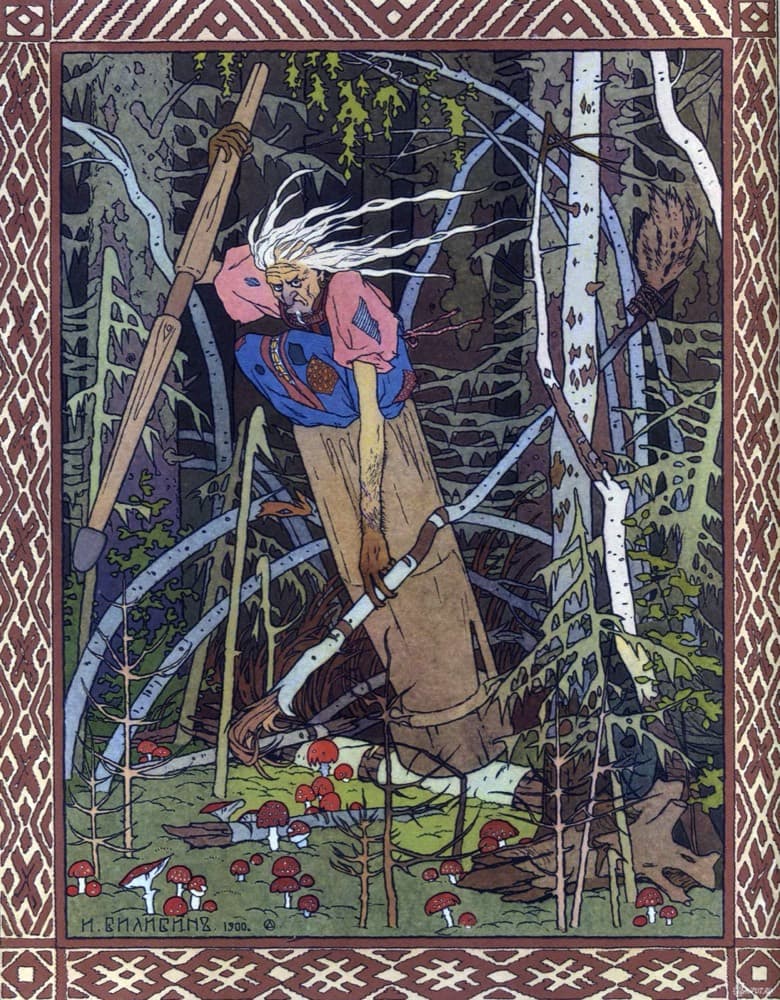
 № 001
№ 001Slavic
Baba Yaga
Folk
芭芭雅嘎
Witch of the Hut on Hen's Legs
Divine lineages · 04
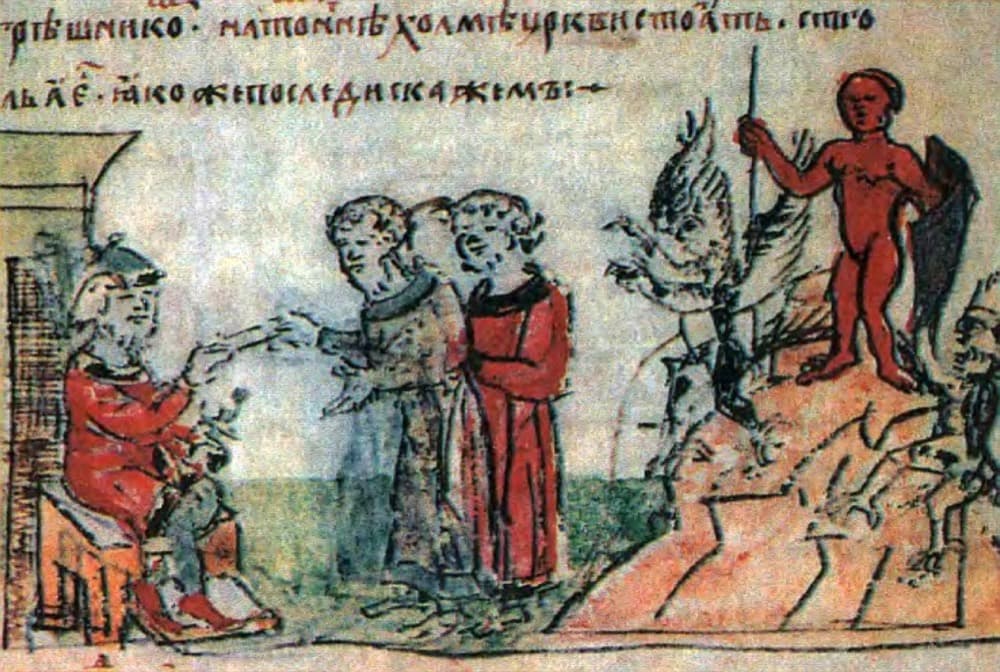
Slavic mythology survives without a native written canon. What is known of the pre-Christian gods has been pieced together from scattered outside witnesses: Procopius in the sixth century, the Primary Chronicle's account of Prince Vladimir raising and then destroying idols in Kyiv, Thietmar of Merseburg's description of West Slavic temples, plus the inferences of philology and archaeology. Only a handful of divine names are secure — Perun the thunderer, Veles the cattle god, the goddess Mokosh, Svarog of the celestial fire — and their stories mostly come down as outlines.
The lower mythology is far better preserved. The domovoy behind the stove, the vodyanoy in the millpond, the rusalka at the water's edge and the night-spinning kikimora lived on for nearly a millennium after Christianization, recorded in Alexander Afanasyev's nineteenth-century tale collections and in the early-twentieth-century fieldwork of ethnographers such as Dmitry Zelenin, together with the great figures of the wonder tale: Baba Yaga, Koschei the Deathless, the Firebird. Church writers complained of dvoeverie, "double faith" — baptized peasants who still left porridge behind the stove — and that double faith is exactly what kept the mythology alive.
Hence its particular temper: the temples fell silent while the hearth fire stayed lit. The high gods crowd into a few lines of chronicle, but the spirits moved into every mill, rye field and stove corner, bargaining with people and moving house alongside them.
Opening the origin story…
№ 001Slavic
芭芭雅嘎
Witch of the Hut on Hen's Legs
 № 002
№ 002Slavic
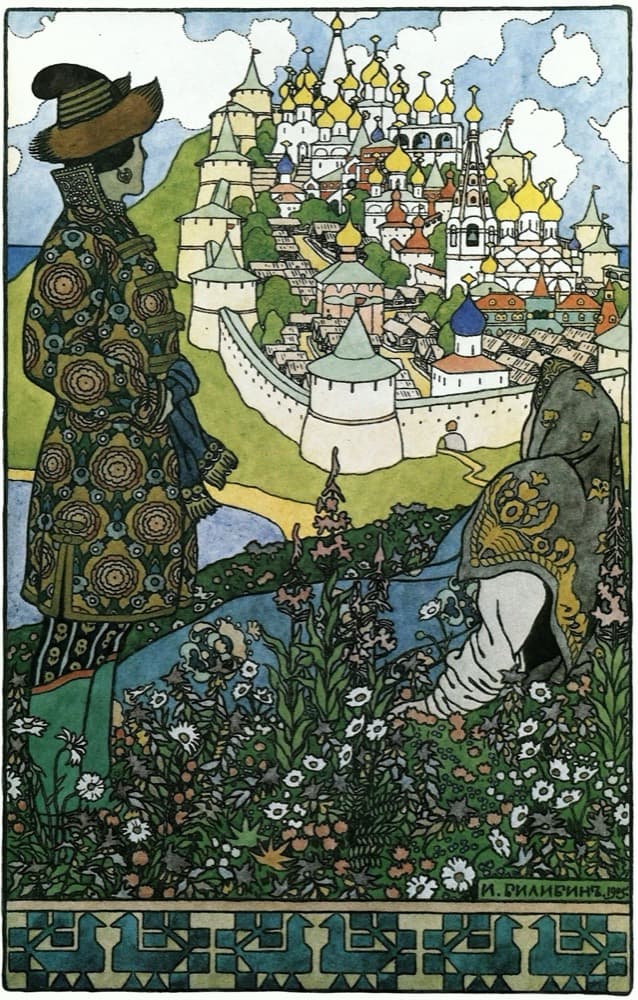
布扬岛
The Charm-Island in the Ocean-Sea
 № 003
№ 003Slavic
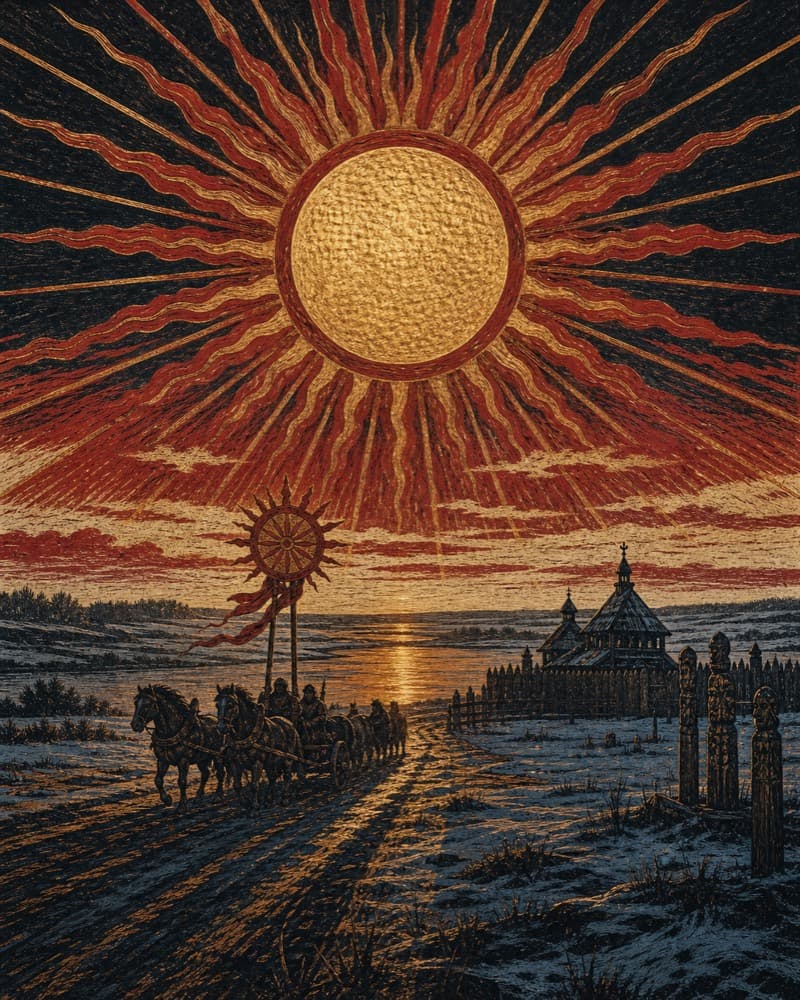
达日博格
The Giving God Identified with the Sun
 № 004
№ 004Slavic
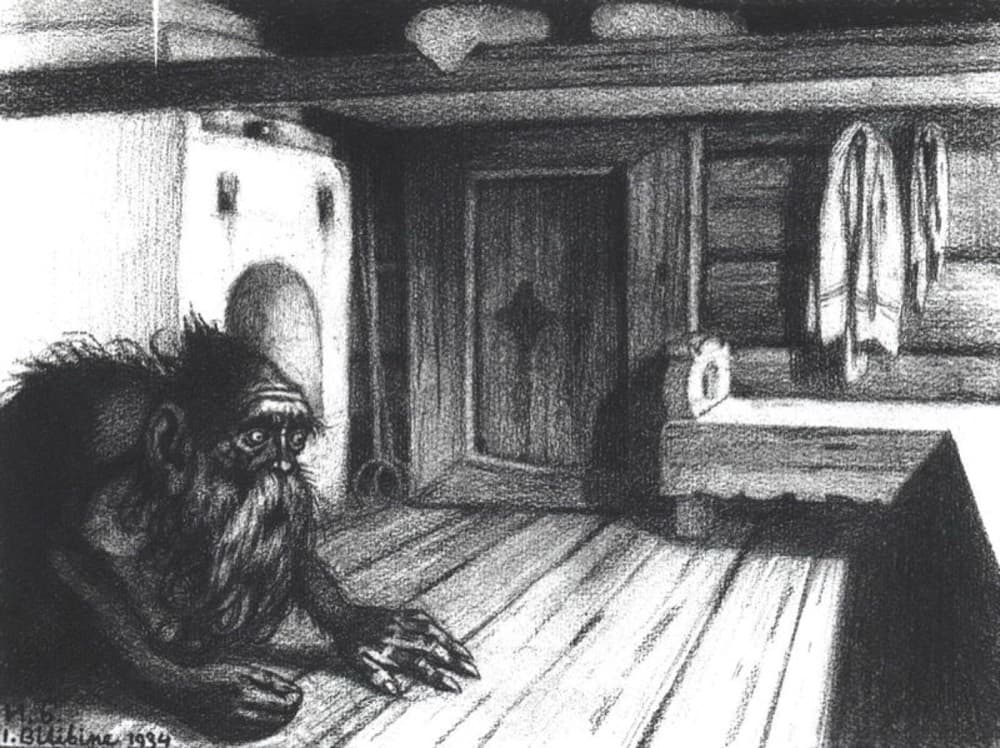
多莫沃伊
Guardian Spirit behind the Stove
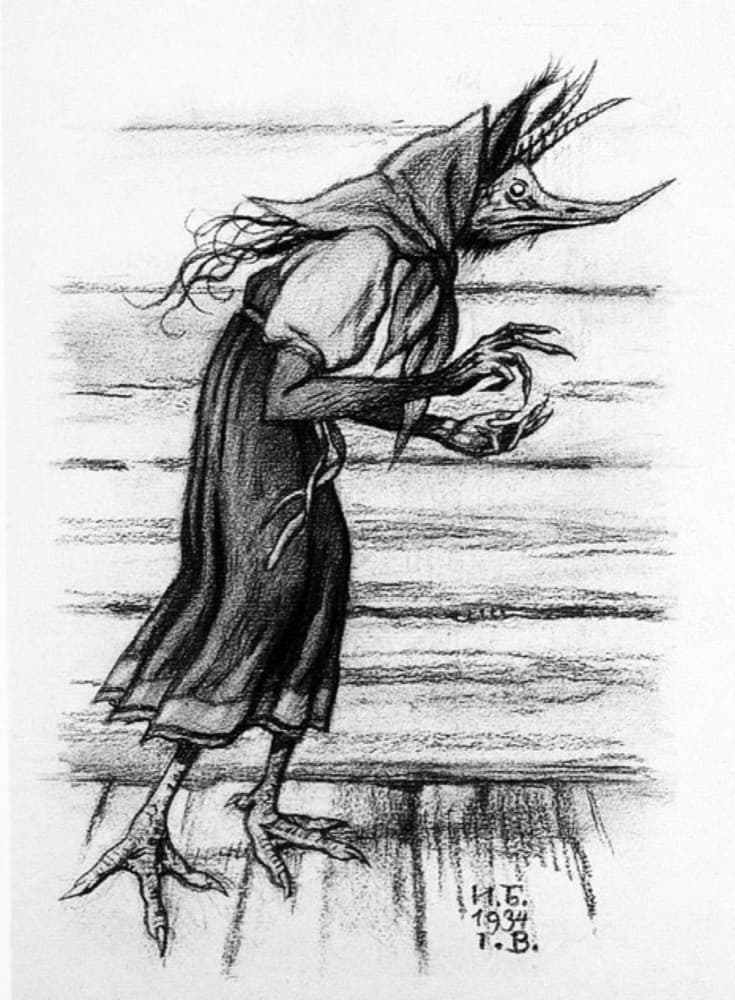 № 005
№ 005Slavic
基基莫拉
Night Spinner of the House
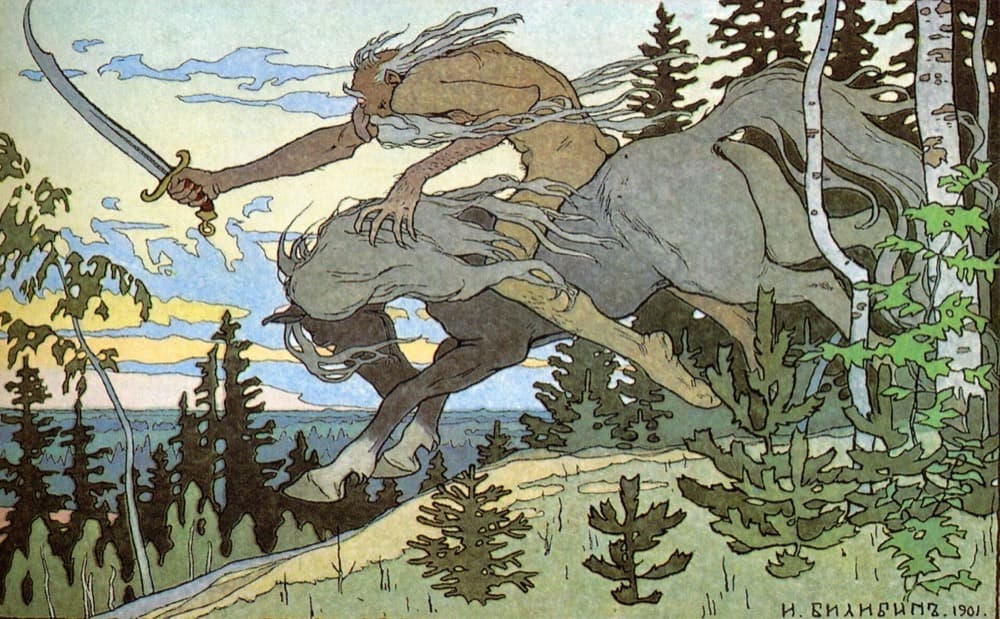 № 006
№ 006Slavic
科舍伊
The Deathless Sorcerer Whose Death Hides in a Needle
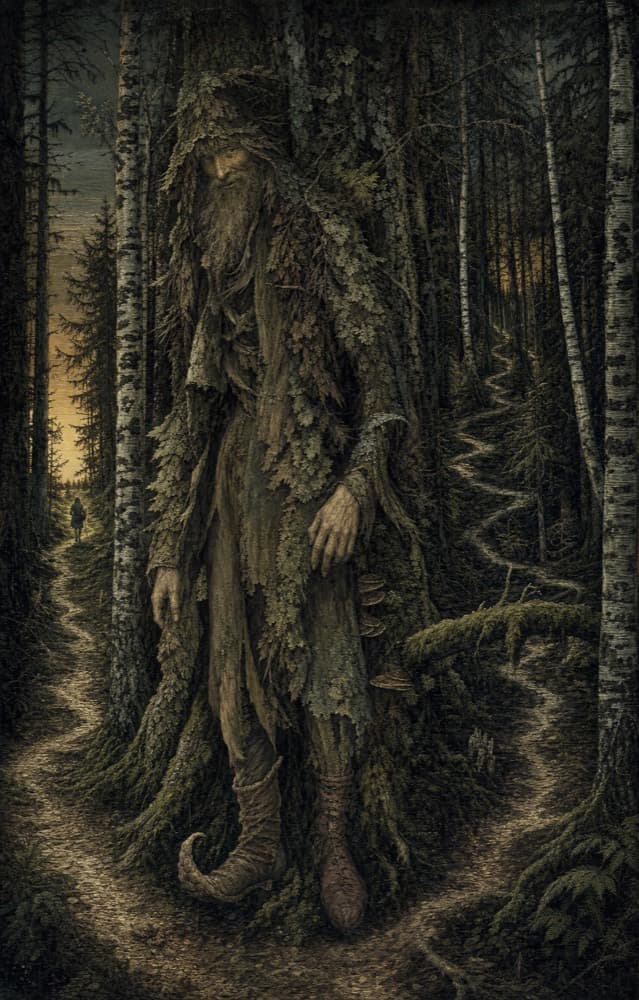 № 007
№ 007Slavic
列希
Forest Master Who Turns the Paths
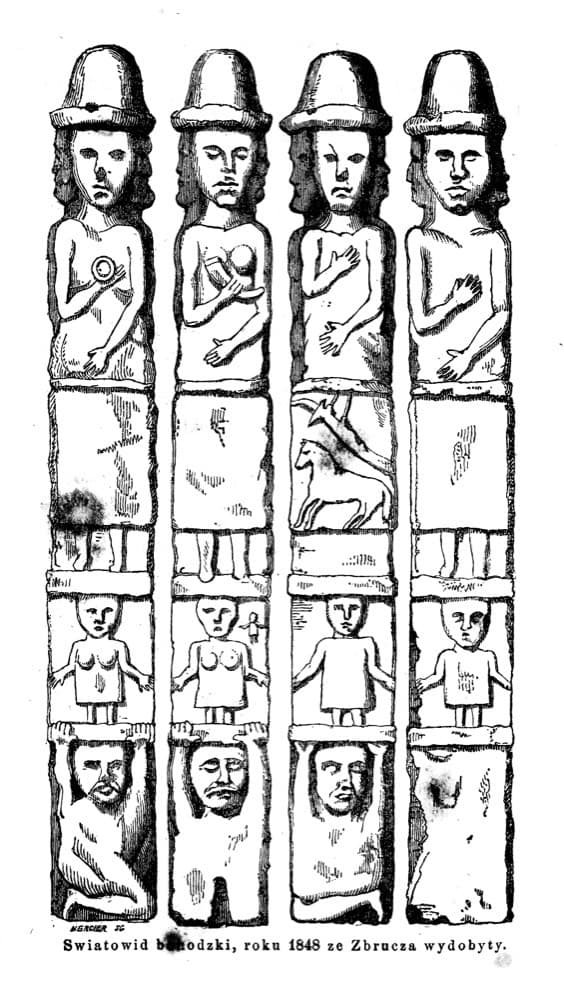 № 008
№ 008Slavic
莫科什
Goddess of Spinning and the Moist Earth
 № 009
№ 009Slavic
佩伦
God of Thunder and War
 № 010
№ 010Slavic
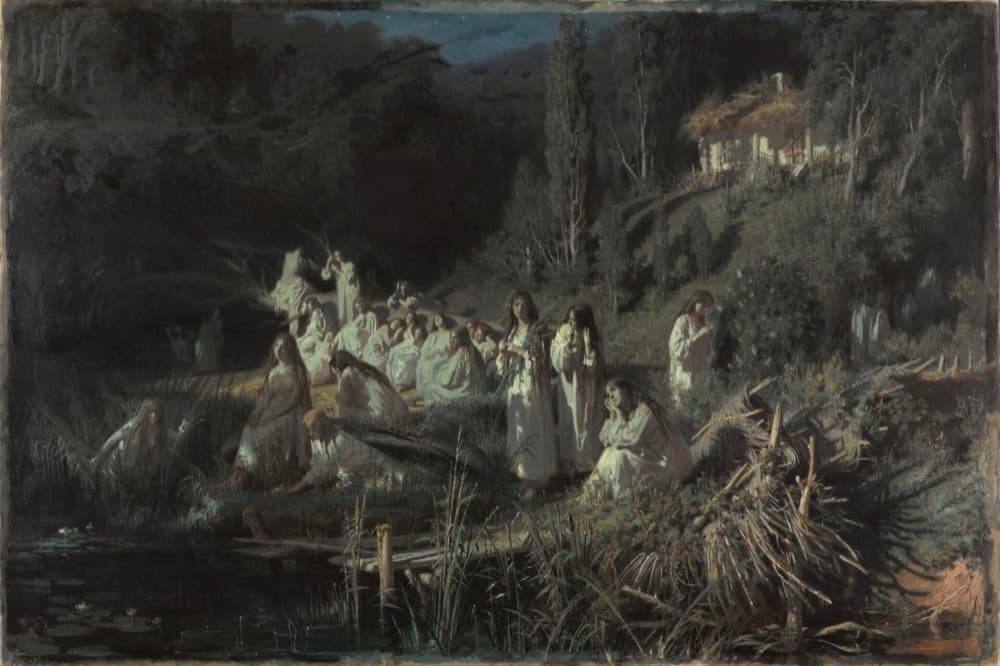
鲁萨尔卡
Drowned Maiden of the Waters
 № 011
№ 011Slavic
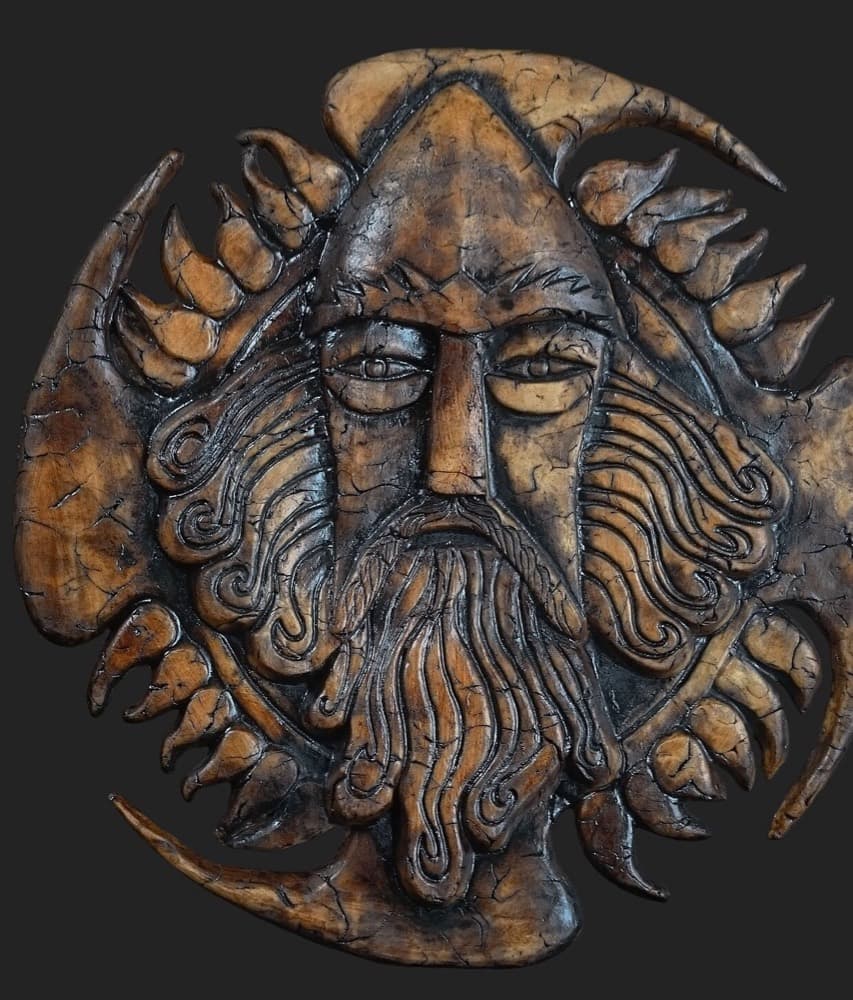
斯瓦罗格
God of Celestial Fire and Smithcraft
 № 012
№ 012Slavic
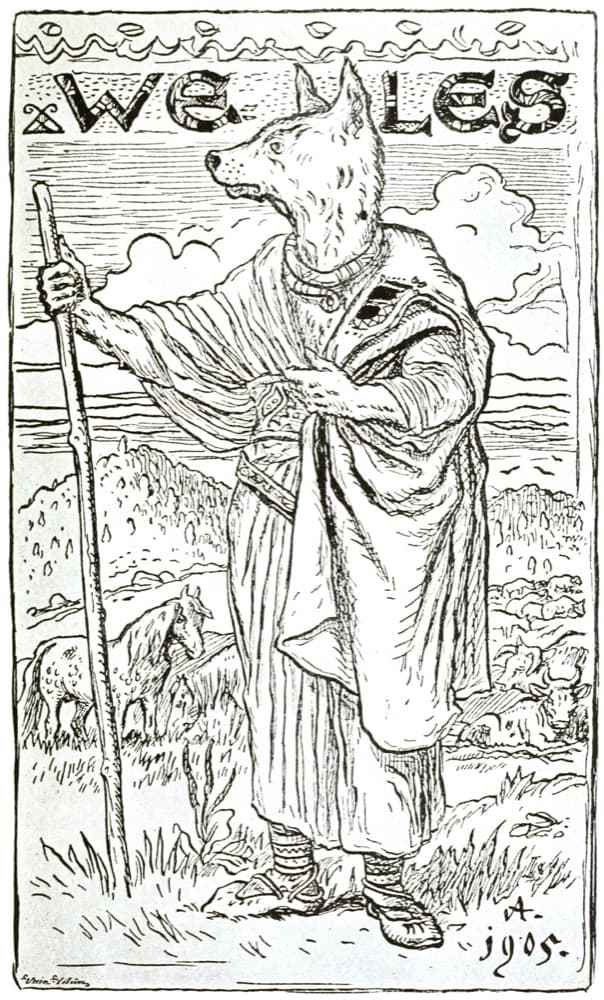
维列斯
God of Cattle, Wealth and the Underworld
 № 013
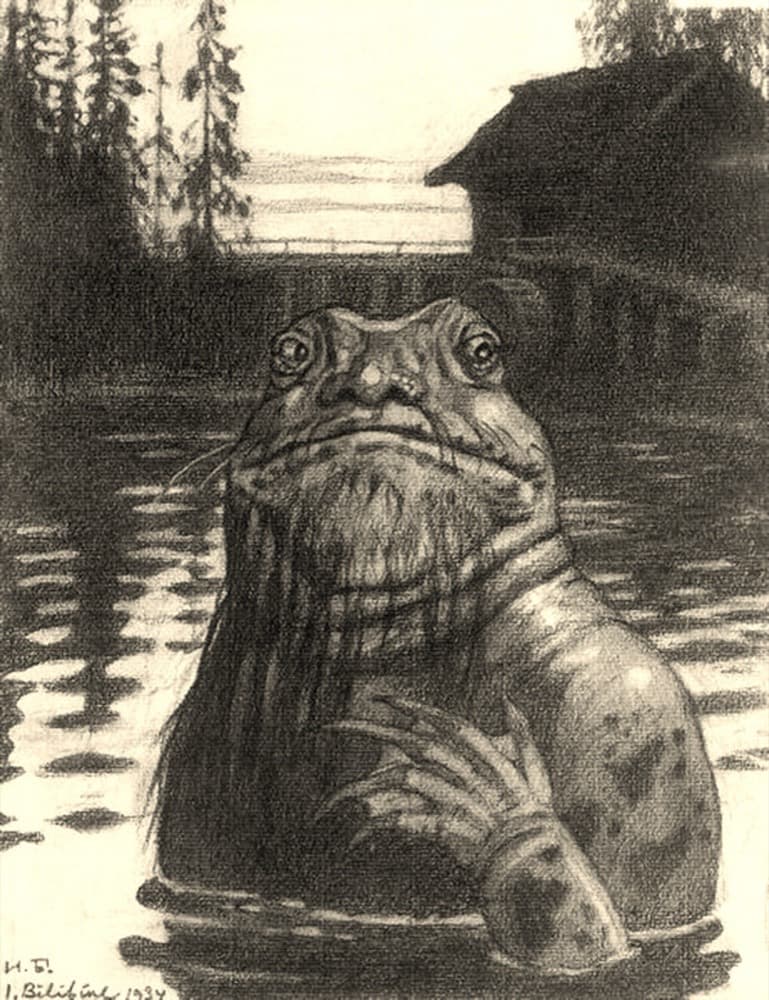
№ 013Slavic
沃佳诺伊
Old Man of the Millpond
 № 014
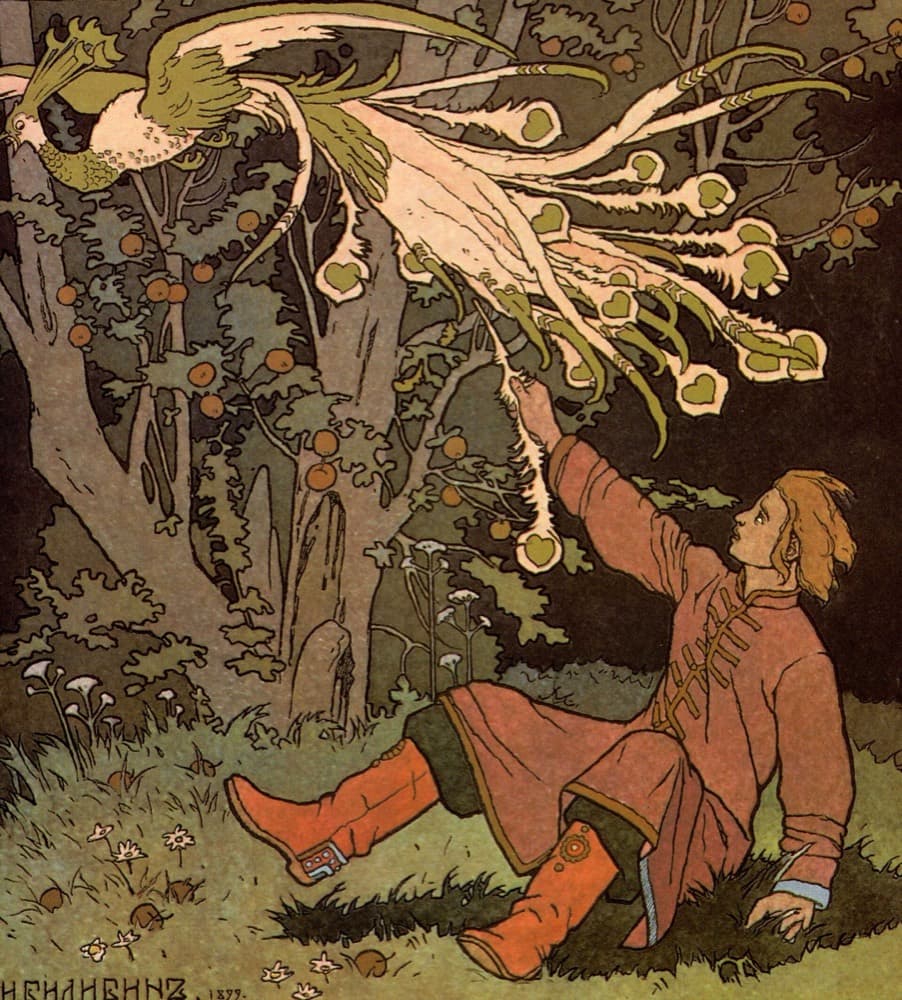
№ 014Slavic
火鸟
The Bird with Feathers of Living Flame