THE STORY & ITS AFTERLIVES
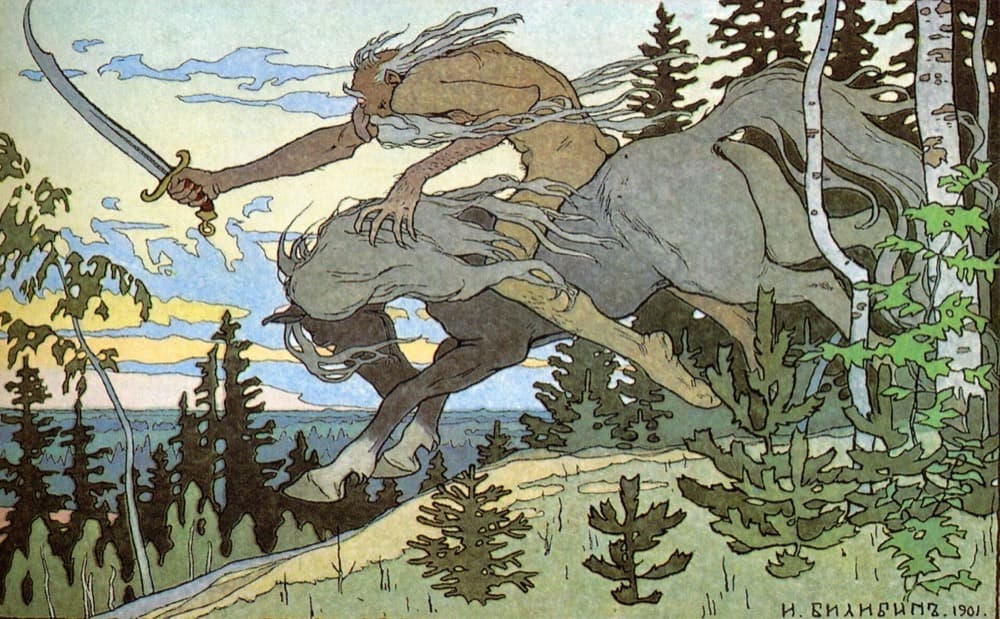
Baba Yaga is the most famous witch of the East Slavic wonder tale. Skeletally thin, fixed in formula as "bony leg," she lives deep in the forest in a hut that stands and turns on hen's legs; a visitor must recite "little hut, turn your back to the forest and your front to me" before the door will face them. Her fence is built of human bones, topped with skulls whose eye sockets glow at night. She travels seated in a mortar, punting with a pestle and sweeping away her tracks with a broom.
In the tales collected by Alexander Afanasyev in the mid-nineteenth century she is by turns an ogress who eats her guests and a tester who rewards them. In "Vasilisa the Beautiful" a girl is sent by her stepmother to borrow fire; with the help of a doll left by her dead mother she performs the witch's impossible chores, sorting grain from chaff, and carries home a skull-lantern whose gaze burns the stepmother's household to ash. In other tales Baba Yaga gives directions, a magic horse, or a ball of thread that rolls ahead to show the way. The folklorist Vladimir Propp, in Historical Roots of the Wonder Tale, read her hut as a checkpoint between the lands of the living and the dead and matched these plots against the structure of initiation rites.
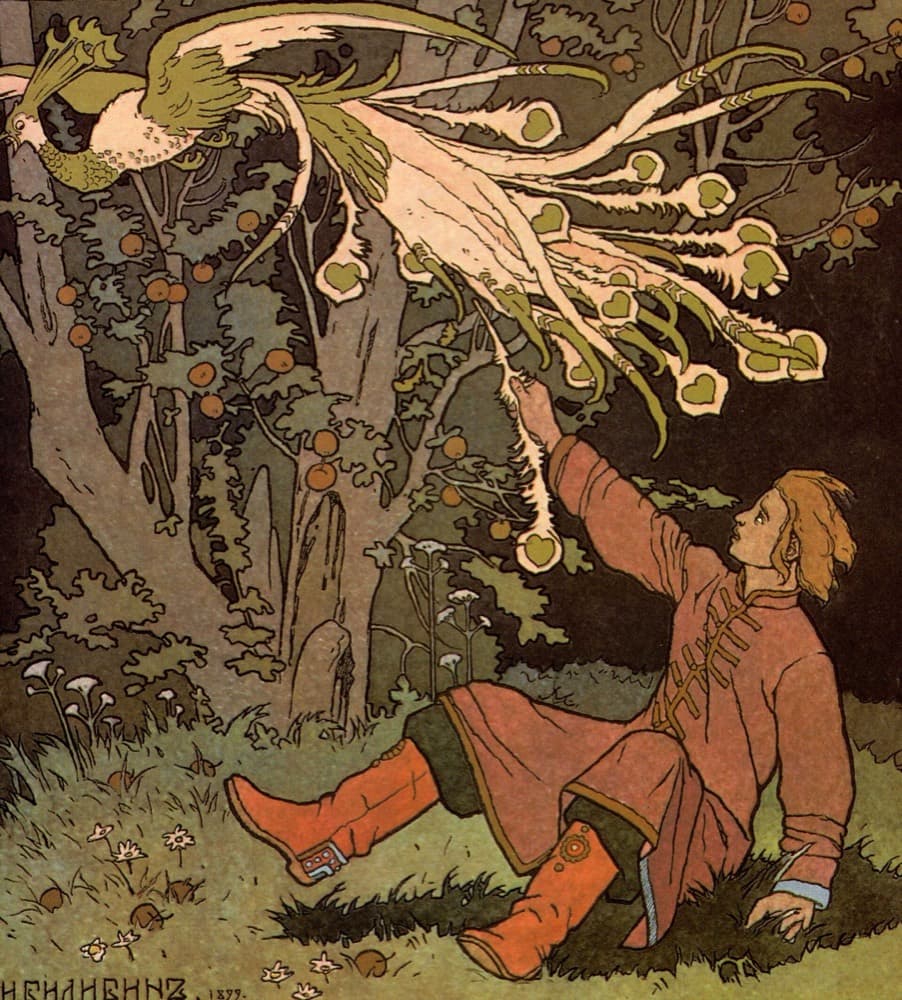
She remains one of the liveliest folk figures in Russian culture: Mussorgsky gave her a movement in Pictures at an Exhibition, Ivan Bilibin drew celebrated illustrations of her, Soviet fairy-tale films made her a recurring character, and her name survives in everyday speech for a fearsome old woman.