THE STORY & ITS AFTERLIVES
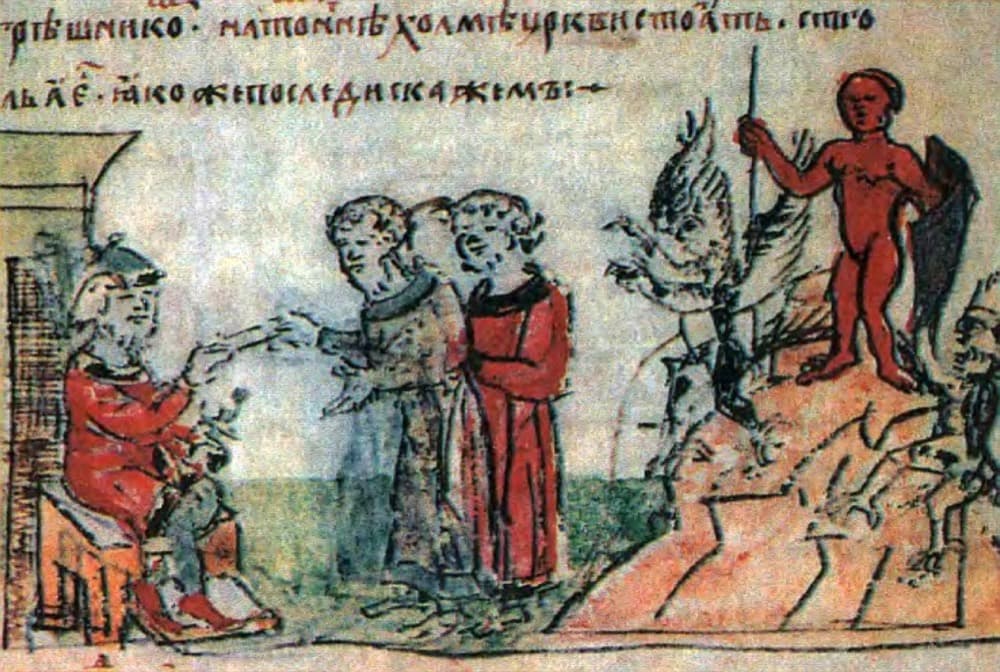
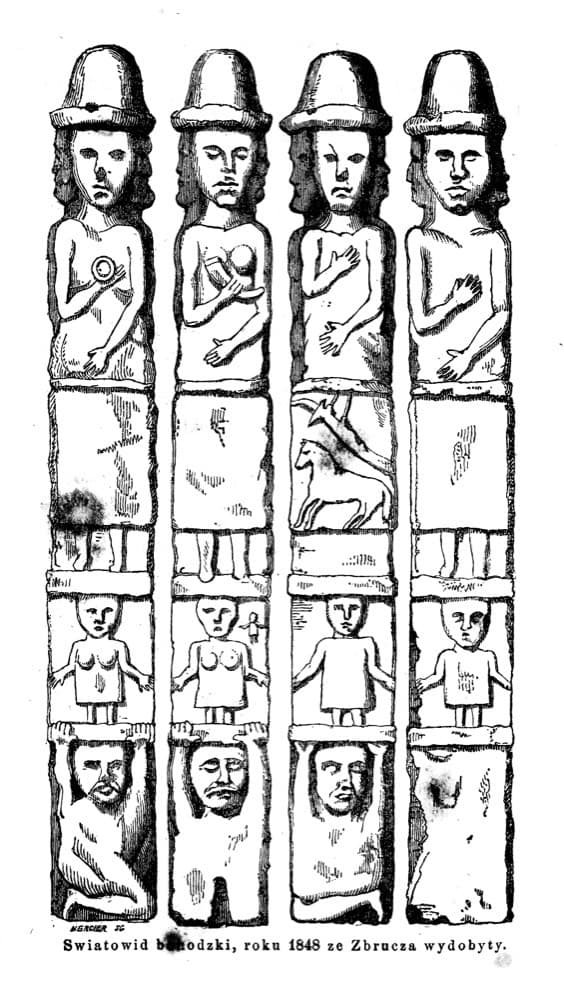
The Primary Chronicle records that in 980 Prince Vladimir raised a group of idols outside his court at Kyiv. Perun stood first; Dazhbog appeared with Khors, Stribog, Simargl, and Mokosh. Eight years later the chronicle has the images overthrown as Rus accepted Christianity, and the rites of the old gods recede from its story. Dazhbog is therefore one of the few deities of medieval Rus named directly in writing, but no complete myth about him survives. His brightness must be traced across a few separated passages.
Under the year 1114, the Primary Chronicle quotes the Slavonic version of the Chronicle of John Malalas and glosses the Greek Helios as Dazhbog, son of Svarog. This is the clearest early link between Dazhbog and the sun, but it is also an act of translation between pantheons, not a self-contained Slavic creation narrative. The Tale of Igor's Campaign later calls the Rus princes or people “the grandsons of Dazhbog.” There the divine name has entered the poetic language of ancestry and collective identity.
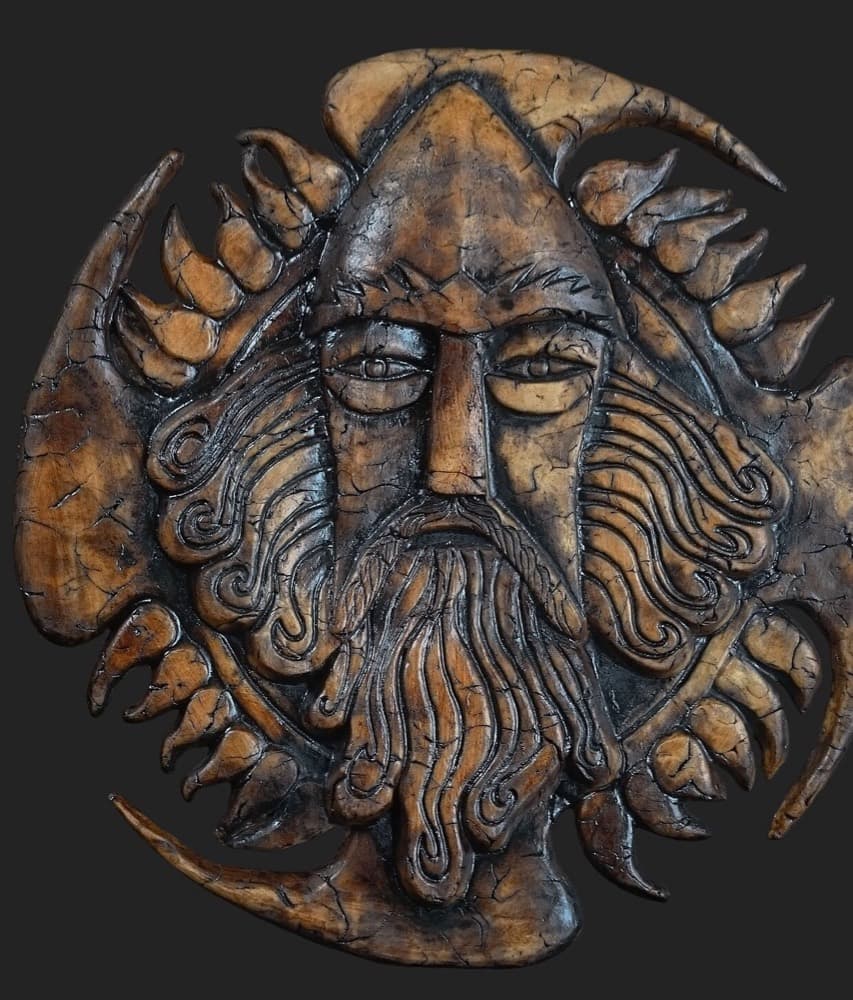
The name is commonly connected with an old Slavic root meaning “give” and with bog, a word carrying the senses of god, fortune, or wealth, hence “the giving god.” Modern reconstructions often equip him with a solar chariot and a complete portfolio of fertility, law, and kingship, details that exceed the surviving medieval evidence. What remains secure is spare but resonant: an idol on the hill at Kyiv, a son of Svarog identified with Helios in a chronicle, and a divine ancestor still invoked in a poem of defeat.