THE STORY & ITS AFTERLIVES
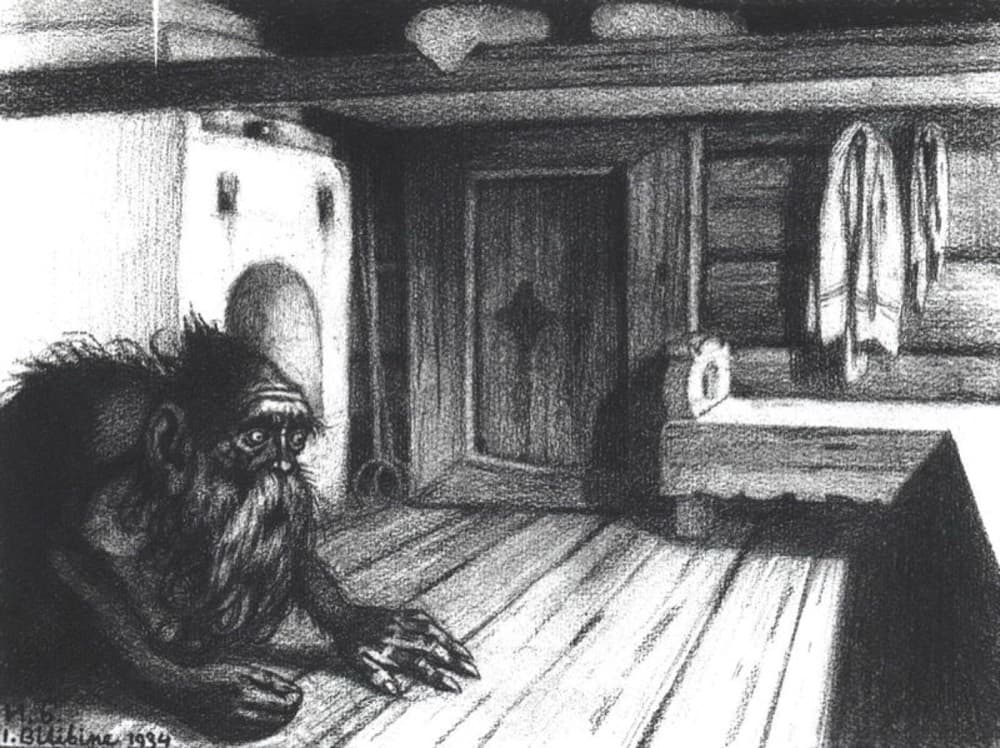
The kikimora is the female spirit of the house, often called the counterpart or wife of the domovoy. Small, scrawny and unkempt, she hides by day behind the stove or under the floorboards and comes out at night to sit at the spinning wheel — yet she spins nothing useful, only tangling and snapping the housewife's yarn and soiling any work left out. The whirr of her wheel and the rustle of flax in the dark were read as omens of trouble in the house, even of a coming death. She torments poultry too: hens found frantic and half-plucked in the morning were said to have suffered her attentions.
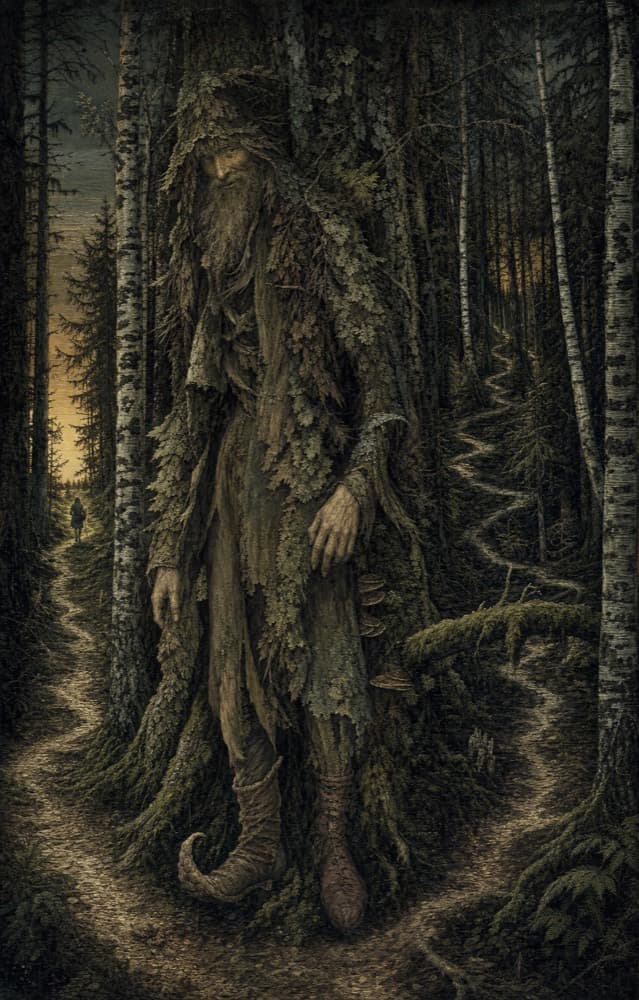
Folk accounts give her several origins: a girl who died unbaptized or under a parent's curse, or a spirit "planted" in the beams or stove by a carpenter or stove-builder cheated of his pay. The countermeasures follow: a "chicken god" — a stone with a natural hole — hung in the coop to protect the birds, the hidden charm-doll of the offended craftsman dug out and destroyed, or a priest called in to cleanse the house. A separate line of tradition speaks of the swamp kikimora, said to be the wife of the forest master leshy, glimpsed in the mists of the marshes.
Vladimir Dal recorded the figure in his mid-nineteenth-century dictionary and folklore writings, glossing her as a house demon. In 1909 Anatoly Lyadov drew on the legends for his orchestral miniature Kikimora, whose brooding introduction and abruptly vanishing ending remain the night spinner's best-known portrait in music.