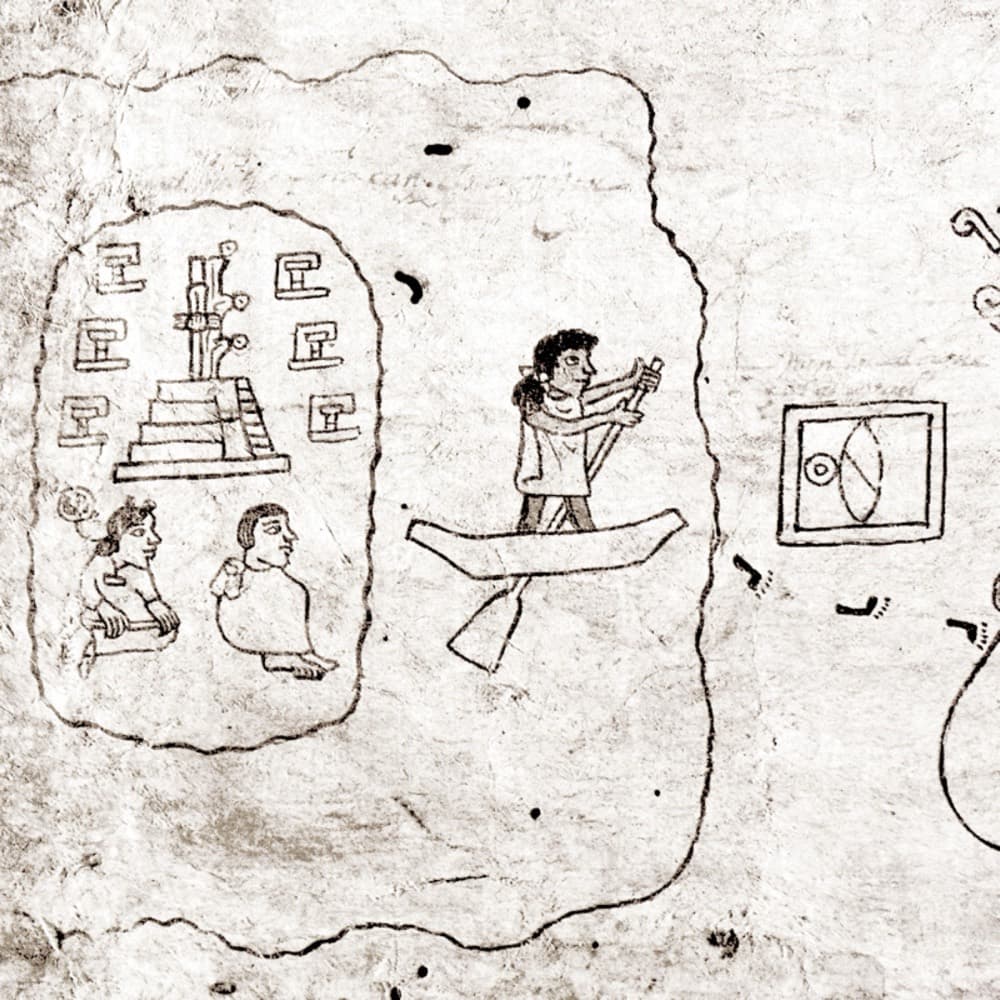
 № 001
№ 001Aztec
Aztlan
Ancient
阿兹特兰
Place of the Herons, Legendary Island Homeland of the Mexica
Divine lineages · 15
Aztec mythology is the belief system of the Nahuatl-speaking peoples of the Valley of Mexico in the fourteenth to sixteenth centuries — above all the Mexica, builders of Tenochtitlan. Its cosmology rests on a debt of blood: the world has already been destroyed four times, and the present Fifth Sun, kindled on a pyre at Teotihuacan, began to move only when the gods gave up their own hearts, and stays in motion only while it is fed. Huitzilopochtli of war and the sun, Tlaloc of the rain, the Feathered Serpent Quetzalcoatl, and Tezcatlipoca the Smoking Mirror form the spine of the pantheon; the earth itself is the torn body of a primordial monster, and ordinary souls walk four years to reach the deepest level of Mictlan, the land of the dead.
The surviving record bears the scars of conquest. Nearly all the Aztecs' own screenfold books were destroyed in the sixteenth century, and knowledge now rests on three kinds of material: pictorial codices, surviving or redrawn after the conquest (the Codex Borgia, Codex Mendoza, and Codex Boturini); alphabetic Nahuatl texts, above all the Florentine Codex compiled by Nahua scholars under the friar Bernardino de Sahagún, together with the Leyenda de los Soles and the Anales de Cuauhtitlan; and archaeology itself — the Sun Stone and the Coatlicue colossus unearthed in 1790, and the Templo Mayor excavated systematically after 1978. These carved stones still stand in the middle of Mexico City, in the open air and behind museum glass.
Its temper is hard-edged and sumptuous at once: obsidian mirrors, quetzal plumes, fire serpents in turquoise mosaic, joined to an unblinking logic of sacrifice. The gods are rarely gentle, and creation is paid for in dismemberment and blood — humanity kneaded from ground bones and divine blood, the land torn from a crocodilian monster. That way of setting death at the center of civilization lives on in the skulls of the Day of the Dead, while the eagle and cactus of the foundation myth remain at the center of the Mexican flag.
Opening the origin story…
№ 001Aztec
阿兹特兰
Place of the Herons, Legendary Island Homeland of the Mexica
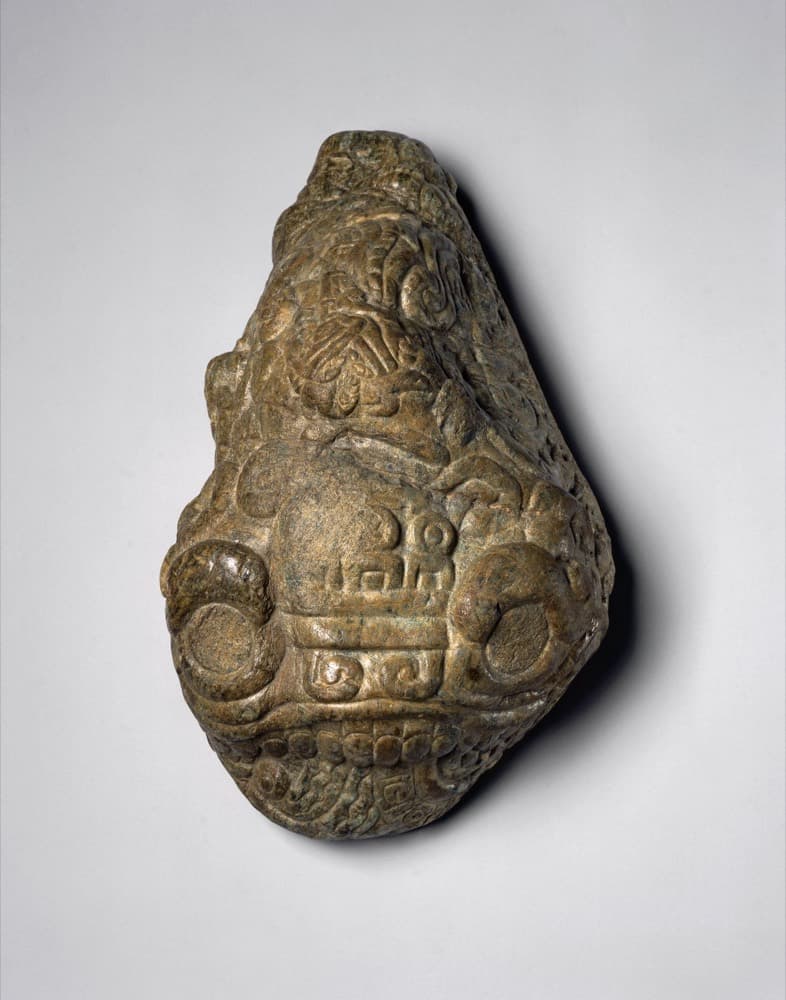 № 002
№ 002Aztec
西帕克特利
The Primordial Crocodilian from Whose Body the Earth Was Made
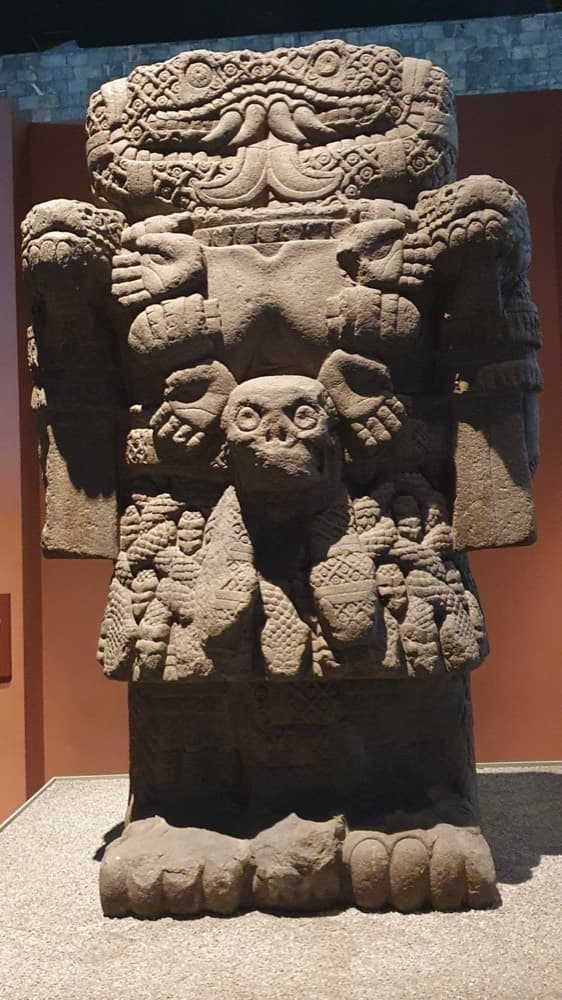 № 003
№ 003Aztec
科亚特利库埃
She of the Serpent Skirt, Mother of Gods
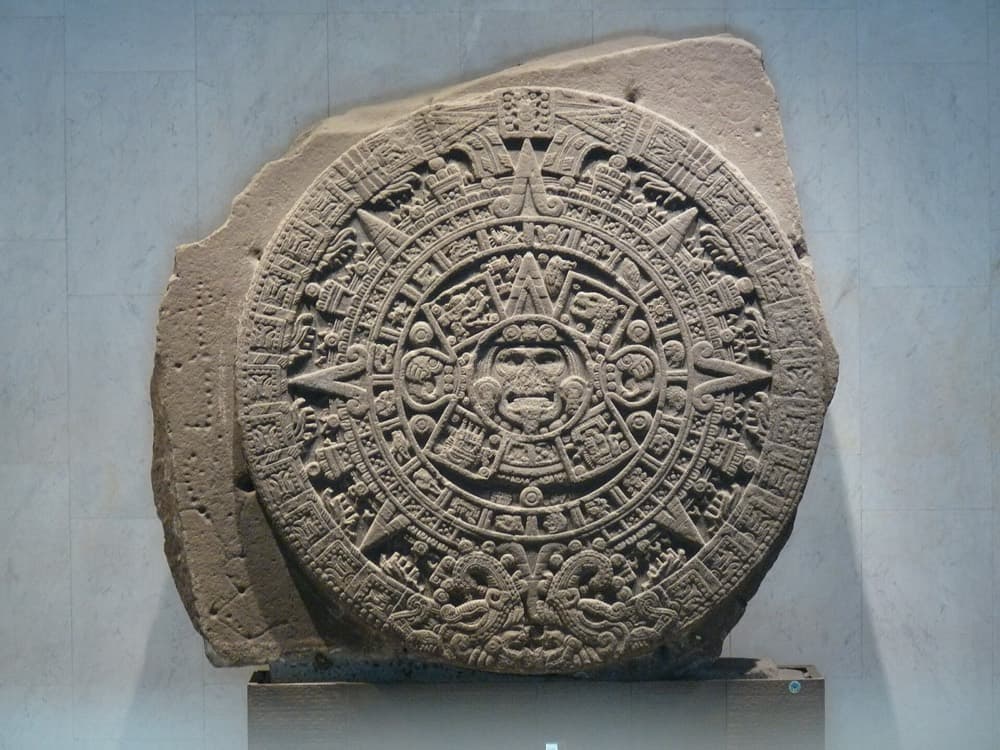 № 004
№ 004Aztec
五太阳纪
The Aztec Ages of Creation: Four Destroyed Worlds and the Present Fifth
 № 005
№ 005Aztec
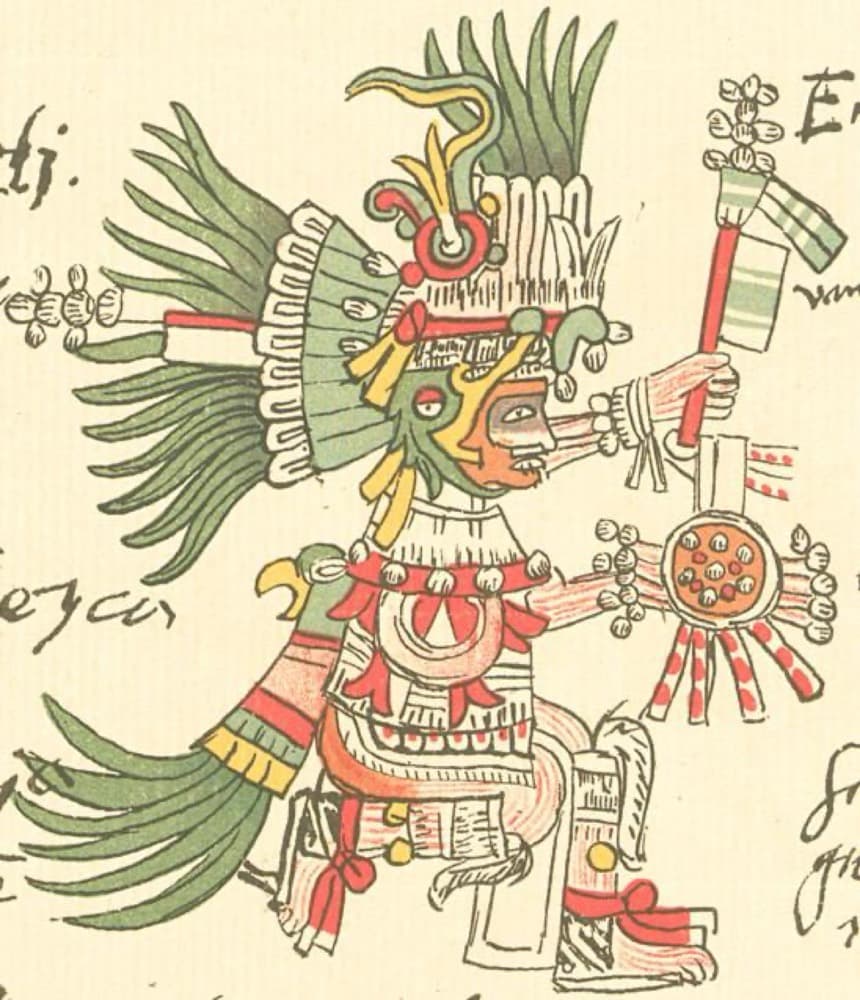
维齐洛波奇特利
Hummingbird of the Left, God of War and the Sun, Patron of the Mexica
 № 006
№ 006Aztec
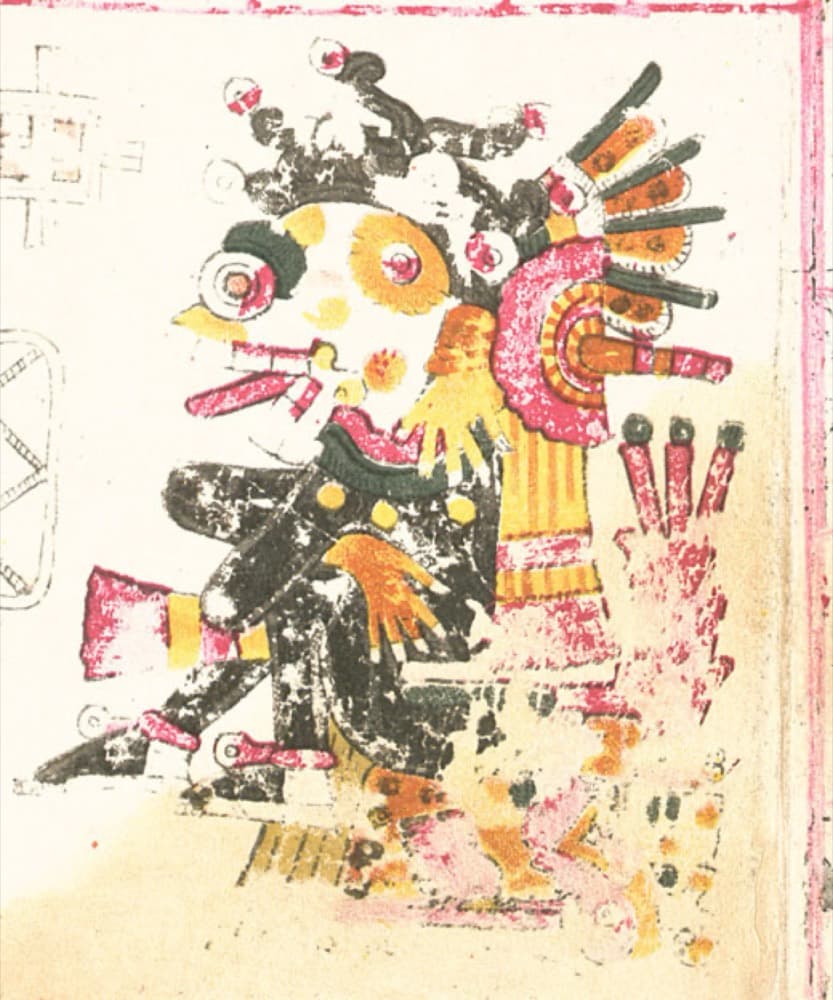
米克特兰特库特利
Lord of Mictlan, King of the Dead
 № 007
№ 007Aztec
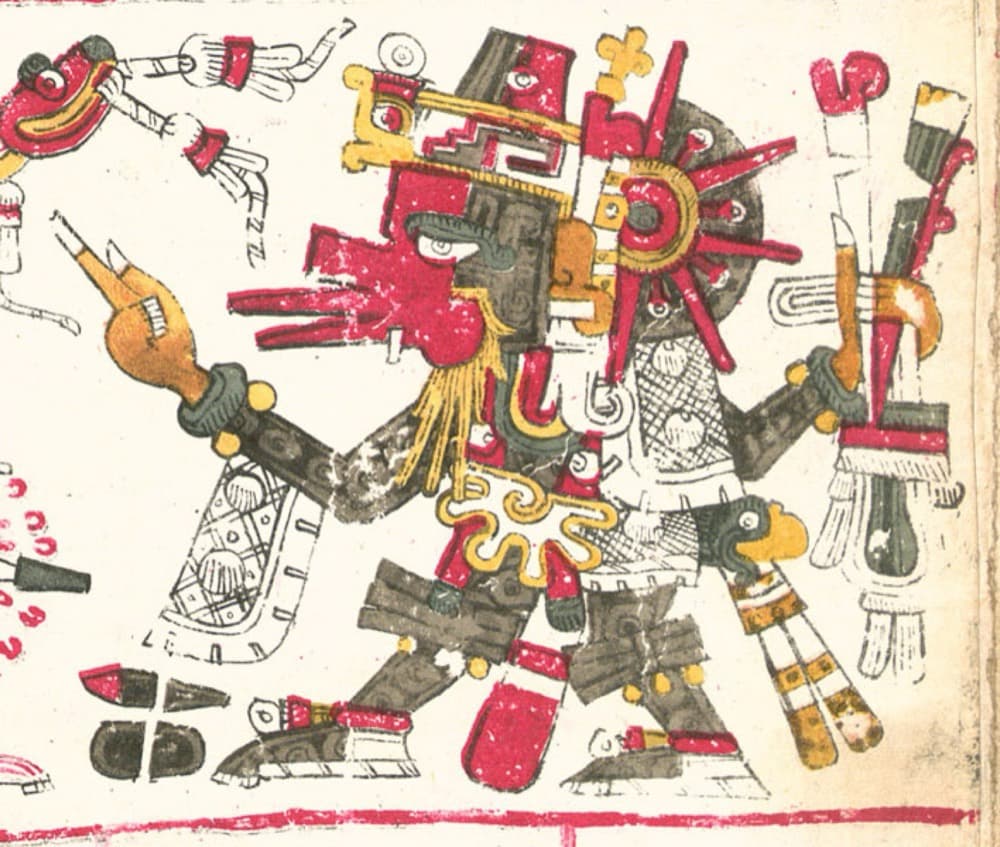
克察尔科亚特尔
The Feathered Serpent, Lord of Wind and the Morning Star
 № 008
№ 008Aztec
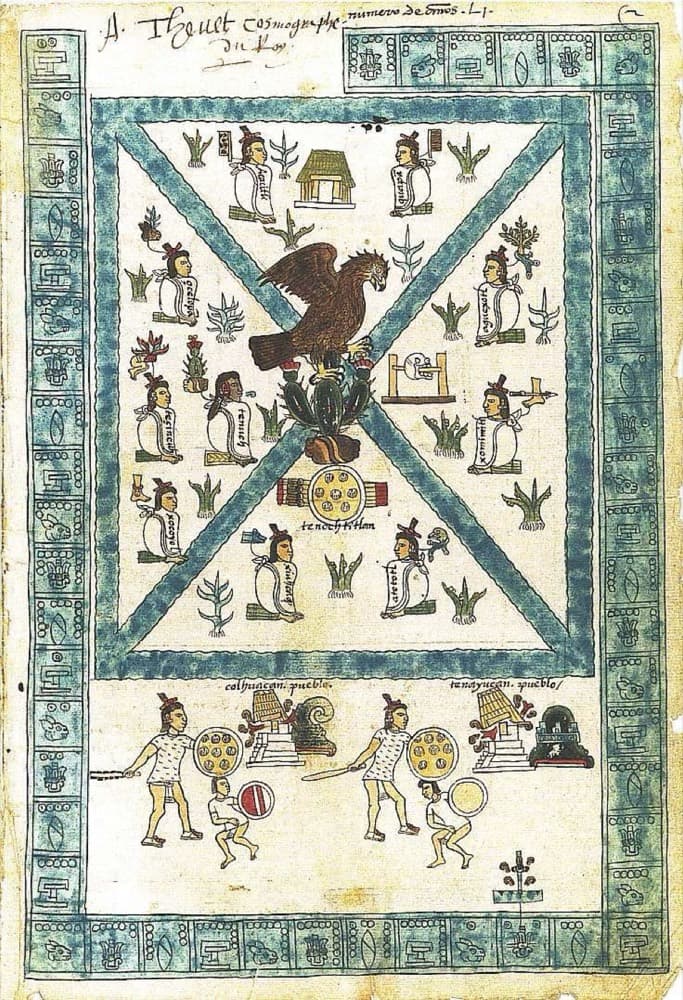
特诺奇蒂特兰
Where the Eagle Alighted on the Cactus: Island Capital of the Aztec Empire
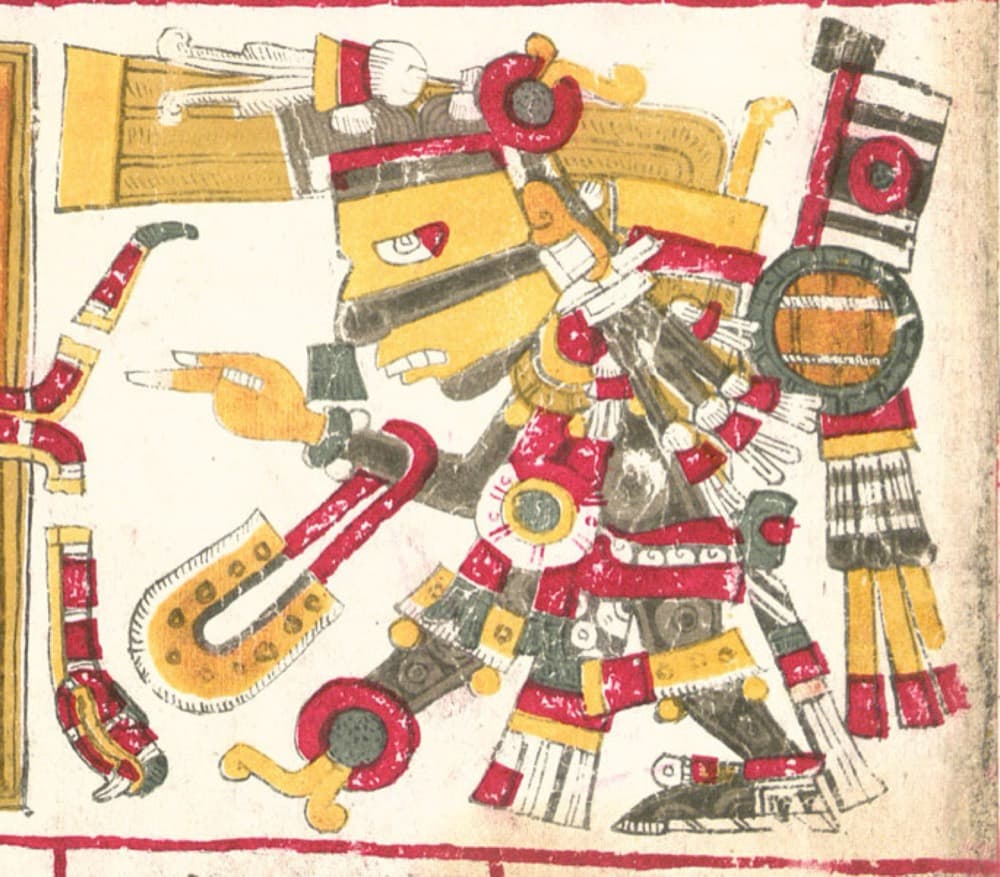 № 009
№ 009Aztec
特斯卡特利波卡
The Smoking Mirror, Lord of the Night Sky and Fate
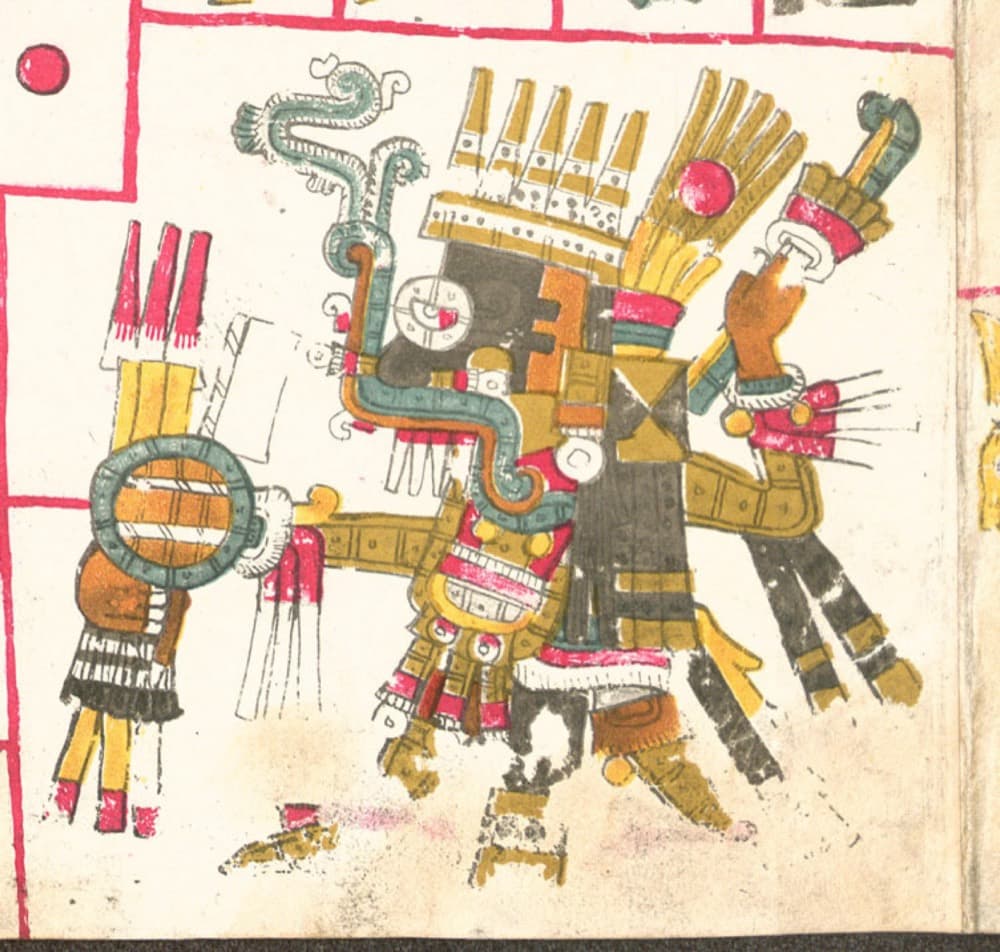 № 010
№ 010Aztec
特拉洛克
God of Rain, Lightning, and Fertility
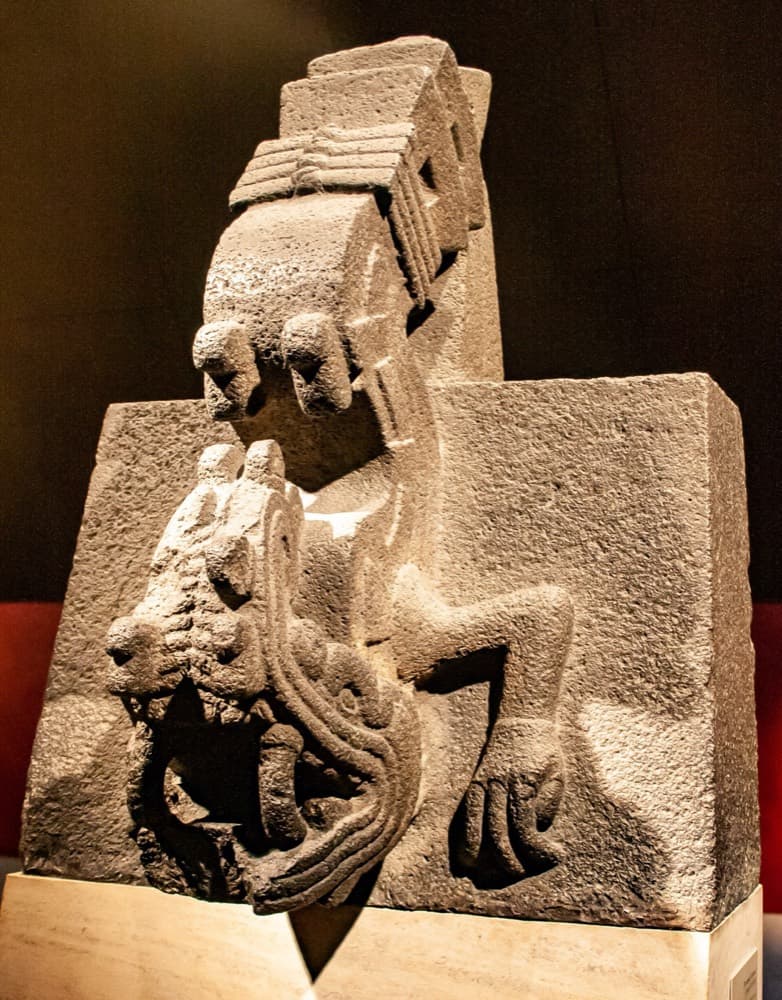 № 011
№ 011Aztec
修考特尔
The Turquoise Fire Serpent, Weapon of the War God
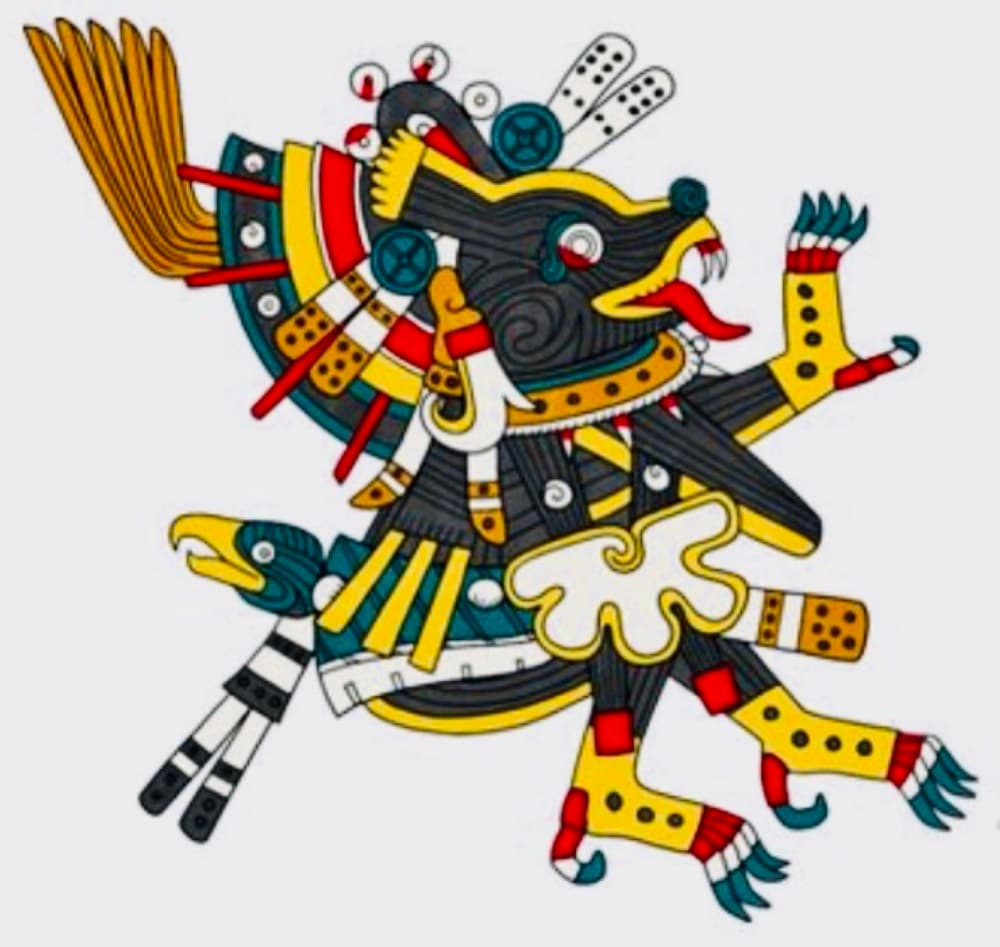 № 012
№ 012Aztec
修洛特尔
The Dog-Headed God, Lord of the Evening Star and Twins