THE STORY & ITS AFTERLIVES
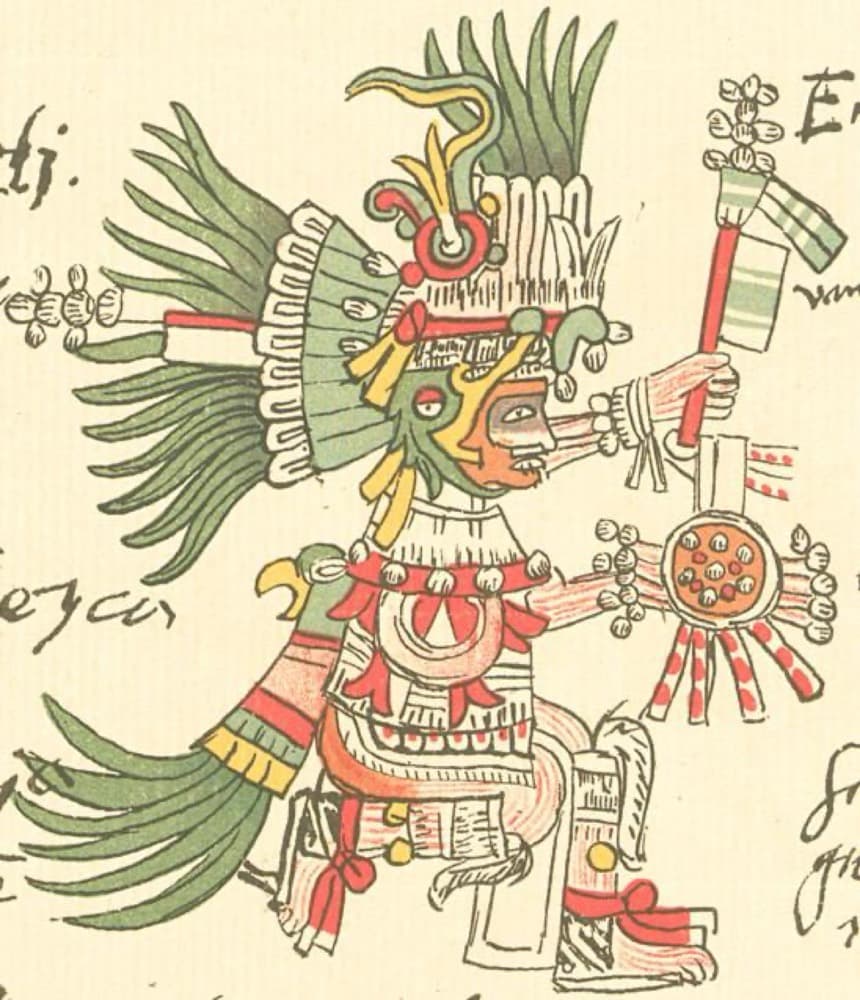
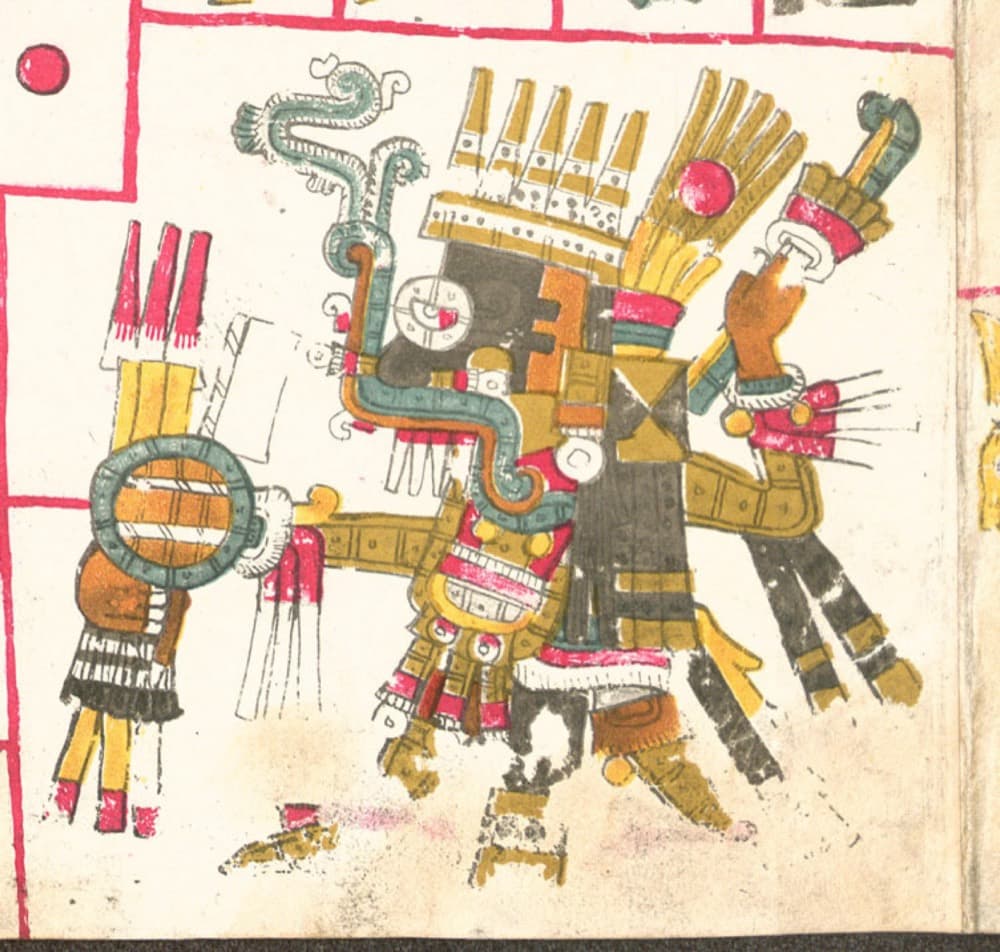
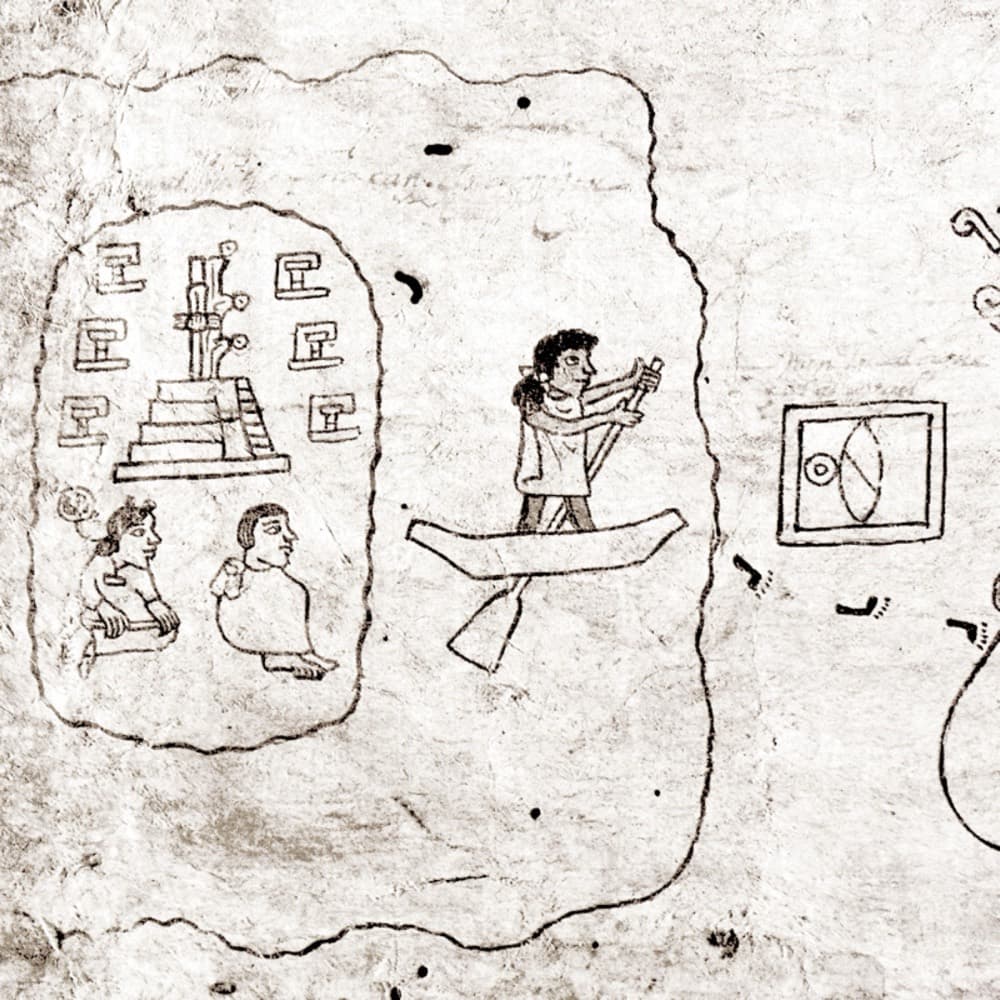
Tenochtitlan was the Mexica capital built on an island in Lake Texcoco, its founding fixed by tradition in the year 1325. The foundation legend turns on a promised sign from Huitzilopochtli: settle where an eagle stands on a cactus growing from a stone. Behind the sign lay a divine feud — Copil, the god's hostile nephew, had been slain and his heart flung into the lake, and from where it landed the cactus grew. Wading through the reed marshes that no other people wanted, the Mexica saw the eagle and raised their first earthen shrine on the spot. The name means Place of the Stone-Cactus Fruit. The frontispiece of the Codex Mendoza (c. 1541) paints the scene: the eagle on the cactus, ten founders seated around it, blue diagonals dividing the city into four quarters. The serpent in the eagle's beak comes from later accounts such as Durán's, and passed from there onto the arms and flag of Mexico.
Within two centuries the lake city had grown into one of the largest in the Americas, with a population estimated around two hundred thousand at European contact. It fed itself from chinampa raised fields, reached the shore by three stone causeways, and drank spring water brought by a double aqueduct from Chapultepec. At its heart rose the Templo Mayor, some forty-five meters high, crowned by the twin shrines of Tlaloc and Huitzilopochtli — rain and war, the two faces of the empire. Bernal Díaz, marching in with Cortés in 1519, wrote that the soldiers, seeing the white towers rising from the water, wondered if they were dreaming.
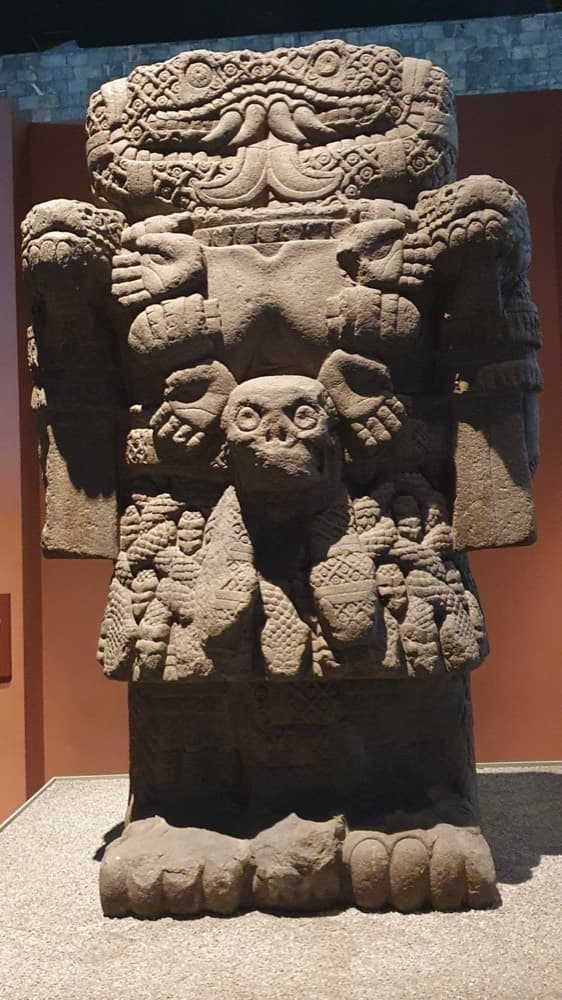
The city fell on 13 August 1521 at the end of the great siege, and Mexico City was raised on its ruins. In 1978 electrical workers struck the Coyolxauhqui stone, setting off the systematic excavation of the Templo Mayor; the ruins now lie open to the sky beside the Metropolitan Cathedral, the center of the city unmoved in seven centuries.