THE STORY & ITS AFTERLIVES
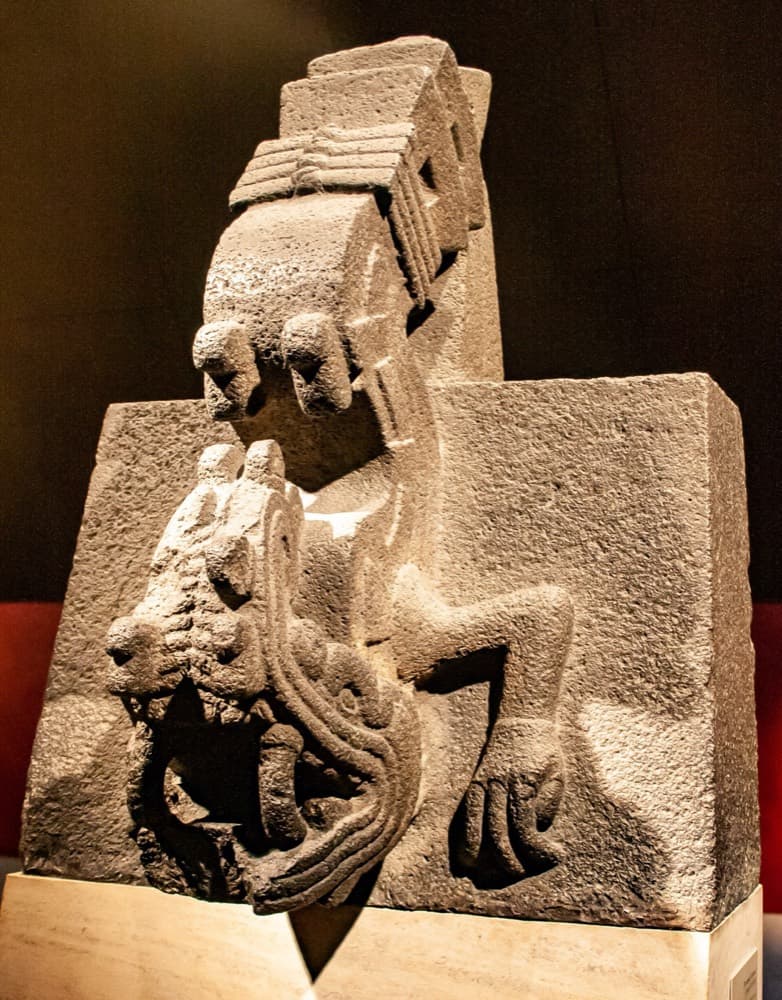
Coatlicue's name means Serpent Skirt. She is the earth mother who devours and brings forth all things: her skirt is woven of braided snakes, her necklace strung with severed hands and human hearts around a skull pendant, her hands and feet clawed. Her head has been cut away, and from the stump of the neck rise two serpents facing one another, their profiles meeting to form her new face. Life and death are two surfaces of one body — the earth that swallows the dead also yields the maize.
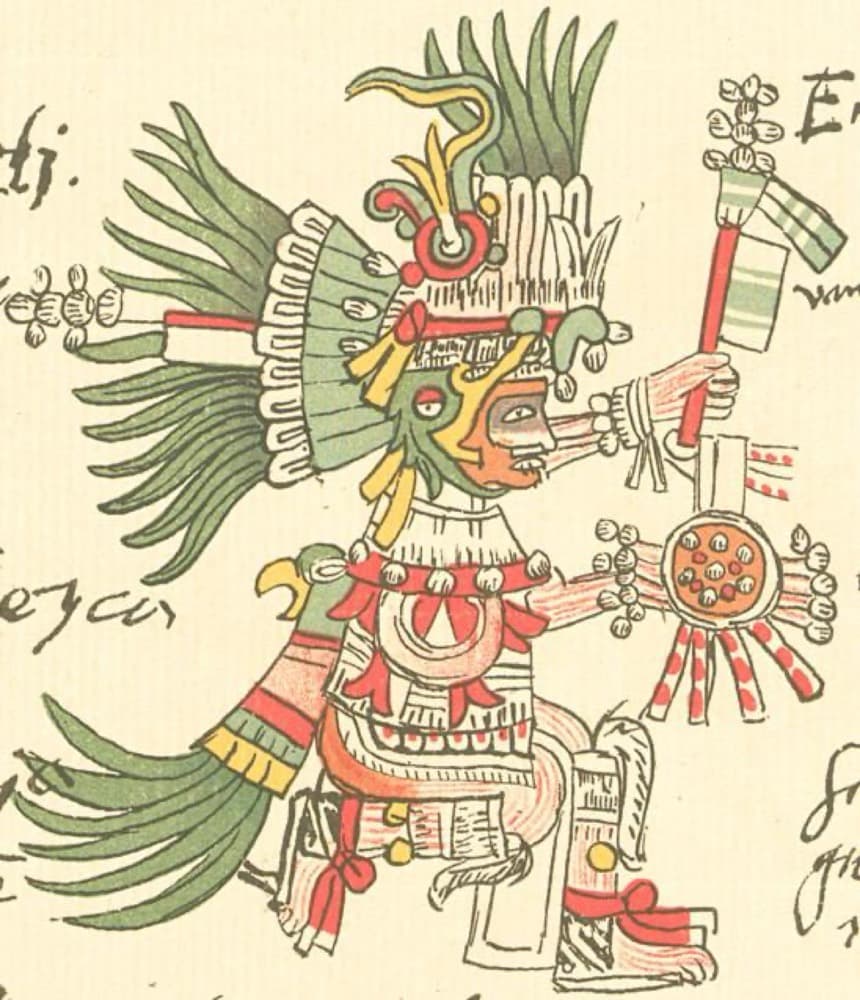
Her most famous act is a birth. While sweeping the temple on Coatepec, Serpent Hill, as her duty required, a ball of down feathers drifted from the sky; she tucked it into her bosom and found herself with child. Her daughter Coyolxauhqui, the moon goddess, took the pregnancy as a disgrace and led her four hundred star brothers up the hill to kill their mother. At the moment of the assault, Huitzilopochtli burst from the womb fully armed, cut down his sister, scattered the stars, and saved her.
On 13 August 1790, workers repaving the central plaza of Mexico City dug up an andesite colossus of Coatlicue about 2.57 meters tall; the famous Sun Stone surfaced nearby later that year. Displayed at the Royal University, the statue so unsettled viewers that it was reburied more than once, and only in the nineteenth century did it remain permanently above ground. It now stands in the National Museum of Anthropology, one of the supreme works of Aztec monumental sculpture — its underside, forever pressed against the earth and hidden from human eyes, carries a relief of the earth lord Tlaltecuhtli.