THE STORY & ITS AFTERLIVES
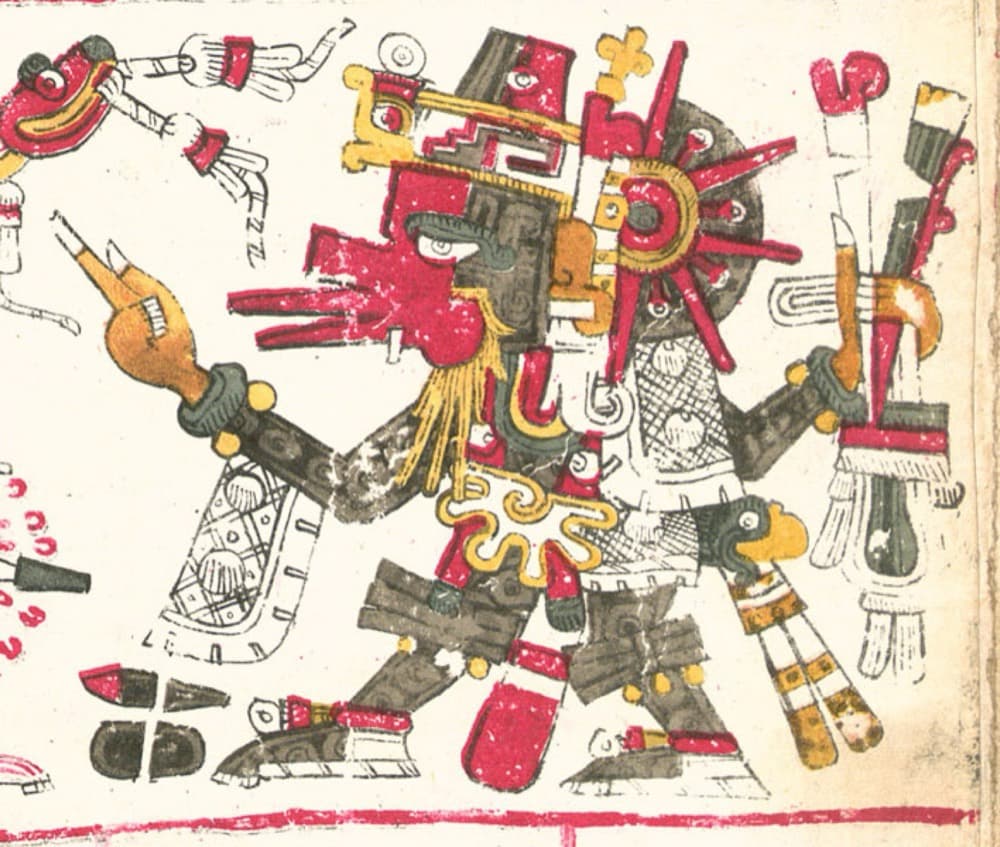
Tlaloc is among the oldest gods of the Valley of Mexico, worshipped at Teotihuacan and Tula long before the Aztecs inherited his mask: rings of coiled serpents around the eyes, jaguar fangs at the mouth, face painted blue-black beneath a heron-feather crest. He commands rain, lightning, and hail through the Tlaloque, his dwarfish helpers who dwell on the mountaintops of the four directions and pour rain from clay jars — thunder is the crack of a breaking jar. The rains of the four quarters differ: the eastern rain feeds the crops, while the others carry frost, blight, and drought. Tlaloc ruled the Third Sun, the age that ended in a rain of fire.
The drowned, the lightning-struck, and those dead of dropsy and other watery diseases bypassed Mictlan for Tlalocan, his evergreen paradise of endless maize, squash, and amaranth; such dead were buried rather than cremated. At the Templo Mayor his northern shrine stood beside Huitzilopochtli's southern one — rain and war, the empire's two pillars, sharing a single pyramid.
In the dry-season festival of Atlcahualo, priests offered small children at mountain sanctuaries, and their tears were read as an omen of abundant rain; the Florentine Codex records the rite without euphemism. On the summit of Mount Tlaloc, about 4,120 meters above sea level east of Mexico City, a stone causeway still leads into his walled open-air precinct, one of the highest archaeological shrines in the Americas. Since 1964 a colossal unfinished statue of the rain god from Coatlinchan, weighing some 168 tons, has stood before the National Museum of Anthropology in Mexico City.