THE STORY & ITS AFTERLIVES
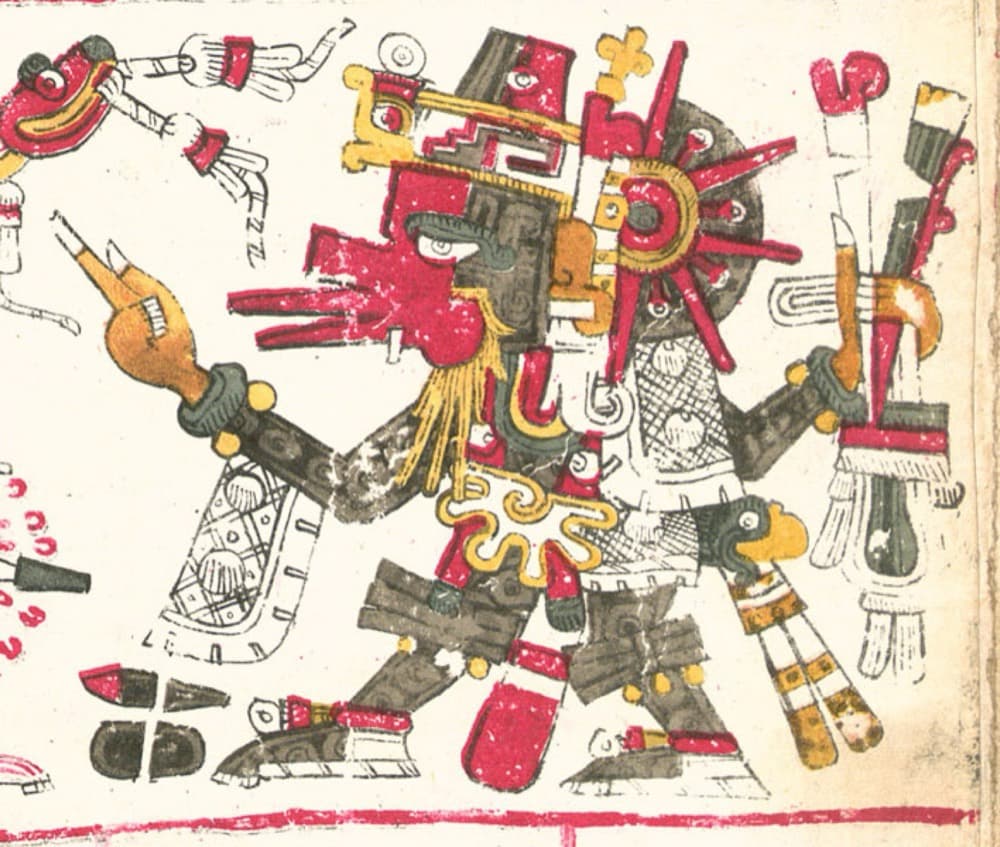
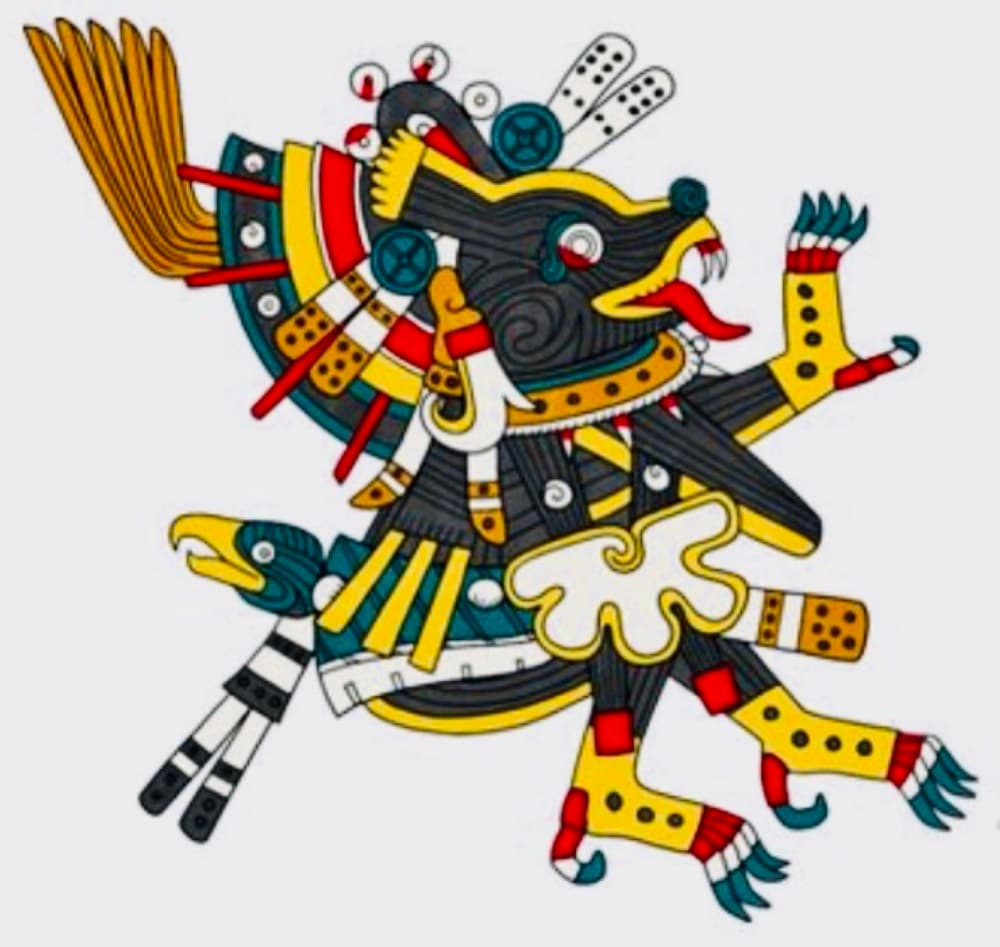
Mictlantecuhtli rules Mictlan, the land of the dead, as a blood-spattered skeleton or a figure in a skull mask, crowned with owl feathers and paper banners, with human bones for ear ornaments. He sits beside his wife Mictecacihuatl in the ninth and lowest layer of the underworld, attended by spiders, bats, centipedes, and owls. All who died ordinary deaths — not in battle, not by water — came to him: a four-year journey past clashing mountains, a wind of obsidian blades, and eight deserts, until a yellow dog carried the soul across a broad river to his throne, where the grave goods were surrendered and the soul dissolved into rest. For this ferrying, dogs were often buried with the dead.
His most famous tale is a contest of wits with Quetzalcoatl, who descended after the Fourth Sun to claim the bones of the previous humanity. Mictlantecuhtli first demanded the impossible: sound a conch trumpet with no holes. Quetzalcoatl called worms to bore it and bees to roar inside. Feigning consent, the death lord had a pit dug in the god's path; a quail startled him, he fell senseless, and the bones broke and scattered. Quetzalcoatl fled with the fragments, from which the gods, bleeding themselves into the ground bone-meal, shaped the present human race — people stand tall and short, it was said, because the bones had shattered.
His rites were held at night and in chambers below the temples. In 1994 archaeologists found two life-size clay statues of Mictlantecuhtli in the House of Eagles beside the Templo Mayor: skull-faced, claws thrust forward, the liver hanging free below the ribs — the organ the Aztecs held to house the breath-soul ihiyotl. The skull imagery of Mexico's Day of the Dead is often traced back to the cult of Mictlantecuhtli and Mictecacihuatl.