THE STORY & ITS AFTERLIVES
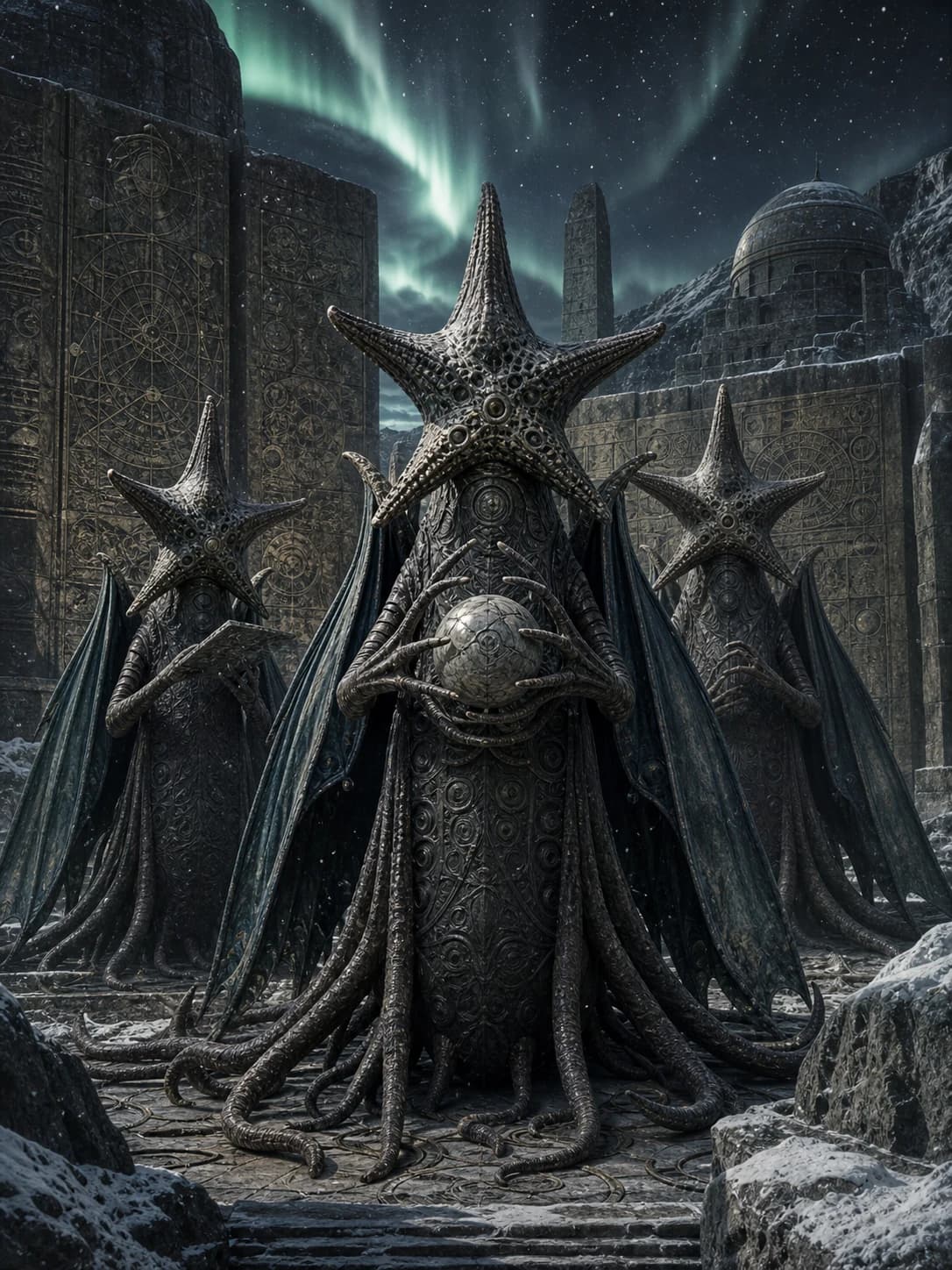
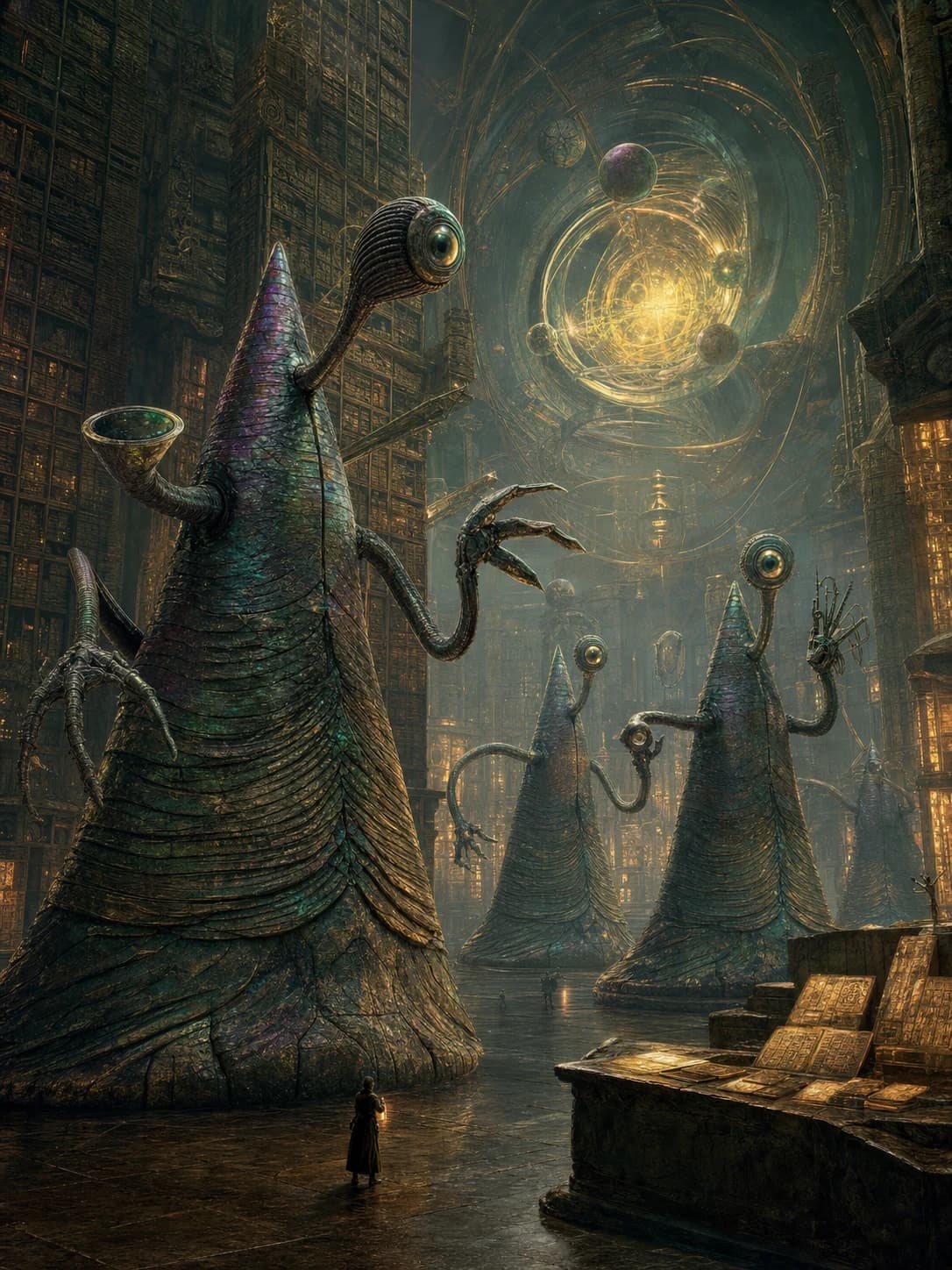
The Mi-Go move through the flooded hills of Vermont in “The Whisperer in Darkness.” Their bodies combine pinkish shell, fungoid tissue, and membranous wings ill suited to Earth’s atmosphere but useful for travel through interstellar ether. Lovecraft transfers “Mi-Go,” a Himalayan name associated with the abominable snowman, to this alien people. They come from Yuggoth to mine unusual materials and maintain a concealed network with selected human collaborators.
Their most disturbing instrument is the brain cylinder. A living human brain can be removed, joined to sensory apparatus, and transported toward planets a body could never reach. To the Mi-Go this may constitute travel, preservation, or even a favor. To the invited human, a voice issuing from a metal canister has no face by which any promise can be tested. The story does not reduce them to demons. They possess science, diplomacy, and purposes of their own; it is simply that human ideas of personhood, embodiment, and consent become terrifyingly fragile upon an operating table built by a civilization between stars.