THE STORY & ITS AFTERLIVES
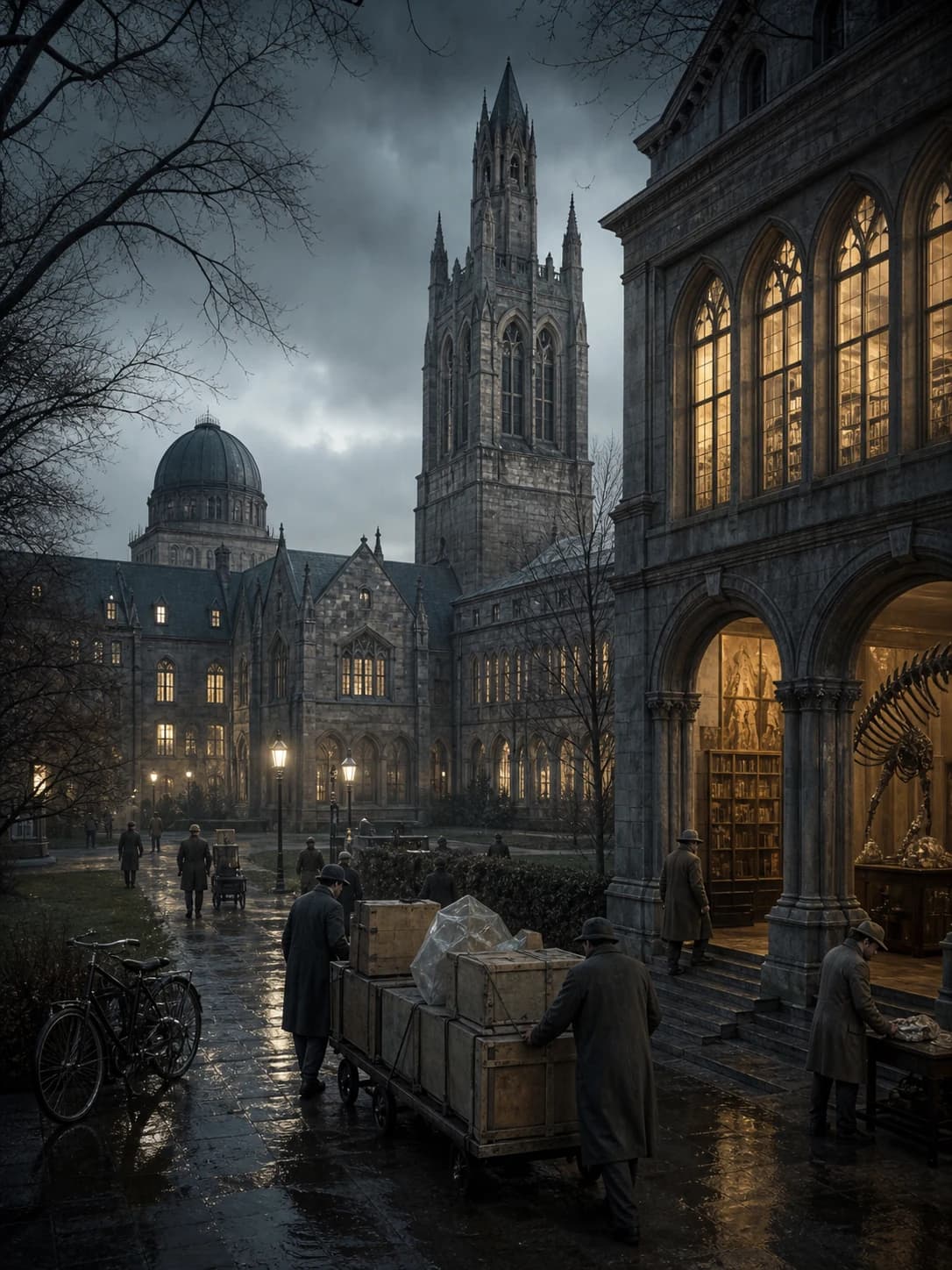
The Necronomicon is attributed to the Yemeni poet Abdul Alhazred, who supposedly titled it Al Azif after the nocturnal sound of desert insects interpreted as demonic speech. Its invented history includes Greek and Latin translations, suppression, burning, and copies hidden in a handful of institutions such as Miskatonic University. Lovecraft wrote a separate “History of the Necronomicon,” using bibliographical language to supply the imaginary book with an author, dates, translators, editions, and surviving locations.
That precision led readers to ask where a real copy could be found, while booksellers and librarians sometimes added playful catalogue records. Several modern publications have borrowed the title, but none is an ancient volume discovered or translated by Lovecraft. The Necronomicon matters because it is absent. Different writers can cite the same missing authority, making each story resemble one leaf from a larger archive. It is both a hinge for shared-world fiction and a model for modern documentary myth: credibility arises not from an object but from accumulated details about editions, lost leaves, and locked shelves.