THE STORY & ITS AFTERLIVES
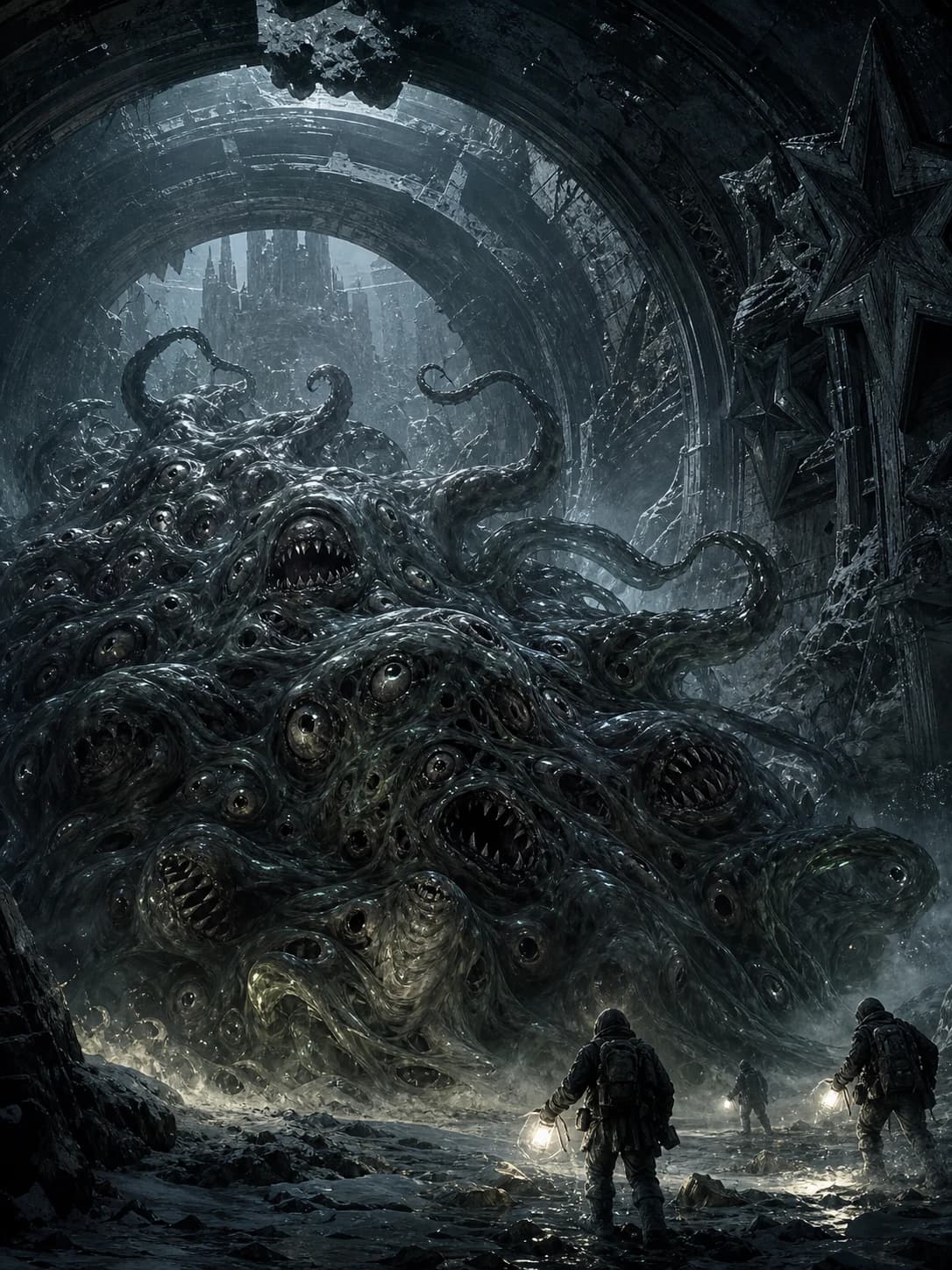
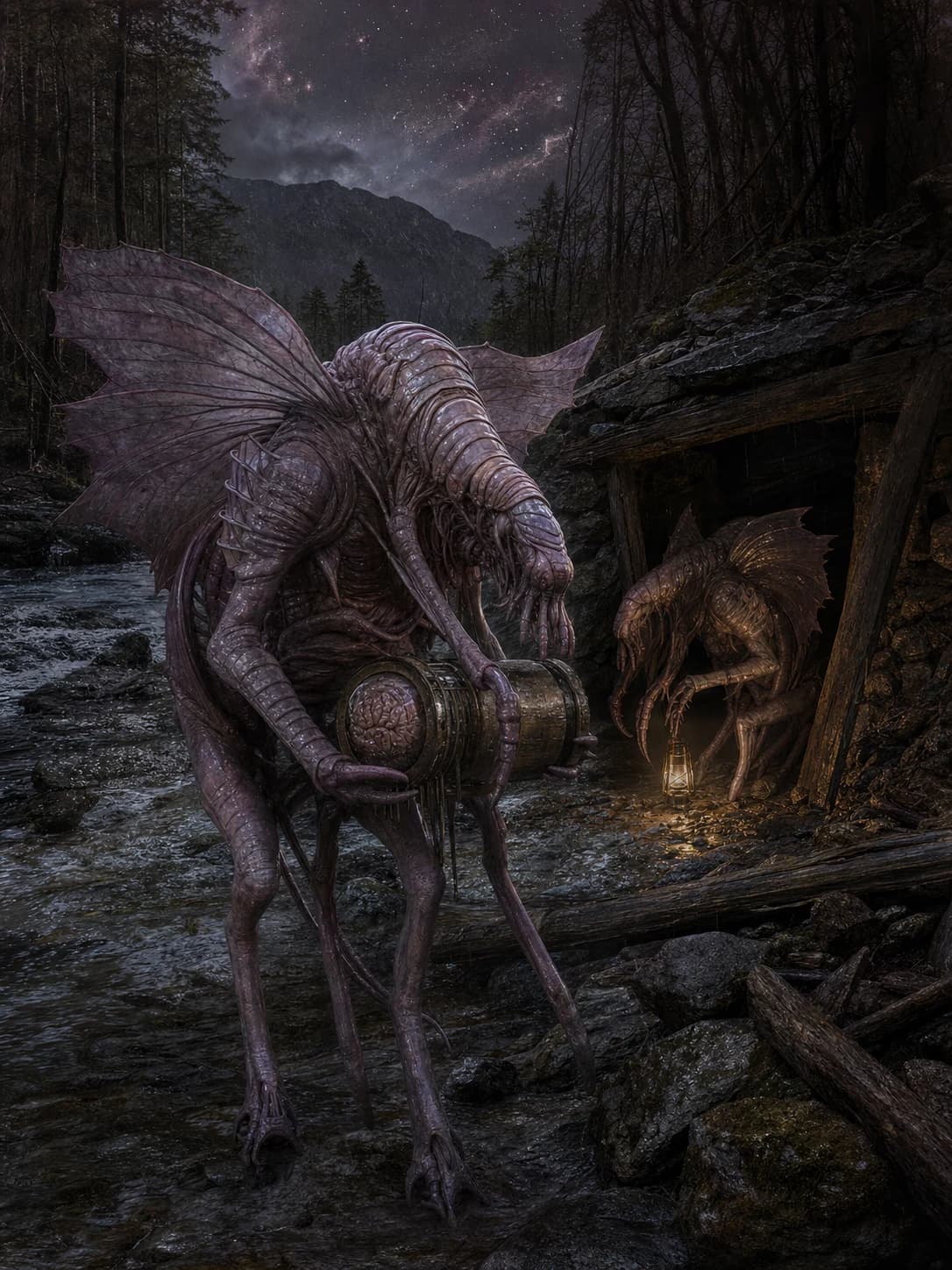
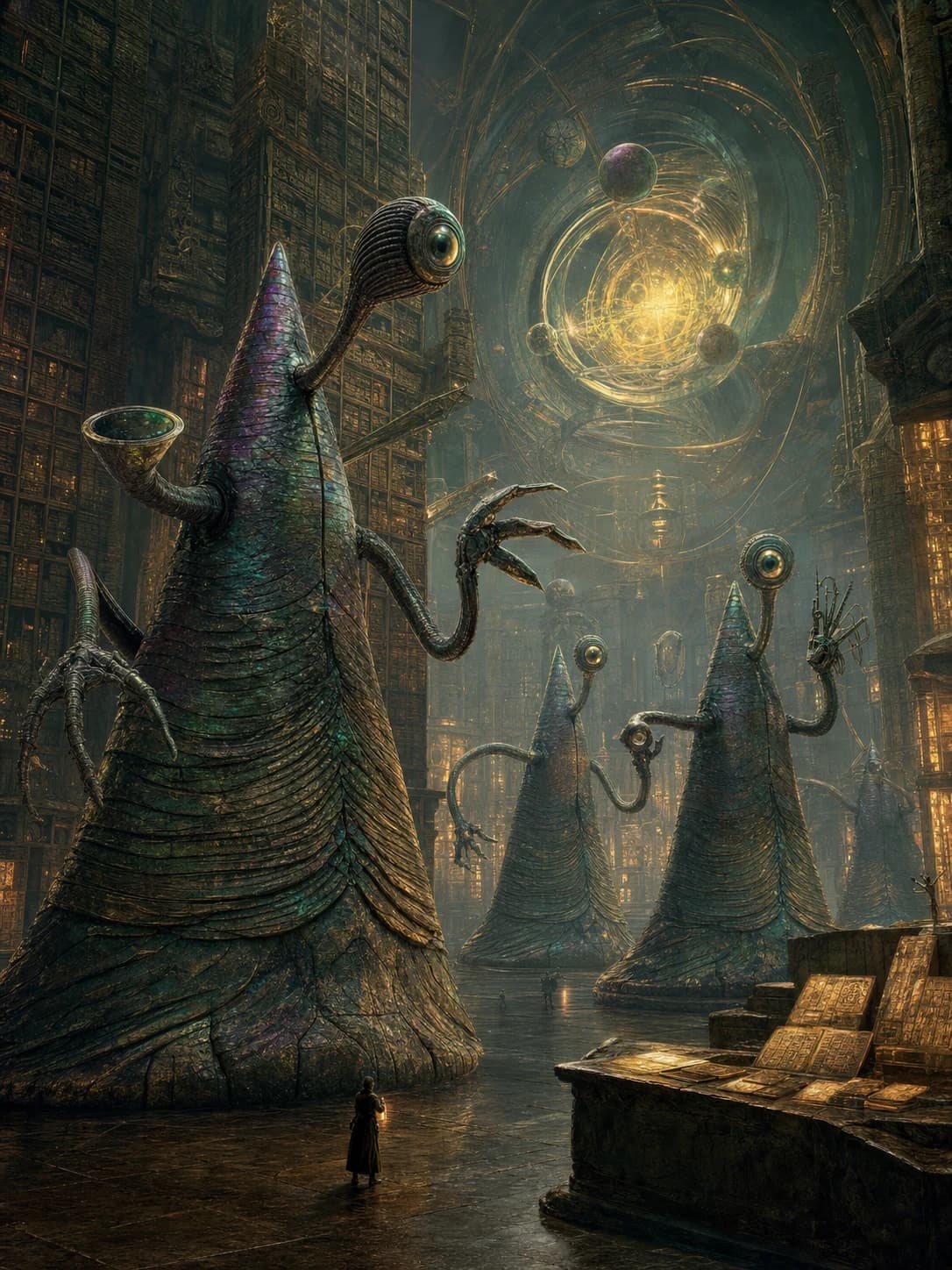
The expedition in At the Mountains of Madness finds barrel-shaped organisms beneath Antarctic ice, combining vegetal and animal features: five-pointed heads, radial limbs, and wings that fold against the body. Deeper murals in a colossal city rewrite Earth’s history as a nonhuman chronicle. The Elder Things migrated between stars, built settlements on land and undersea, cultivated or initiated early terrestrial life, and engineered shoggoths as plastic labor. Across immense ages their civilization declined; the servants learned rebellion, while climate and competing arrivals drove survivors toward the deep ocean.
Lovecraft sometimes calls them “Old Ones,” a phrase easily confused with the later taxonomic label “Great Old Ones”; “Elder Things” became the clearer conventional name. They hold a rare position in the mythos. Though vastly alien, they still build, record, migrate, wage war, and fail. Once the Antarctic scholars learn to read the murals, they even feel a brief kinship. Against the greater darkness beyond the city, these star-headed makers begin to resemble another civilization buried by time rather than a simple assembly of monsters.