THE STORY & ITS AFTERLIVES
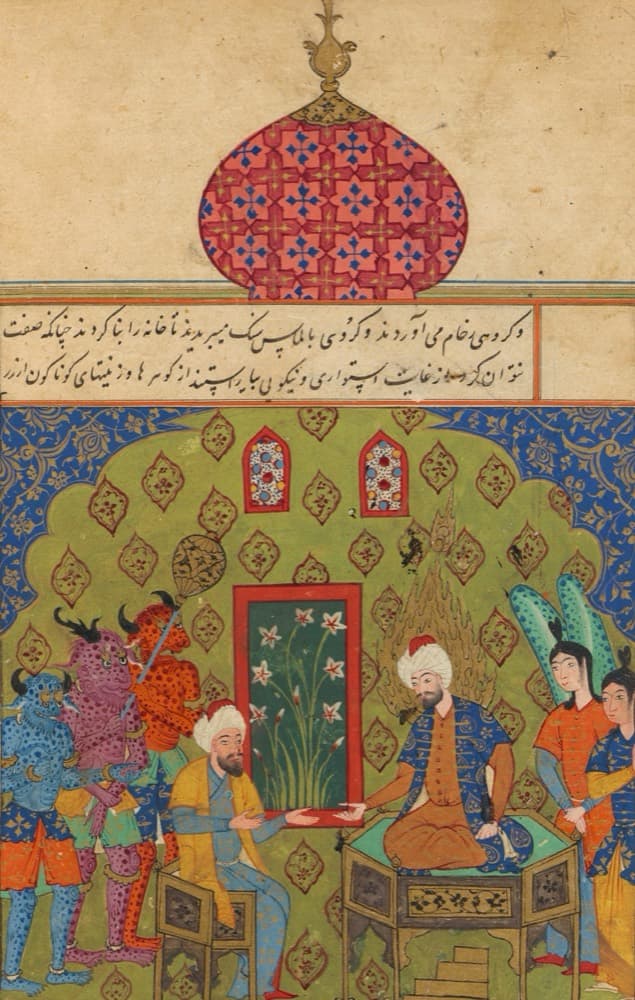
The word jinn comes from an Arabic root meaning to veil or conceal: they are the hidden inhabitants of the world, sharing it invisibly with humankind. The Quran states that God created the jinn from smokeless fire, as humans were created from clay. They eat, marry, beget children and die; they have tribes and chiefs, believers and unbelievers among them. Usually formless, they can appear as snakes, dogs, black cats or travellers, and they favour abandoned places: ruins, dry wells, bathhouses, the deep desert.
Before Islam, the Arabs of the peninsula sacrificed to jinn for protection when camping in wild valleys. Every poet was thought to have a jinni dictating his verses, the finest inspiration coming from the spirit-haunted valley of Abqar, and soothsayers claimed their jinn eavesdropped on heaven. The seventy-second chapter of the Quran, titled al-Jinn, describes a band of jinn who overhear the recitation and convert, fixing them in Islamic doctrine as rational beings alongside angels and humans, capable of faith and damnation.
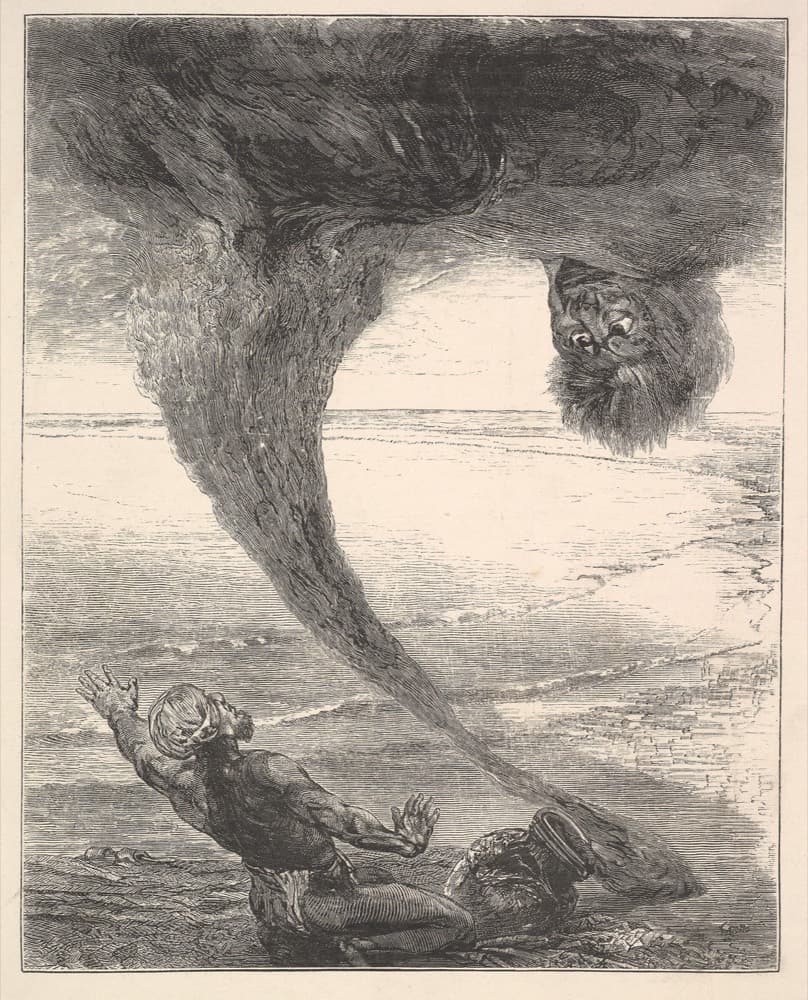
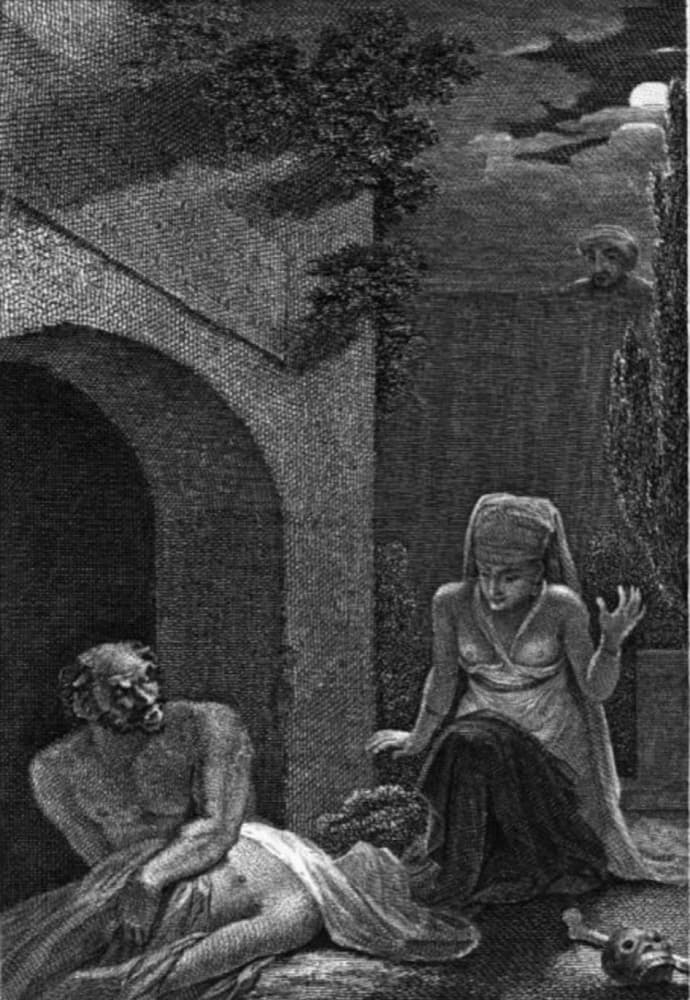
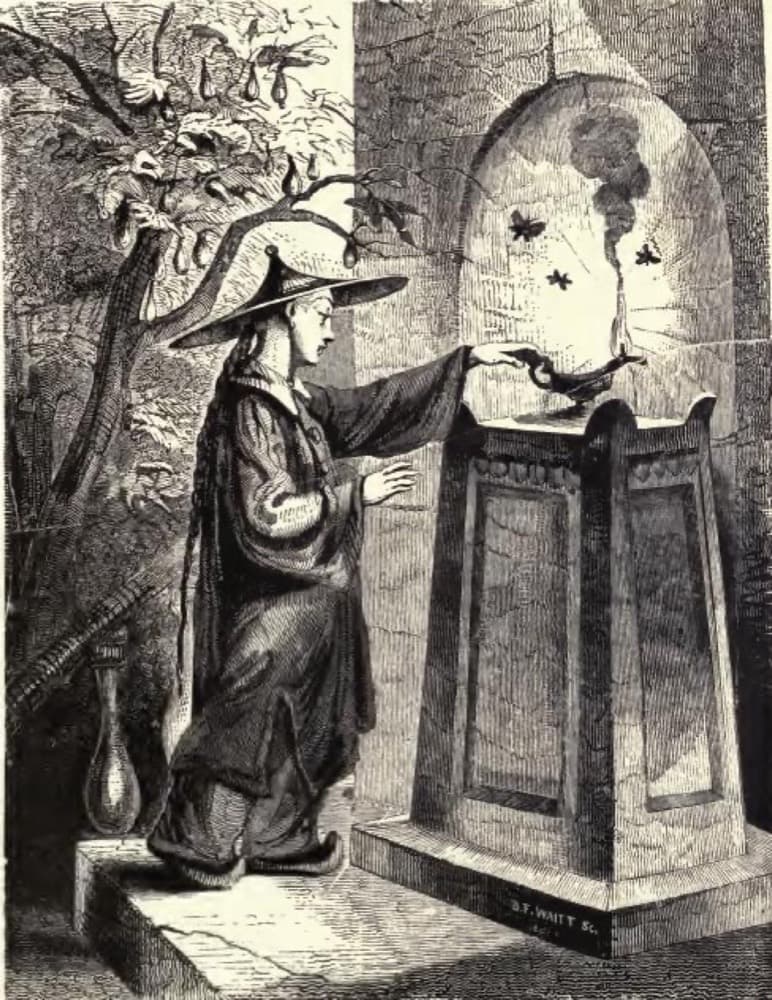
The Thousand and One Nights supplied their most durable image: wrathful spirits sealed by Solomon in brass bottles at the bottom of the sea, servants bound to rings and lamps who obey whoever holds them, jealous abductors keeping stolen brides in underground palaces. Through Antoine Galland's French translation, begun in 1704, the jinni became the European genie, and a desert terror turned into a granter of wishes.