THE STORY & ITS AFTERLIVES
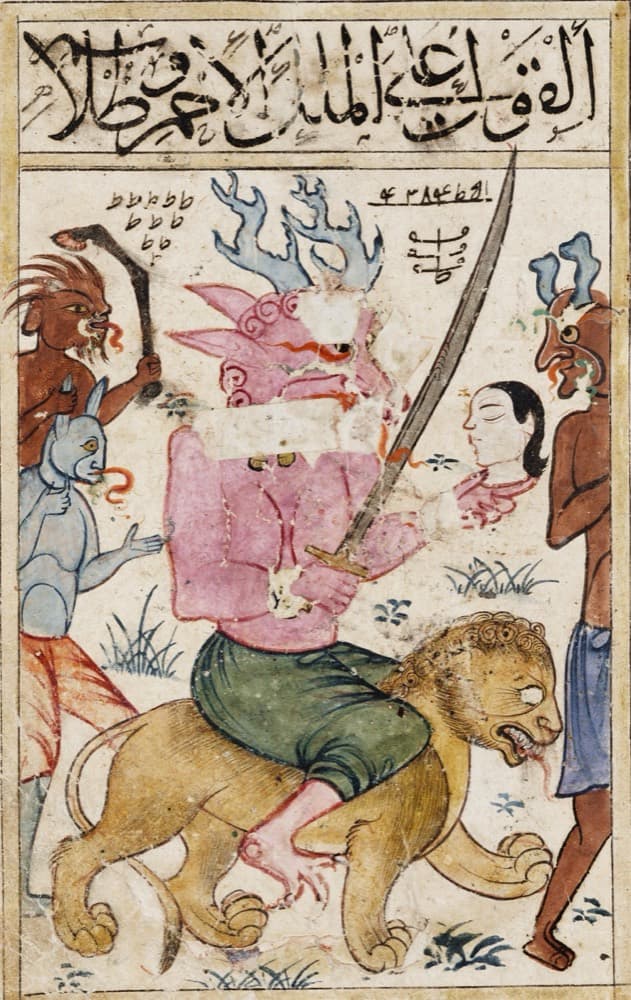
The ghul takes its name from a root meaning to seize and destroy. It haunts wastelands and ruins, a shapeshifter that most often becomes a woman beckoning to lone travellers on night roads, or kindles false campfires to draw caravans off the track, tearing into its victims once they stray close. Another strain of the tradition makes it a graveyard creature that digs up fresh burials to eat the dead. Its shape is unstable, but classical accounts give it one tell that no disguise conceals: the hooves of a donkey. The male is called qutrub, and the si'la, a kindred desert witch, was reckoned even more cunning.
The most famous encounter belongs to the sixth-century brigand-poet Ta'abbata Sharran, who claims in verse to have met a ghul on a night journey, cut it down with his sword, and lain upon the corpse until dawn: a head like a cat's, a forked tongue, legs like a misshapen foetus, the bristled back of a dog. After the rise of Islam a hadith declared 'there is no ghul'; scholars mostly read this as denying its power to lead men astray rather than its existence, and the fear survived in folk practice regardless.
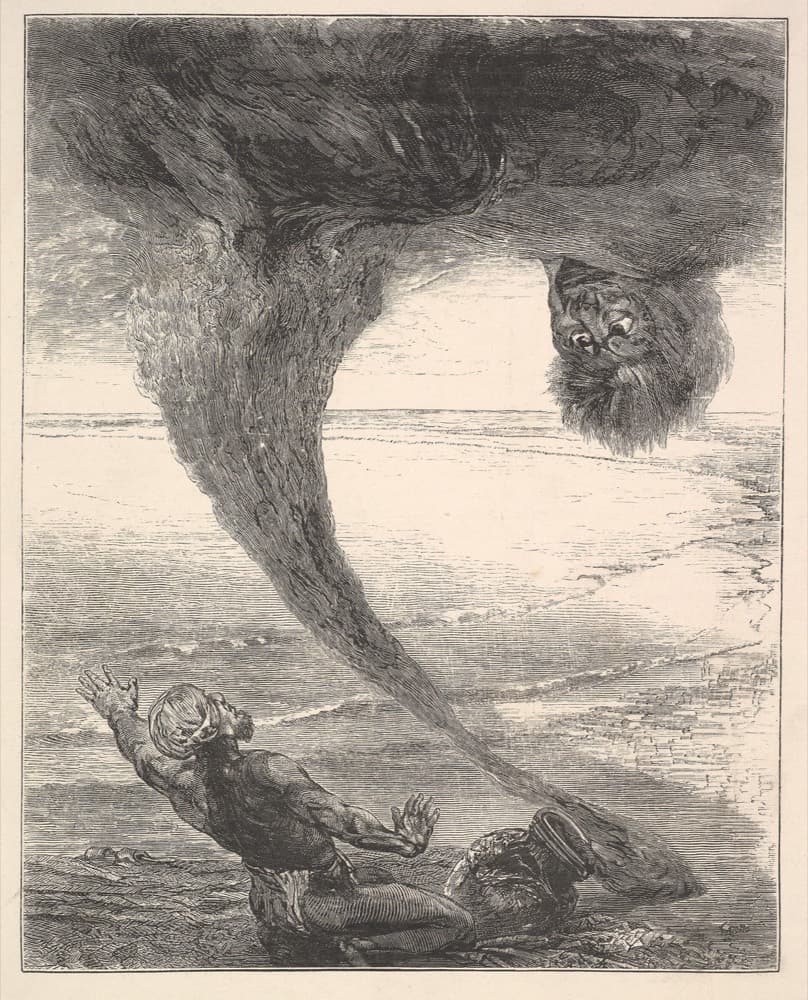
Ghouls recur throughout the Thousand and One Nights; in Galland's version of the story of Sidi Nu'man, a husband follows his wife by night and finds her sharing a corpse with a ghul among the graves. Through Galland's French and William Beckford's oriental novel Vathek (1786), the word entered English, widening into a general term for corpse-eaters, grave-robbers and gawkers at disaster.