THE STORY & ITS AFTERLIVES
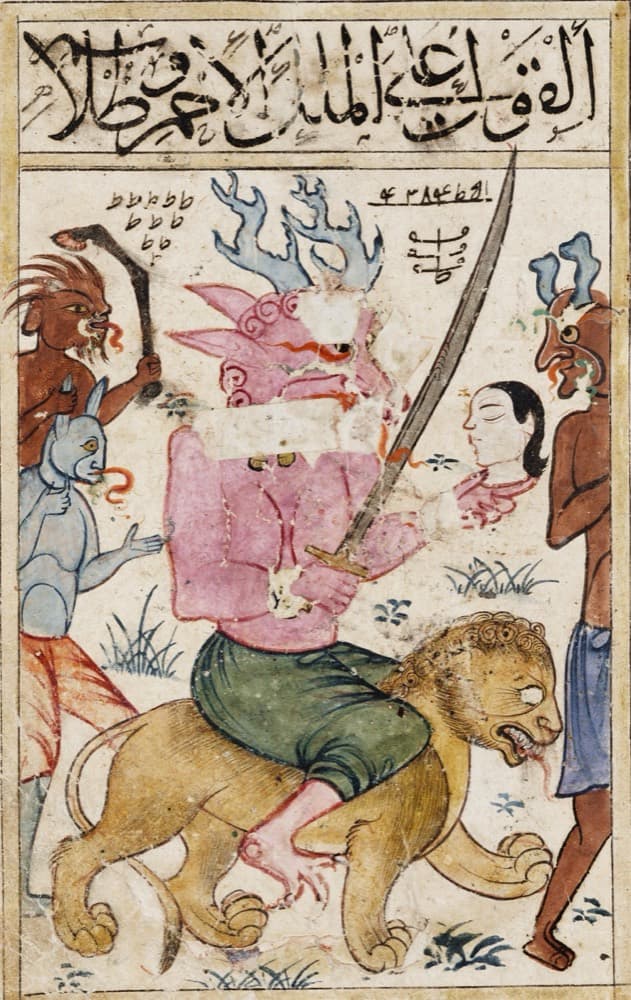
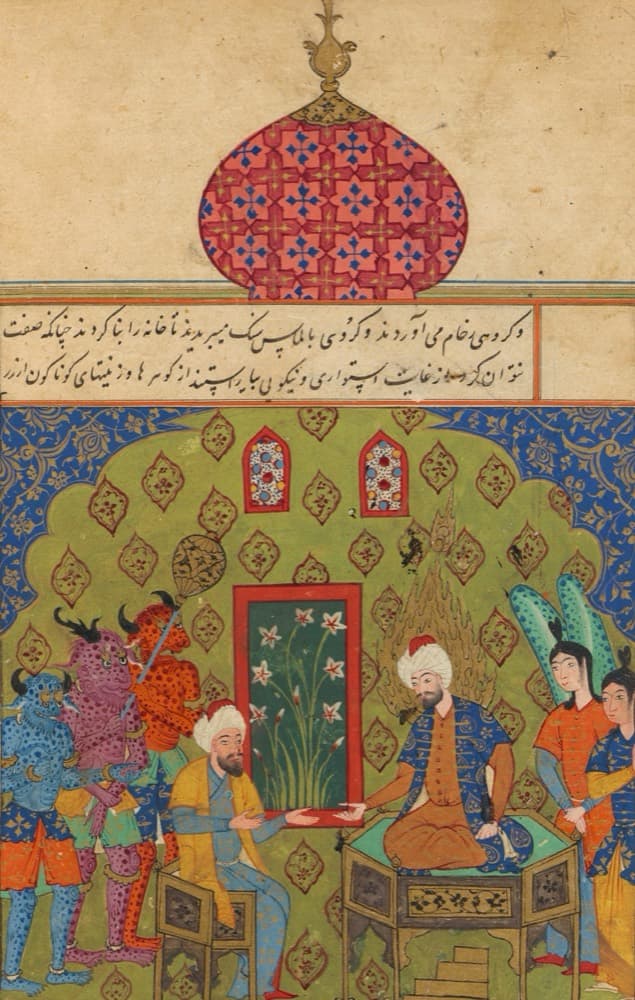
The name first appears in Quran 27:39. When Solomon asks his assembly who can bring him the throne of the Queen of Sheba, 'an ifrit of the jinn' rises and promises to deliver it before the king can stand from his seat, boasting of his strength and trustworthiness. From this single verse grew the ifrit's reputation as the powerful class of jinn: in folk rankings it stands above the common jinni, cunning, immensely strong, proud, and associated with fire and the underworld.
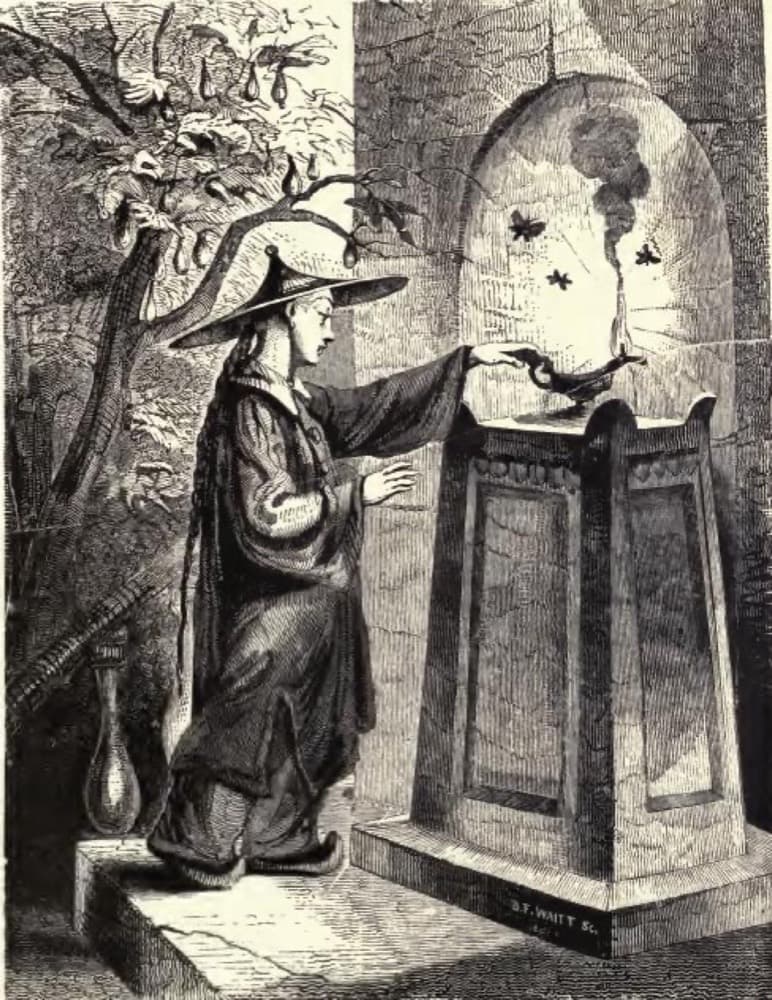
The Thousand and One Nights is the ifrit's true stage. The pillar of smoke that pours from the fisherman's brass bottle condenses into a giant with a head like a dome, who claims Solomon sealed him away eighteen centuries earlier; in the Second Dervish's tale a jealous ifrit keeps a stolen bride in an underground palace beneath a trapdoor in the wilderness, visiting every ten days. Not every ifrit in the stories is evil — some carry messages or grant favours — but their entrances always come with smoke, flame and shaking earth.
In modern Egyptian speech an afrit is also the ghost of a person violently killed, lingering where the blood was spilled; the orientalist Edward Lane recorded the usage in Cairo in the 1830s. Fantasy games have since made the ifrit a generic fire demon, horned and wreathed in flame — a modern illustrator's invention, for the classical texts never agreed on its shape.