THE STORY & ITS AFTERLIVES
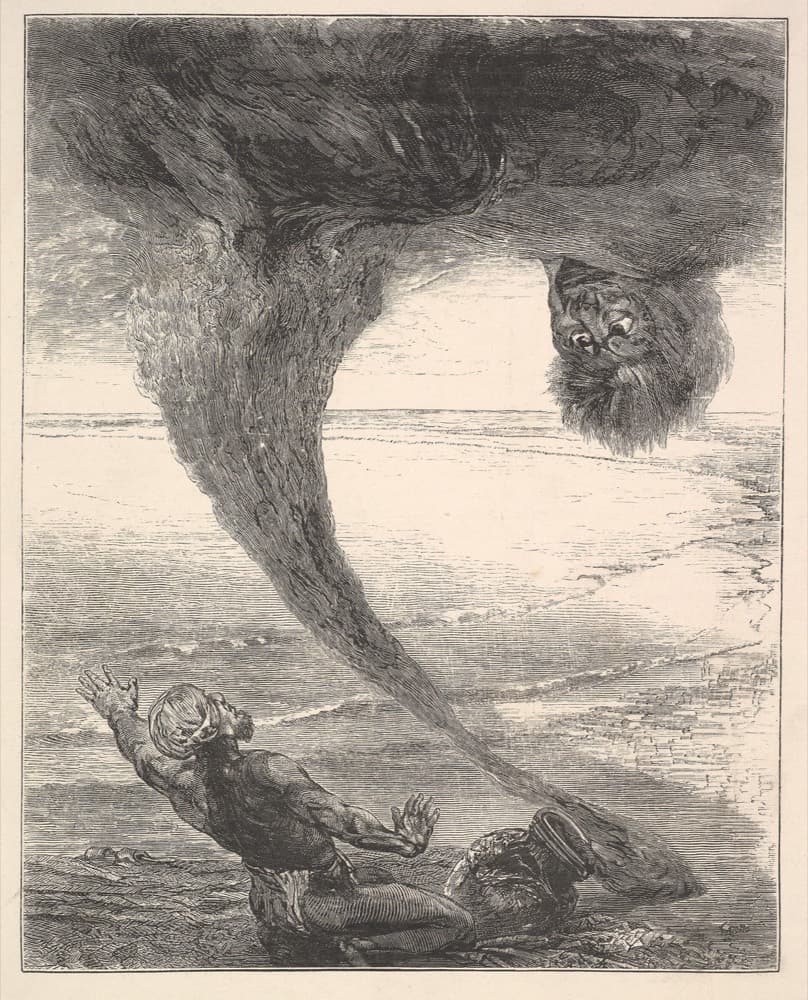
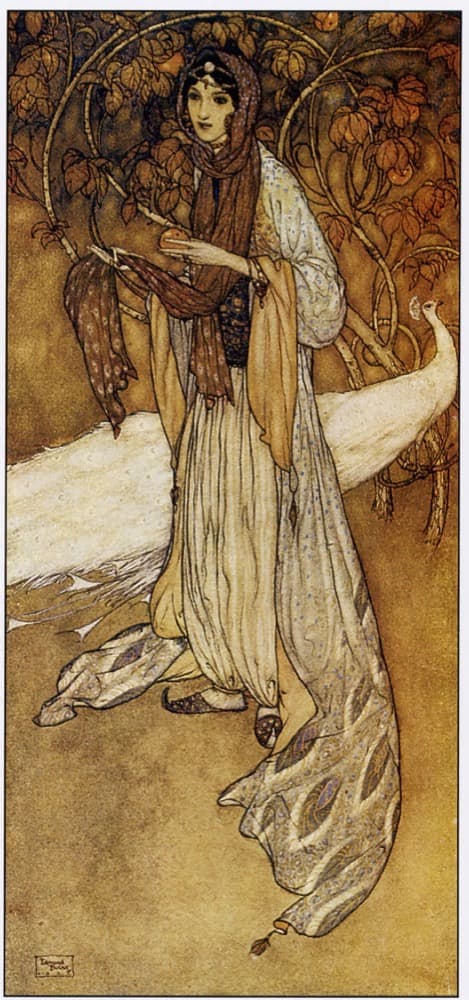
The tale runs: in a city of 'China' lives Aladdin, a tailor's idle son. A Maghribi sorcerer arrives posing as his uncle, leads him outside the walls, opens an underground treasure cave by incantation, and asks only that the boy fetch an old oil lamp from its lowest chamber. Aladdin stuffs his clothes with jewels, quarrels with the sorcerer at the cave mouth, and is sealed underground. Rubbing the ring the sorcerer had lent him, he summons the jinni of the ring and escapes; at home his mother scours the dirty lamp to sell it, and a far mightier jinni erupts from it. Rubbing the lamp now grants anything: Aladdin marries the princess Badr al-Budur and raises a jewelled palace overnight, loses everything when the sorcerer cries 'new lamps for old' and spirits palace and princess to the Maghrib, and wins it all back through the forgotten ring.
Famous as it is, the story appears in no early Arabic manuscript of the Nights. In May 1709 Hanna Diyab, a Maronite Syrian from Aleppo, told it in Paris to the translator Antoine Galland, who noted it in his diary and worked it into volumes nine and ten of his French version (1712). Scholars call these the 'orphan tales' — Ali Baba is another. Diyab's own memoir, written in 1763, was re-identified in the Vatican Library in the late twentieth century, and the young traveller's dazzled view of Paris is thought to colour the tale's rags-to-riches splendour.
The lamp became the very shape of the wish. Pantomime played it for two centuries; Disney's 1992 film painted the genie blue and gave him Robin Williams's patter. The old oil lamp remains the most recognisable trademark of the Thousand and One Nights — strictly speaking, its latest-arriving piece of luggage.