THE STORY & ITS AFTERLIVES
Everything ancient we have on Atlantis comes from two dialogues Plato wrote around 360 BCE, the Timaeus and the unfinished Critias. The tale is attributed to the statesman Solon, who supposedly heard it from priests at Sais in Egypt: nine thousand years earlier, beyond the Pillars of Heracles, lay an island larger than Libya and Asia combined, ruled by descendants of Poseidon. The Critias describes a capital ringed by three circular canals and two ring-shaped belts of land, its walls sheathed in bronze, tin, and the legendary metal orichalcum, with elephants roaming the island and harbours crowded with shipping.
In Plato's account the ten kings of Atlantis invaded the Mediterranean and were repelled by primeval Athens; soon afterwards violent earthquakes and floods sank the whole island in a single day and night, leaving an impassable shoal of mud. Many ancient writers treated the story as a philosophical fable about the ideal state, and no ancient geographer ever charted it.
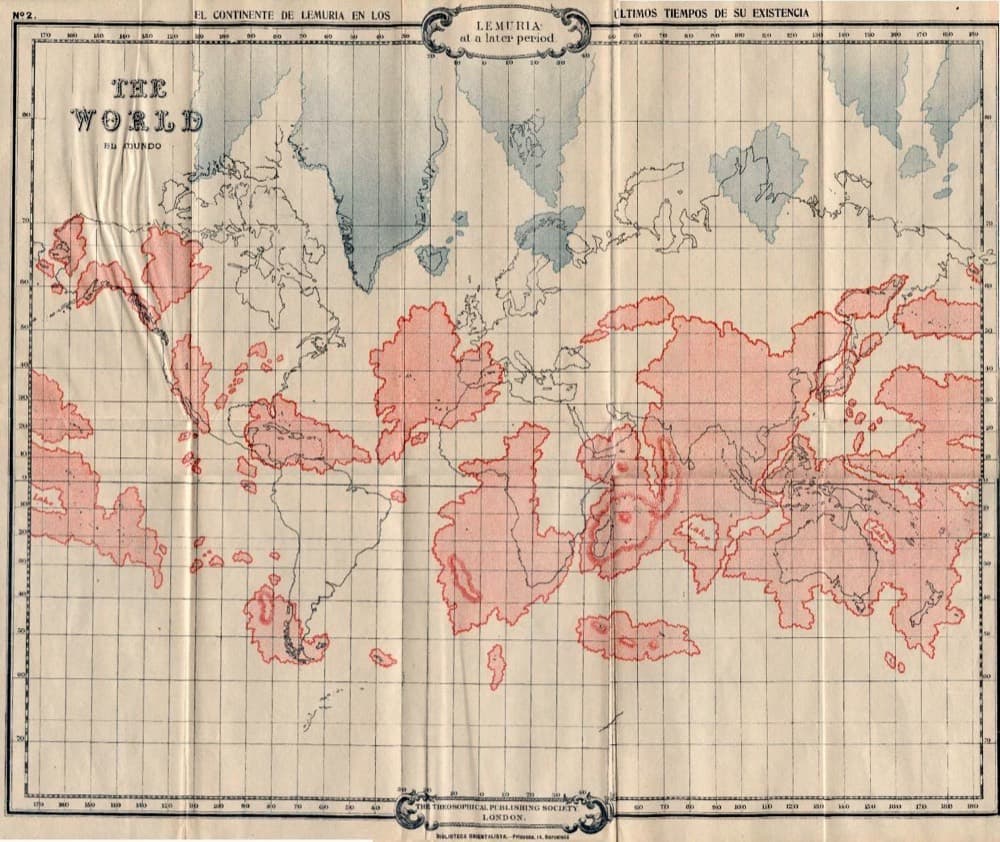
The modern legend begins in 1882, when the American congressman Ignatius Donnelly published Atlantis: The Antediluvian World, casting the island as the mother of all civilizations; Helena Blavatsky's Theosophy then folded it into her scheme of root races. Scholars today often point to the Bronze Age eruption of Thera around 1600 BCE, which devastated Minoan Crete, as a possible seed of the story, but outside Plato's text no independent ancient evidence exists.