THE STORY & ITS AFTERLIVES
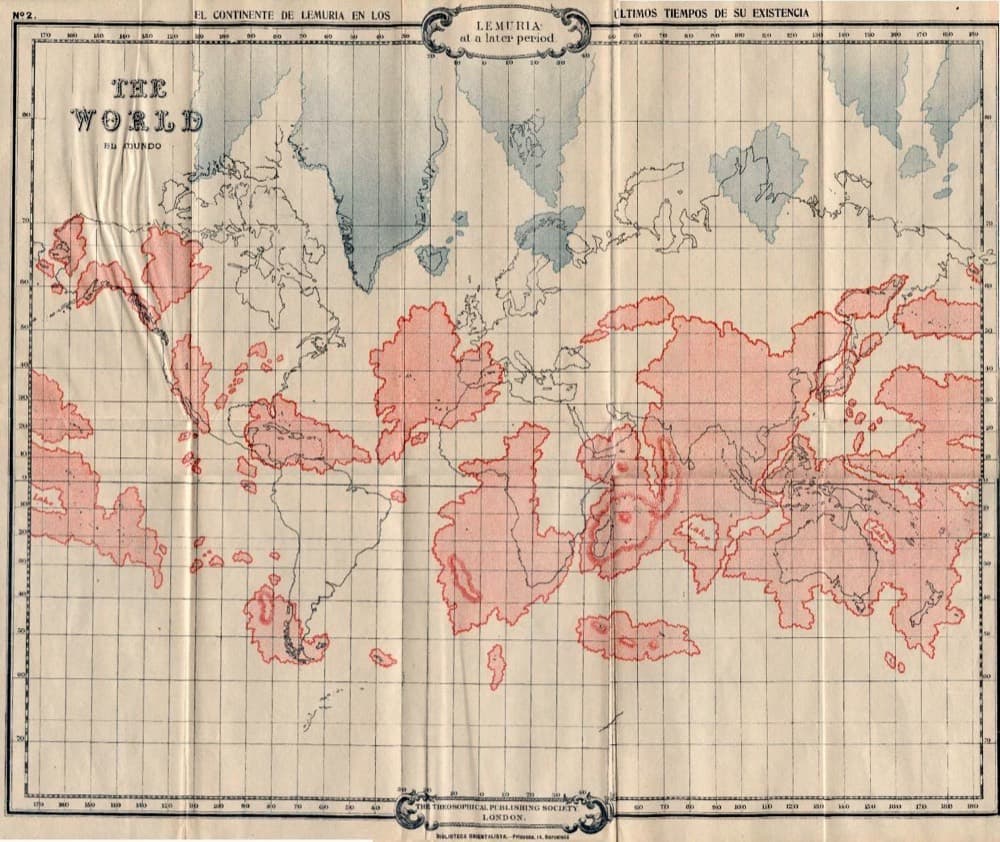
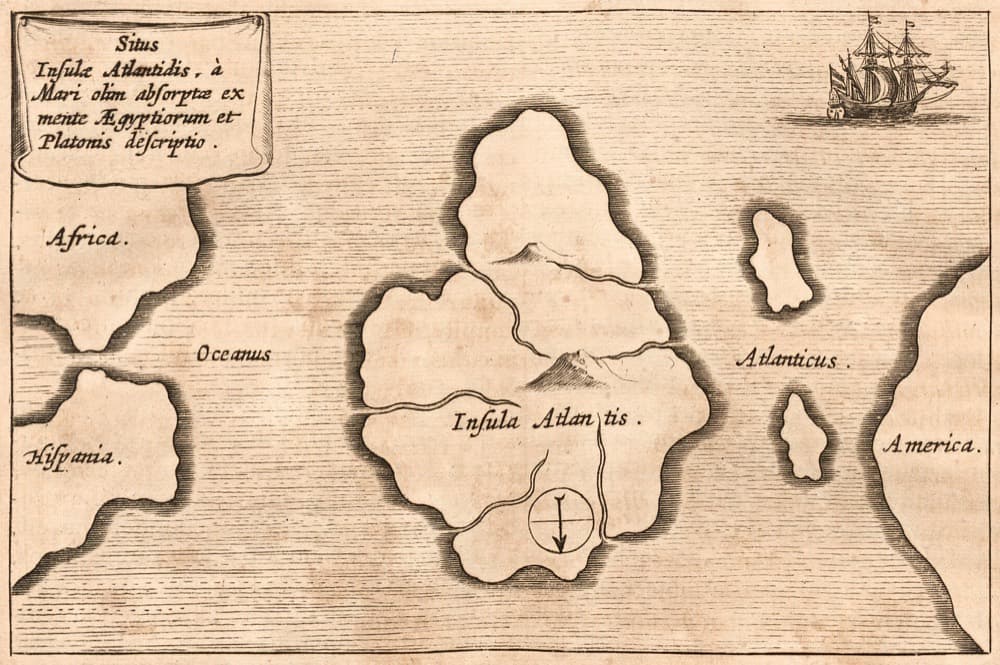
The modern Mu narrative developed through nineteenth-century misreadings of Maya texts. In 1869-70 the French abbé Brasseur de Bourbourg published a reading of the Troano Codex (part of the Madrid Codex) misusing Bishop Diego de Landa's recorded "Maya alphabet", claimed to find in it the record of a land destroyed by catastrophe, and assembled two undecipherable glyphs into its name, Mu. The photographer Augustus Le Plongeon then announced that Queen Móo of Mu had fled to Egypt and founded Nile civilization, placing the continent in the Atlantic, nearly on top of Atlantis.
In 1926 the Anglo-American writer James Churchward published The Lost Continent of Mu and rewrote the story wholesale. He claimed that as a young man in India a temple priest had taught him to read the "Naacal tablets", which revealed a continent some eight thousand kilometres wide spanning the central Pacific, home to sixty-four million people, swallowed overnight by volcanoes and collapsing land twelve thousand years ago; Easter Island's statues and the islands of Polynesia were its remnants. These claims lack independently verifiable evidence.
Mu belongs to modern lost-civilization literature; its maps and numerical claims do not establish its existence. Nor is it accurate to rule out all submerged continental crust in the Pacific: geological research supports Zealandia, a largely submerged continent in the southwest Pacific. That finding does not establish Churchward’s Mu or its civilization.