THE STORY & ITS AFTERLIVES
The Thunderbird is among the most widely shared figures in Native North American tradition, told of from the Northwest Coast through the Great Lakes to the Plains. The common frame: an immense raptor dwells on high peaks or above the clouds; the beat of its wings rolls out as thunder, the opening and closing of its eyes flashes as lightning, and the first storms of spring announce its return. The Lakota know it as Wakíŋyaŋ, one of the sixteen aspects of Wakan Tanka, dwelling on a mountain in the far west where the sun sets; a person who dreams of the thunder beings must become a heyoka, a sacred clown whose contrary behavior carries the thunder's power for the people.
On the Northwest Coast, the Kwakwaka'wakw, Nuu-chah-nulth, and their neighbors tell of the Thunderbird's battles with whales: it plunges from its mountain, seizes a killer whale in its talons, and carries it home to eat, scattering whale bones across the heights. Geologists have noted how closely these narratives track the great earthquakes and tsunamis of the Cascadia fault, and the rupture of 1700 may survive within them. In Ojibwe the bird is animikii, and the Thunderbird clan remains an important Anishinaabe clan today.
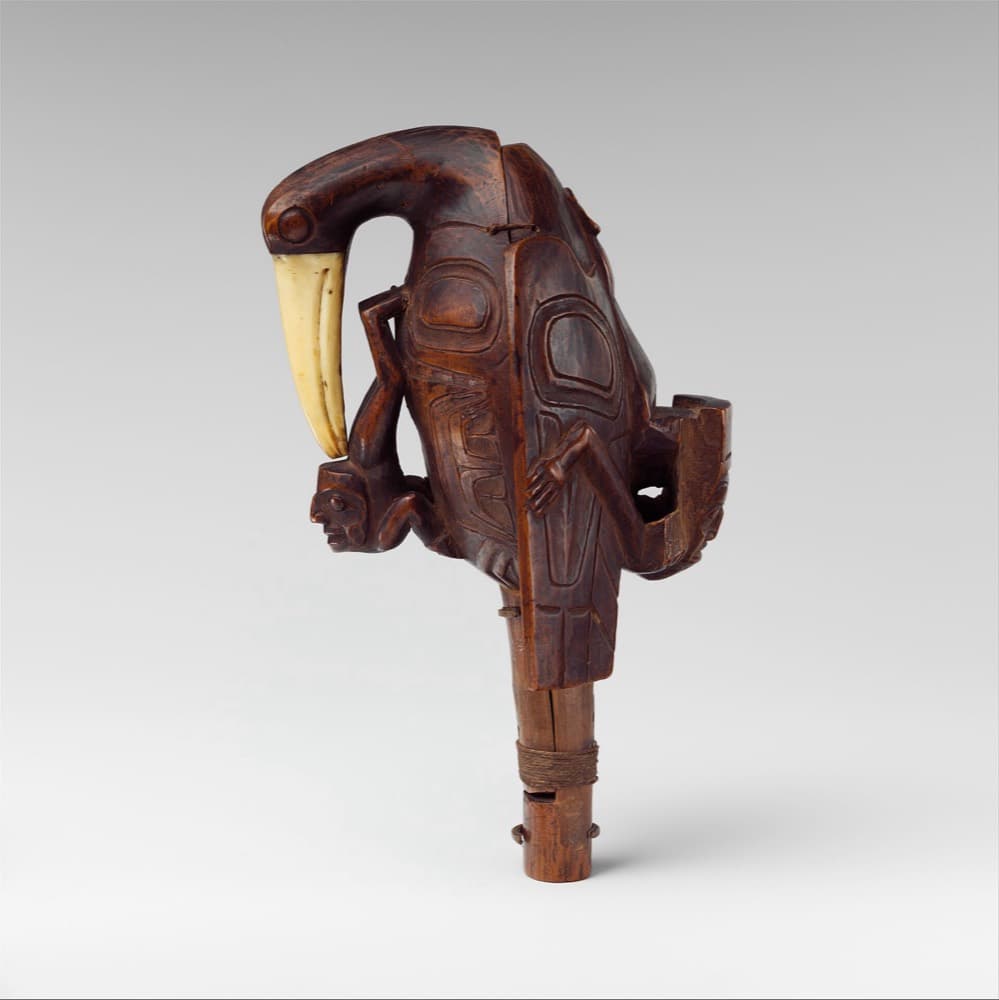
The spread-winged Thunderbird crowns totem poles along the coast and has passed into modern visual culture, lending its name to aircraft, automobiles, and sports teams, while remaining a living presence in ceremony and clan life.