THE STORY & ITS AFTERLIVES
Among the rainforest peoples from southeast Alaska down the British Columbia coast, Raven (Xhuuya in Haida, Yéil in Tlingit) is the chief shaper of the present world. Greedy, cunning, and never satisfied, he built the order of things almost by accident, piece by piece, while pursuing his own appetites: light, fire, the tides, and the salmon in the rivers were mostly stolen or swindled into being.
The most famous story is the theft of light. The world lay in darkness, the sun, moon, and stars locked in boxes in the house of an old chief. Raven turned himself into a hemlock needle floating in the basket of the chief's daughter as she drank; she conceived, and he was born as the old man's adored grandson. Crying for the boxes one by one, he released the stars and the moon, then seized the sun and flew out through the smokehole to scatter light over the world; the soot of that escape is why the raven is black. The Haida also tell that after the great flood receded, Raven heard small voices inside a giant clamshell at Rose Spit on Haida Gwaii and coaxed the frightened little beings out: the first humans.
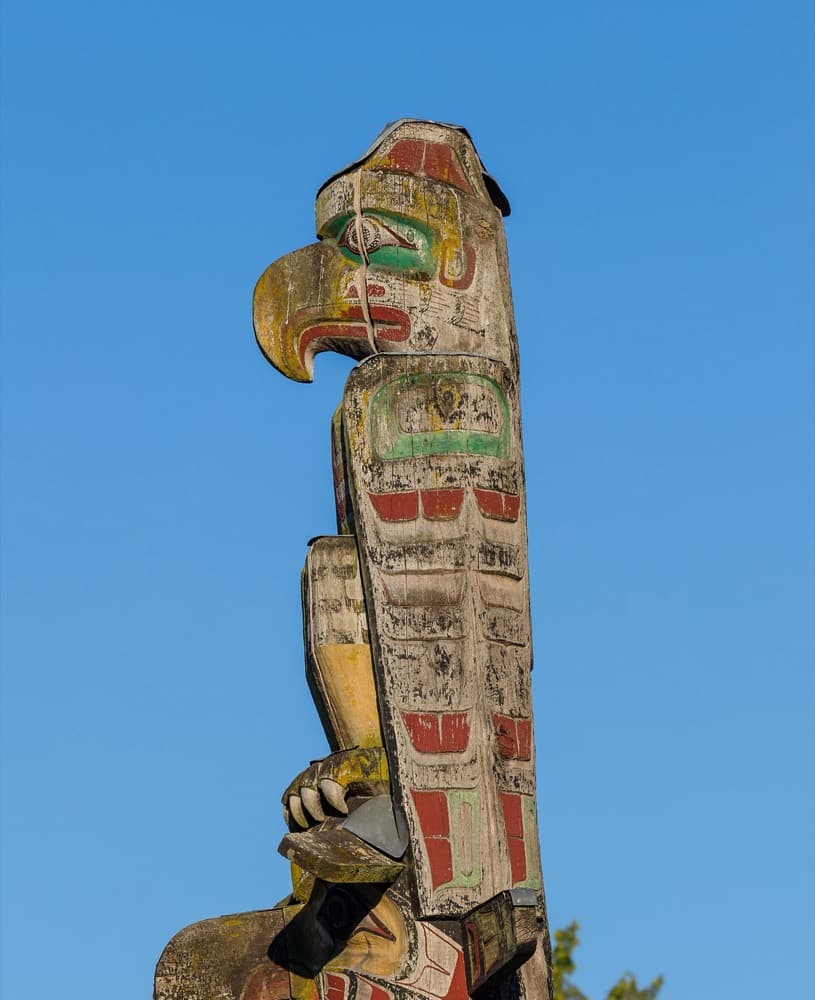
Raven and Eagle (or Wolf) form the two moieties of Northwest Coast society, still governing marriage and inheritance among the Haida and Tlingit. Bill Reid's monumental cedar carving The Raven and the First Men (1980) renders the clamshell scene, and stands in the Museum of Anthropology at the University of British Columbia in Vancouver.