THE STORY & ITS AFTERLIVES
Nanabozho (also Nanabush or Wenabozho) is the central figure of the oral traditions of the Anishinaabe peoples of the Great Lakes: the Ojibwe, Odawa, and Potawatomi. Born of the spirit of the West Wind and Wenonah, a human woman, and raised by his grandmother Nokomis, he changes shape at will and most often takes the form of a great hare, which is why early French missionaries recorded him as Michabou, the Great Hare. He is trickster and benefactor in one body: he stole fire for the people, gave the animals and plants their names, and founded the Midewiwin medicine society, yet a whole cycle of stories shows him undone by his own appetite and schemes.
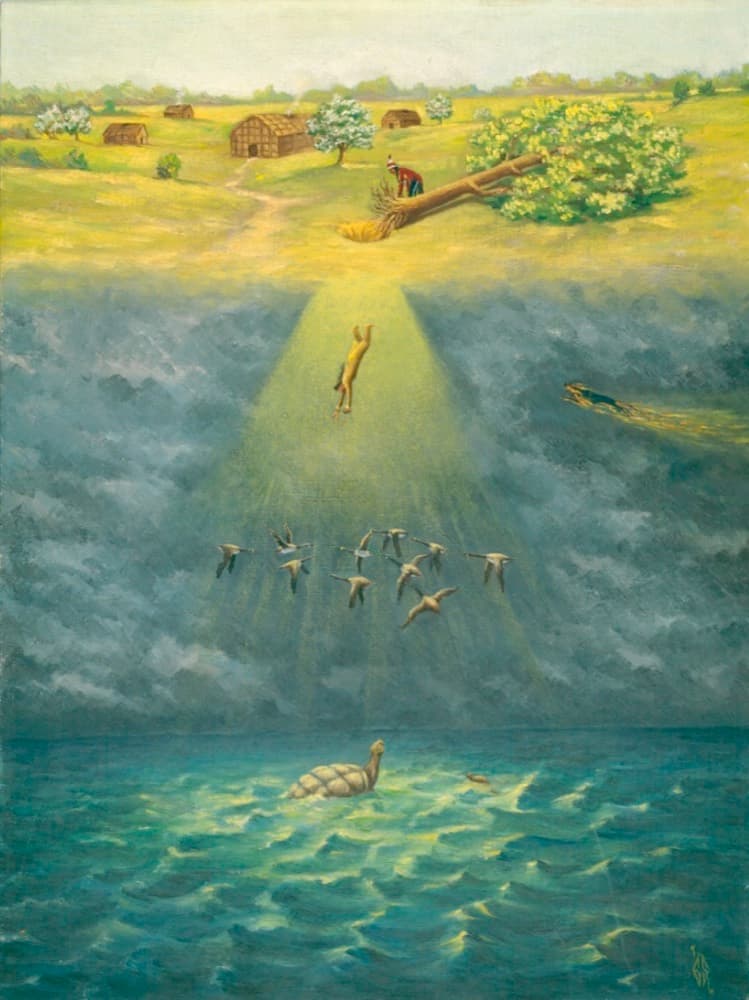
His greatest deed is remaking the world after the flood. When the underwater spirits killed his wolf brother, Nanabozho wounded their chief in revenge, and the waters rose over the earth. Clinging to driftwood, he asked the water animals to dive for soil: loon, otter, and beaver each surfaced dead, until the little muskrat went down and floated up lifeless with a few grains of earth clenched in its paw. Nanabozho spread the earth on the back of the great turtle and breathed it into growth, making the land of today, Turtle Island, still a Native name for North America.
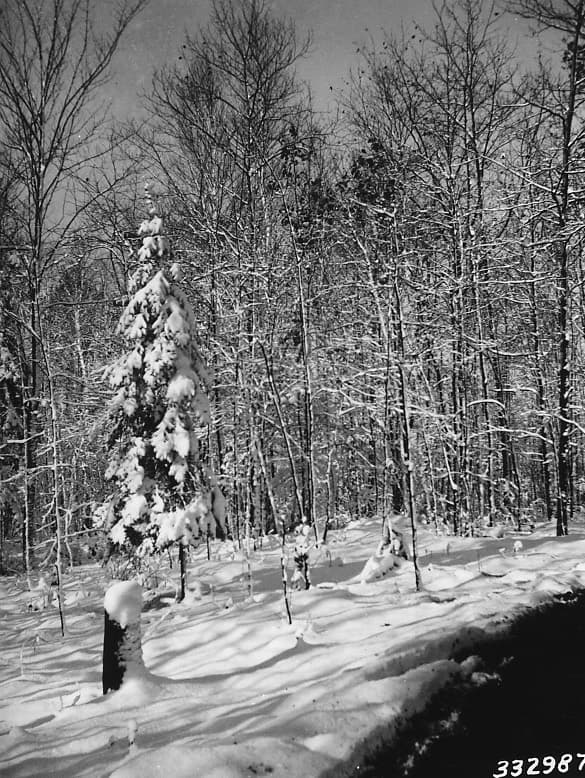
In 1839 Henry Rowe Schoolcraft, who worked alongside his Ojibwe wife Jane Johnston, recorded many Nanabozho stories in Algic Researches; Longfellow drew on them for The Song of Hiawatha (1855) but attached the Iroquois name Hiawatha to the Anishinaabe hero, a confusion that persists. In Anishinaabe communities, Nanabozho stories are traditionally told only when snow lies on the ground.