THE STORY & ITS AFTERLIVES
Coyote stands at the center of the oral traditions of dozens of peoples across the Plains, Plateau, Great Basin, California, and the Southwest. He usually walks the world as a talking coyote, sometimes as a man, and carries two faces at once: creator and buffoon. Many nations tell how he stole fire for human beings, taught the arts of fishing, and destroyed the monsters that plagued the land; in the same story cycles he ruins everything through gluttony, lust, or envy, dies scalded, crushed, or drowned, and is whole again by morning so the stories can go on.
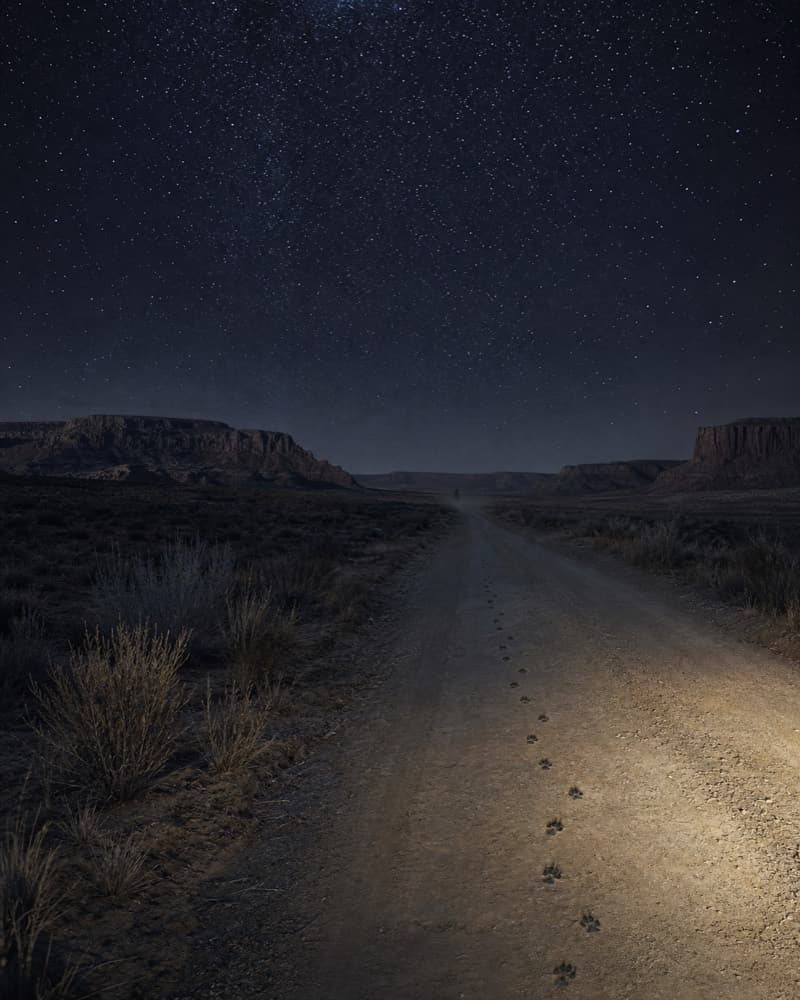
The Navajo call him Mą'ii. In Navajo creation narrative, while the Holy People were setting the stars into the sky one by one, Coyote lost patience, seized the pouch of stars, and hurled it upward, scattering the Milky Way; one star he placed deliberately in the south, the Coyote Star. Plateau peoples such as the Nez Perce and Yakama tell how Coyote traveled up the Columbia River breaking the fish dam and freeing the salmon, an account of why the salmon run.
For many nations Coyote stories belong to winter nights by the fire, entertainment and instruction at once: children learn from his fates what greed and recklessness cost. Since the twentieth century Coyote has entered literary and anthropological discussion as the trickster archetype, and is often named an ancestor of cartoon figures like Wile E. Coyote.