THE STORY & ITS AFTERLIVES
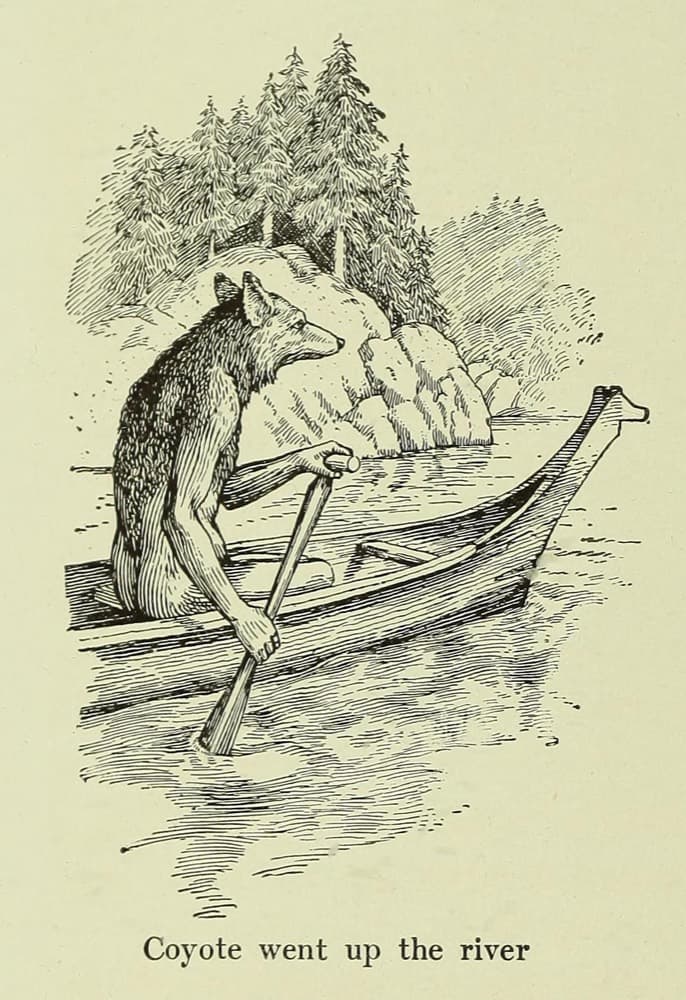
The Navajo term is yee naaldlooshii, "by means of it, it goes on all fours." In Navajo tradition the skin-walker is a human being: a man or woman who has abandoned Hózhǫ́, the way of beauty and harmony, to practice witchcraft (the ánt'įįhnii) for personal gain. Initiation is said to demand a terrible crime, such as the killing of a close relative. Thereafter the witch can don the pelt of a coyote, wolf, owl, or bear and travel the night in animal form, spreading sickness and misfortune; accounts speak of robbing graves and of harming victims with corpse poison.
For the Navajo this is the darkest region of witchcraft belief and a strict taboo of speech: talking about skin-walkers is thought to risk drawing their attention, and speaking of them to outsiders is especially improper. The anthropologist Clyde Kluckhohn's Navaho Witchcraft (1944) documented the belief system through fieldwork, recording along the way the hesitation and fear of those he interviewed. The figure makes sense only inside its social frame: in Navajo thought, illness and misfortune flow from broken harmony, and one who breaks harmony deliberately is a witch.
Reports from Utah's "Skinwalker Ranch" in 1996 and the reality shows that followed turned the English word into a generic wilderness monster, stripped of its Navajo context. Within Navajo society the belief remains a grave and sensitive subject.