THE STORY & ITS AFTERLIVES
The head of Set is a puzzle of Egyptian iconography: a long drooping curved snout, erect square-topped ears, and a stiff forked tail belonging to no identifiable species — Egyptologists simply call it the 'Set animal.' He rules the desert, storms, foreign lands, and violence, and his color is red, the red of the barren land opposed to the black silt of the valley. A son of Geb and Nut and one of the Ennead, he is said in the Pyramid Texts to have torn himself violently from his mother's side at birth.
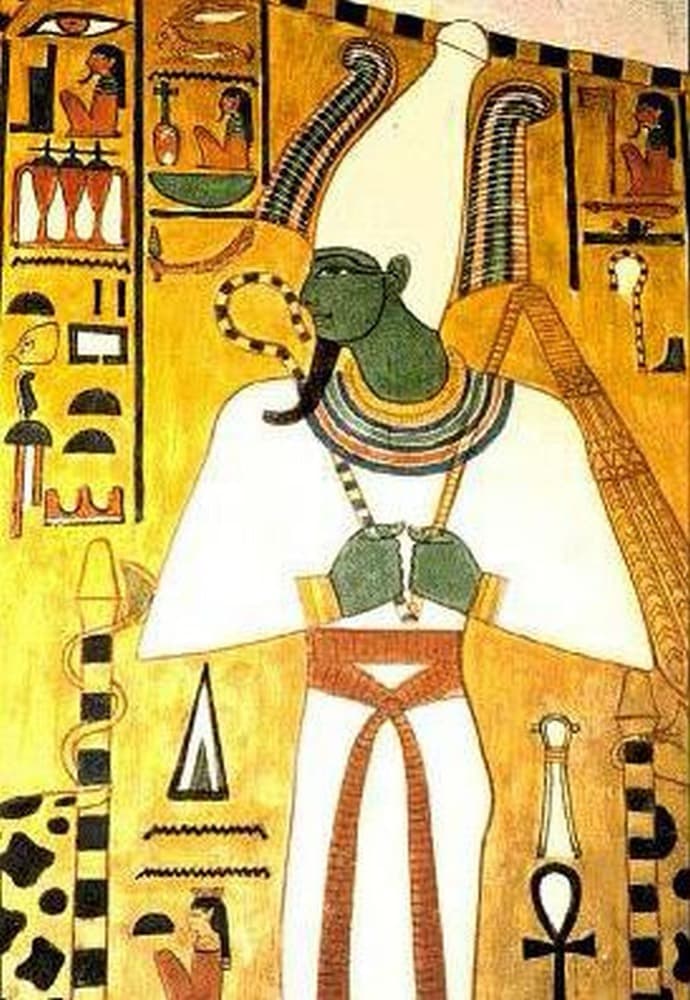
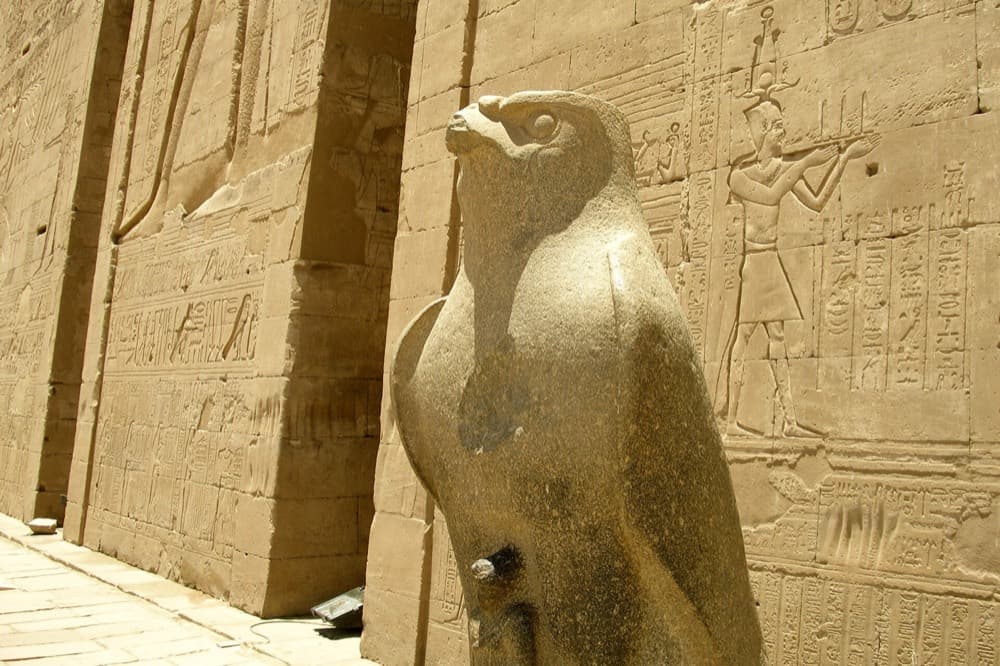
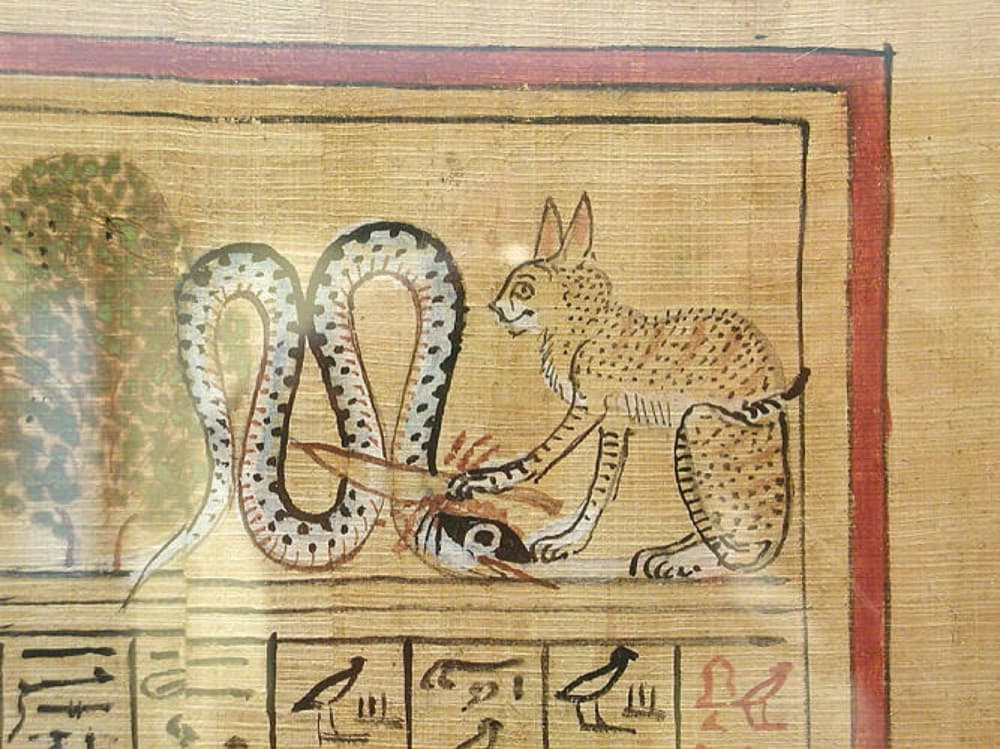
His great crime was the murder of his brother Osiris, tricked into a chest and drowned in the Nile, his recovered body then hacked apart and scattered. The eighty-year lawsuit with his nephew Horus followed, ending in defeat and the loss of the throne. Yet Set is more than a villain: in the Amduat and other netherworld books he stands at the prow of the solar barque each night, the one god violent enough to drive his spear into the chaos serpent Apep and keep the sun alive. The Ramesside kings of the Nineteenth Dynasty, natives of the eastern Delta where his cult flourished, honored him openly; the name Seti means 'man of Set.'
After repeated foreign invasions in the first millennium BCE, the god of foreign lands fell into disgrace, his images were defaced, and he merged with Apep as a figure of pure evil; the Greeks equated him with the monster Typhon. His early cult center was Nubt (Greek Ombos) in Upper Egypt.