THE STORY & ITS AFTERLIVES
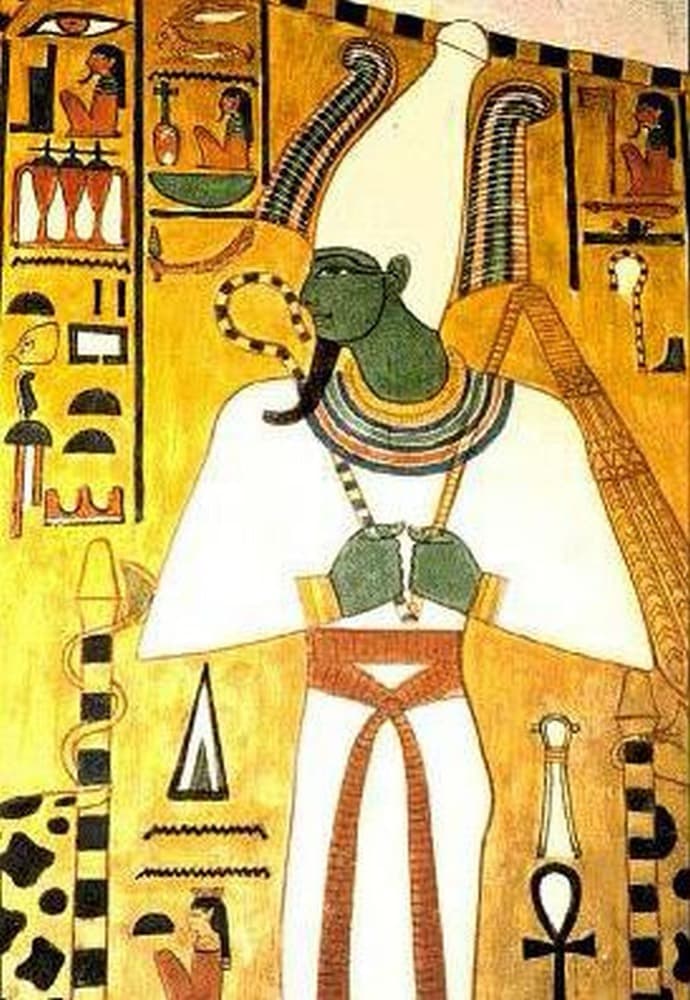
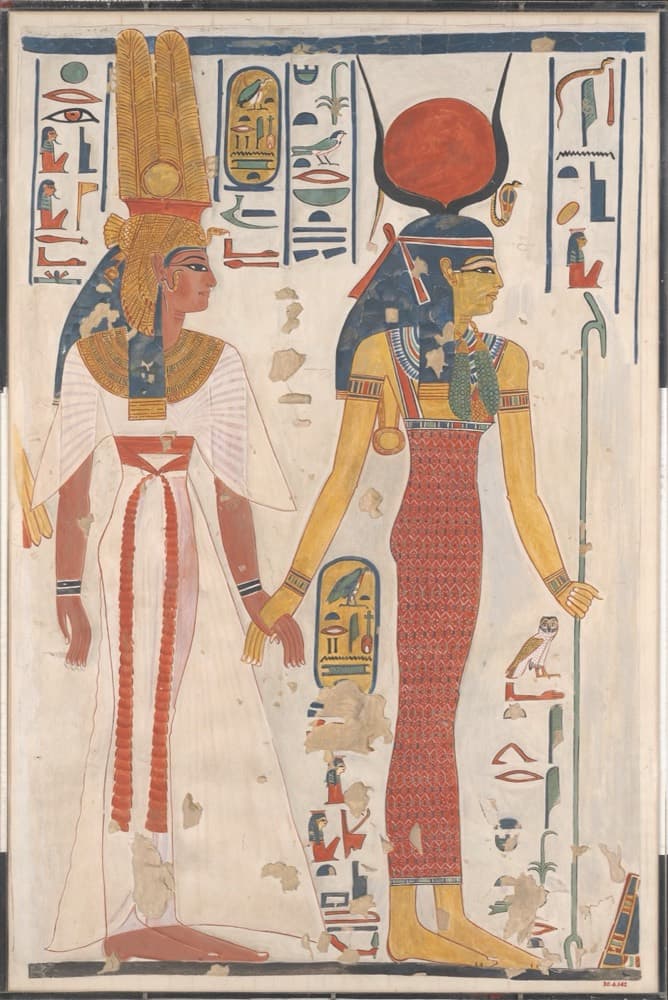
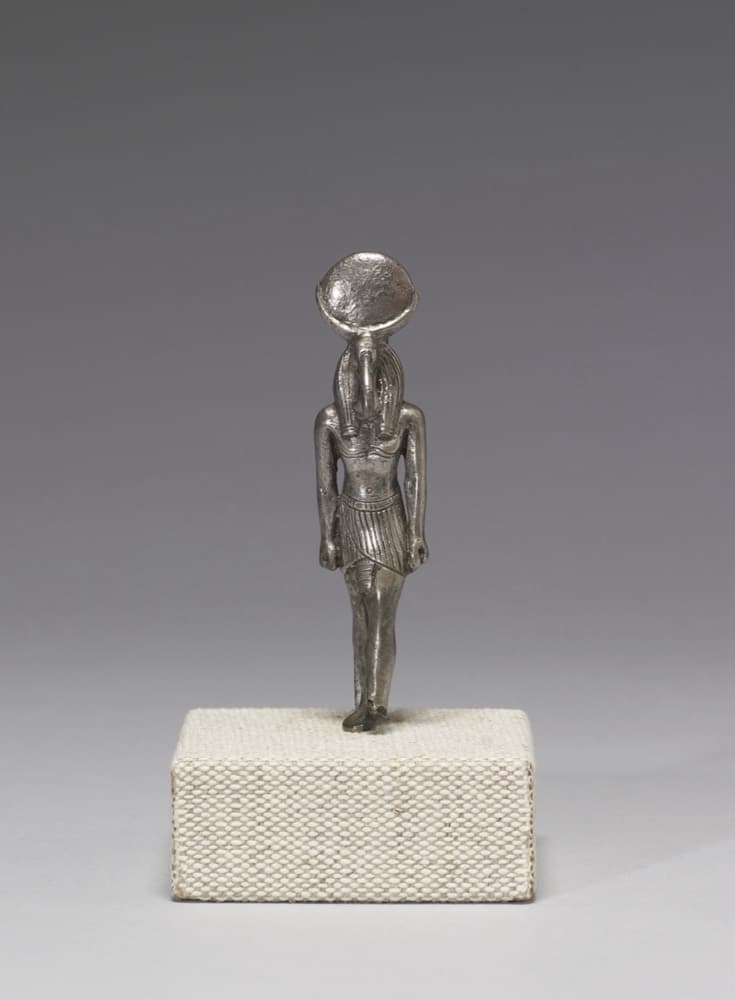
Horus takes the form of a peregrine falcon or a falcon-headed man; his two eyes were read as the sun and the moon, his outstretched wings as the sky itself. He is among the oldest attested Egyptian gods: from the Early Dynastic period the king's name was written inside the serekh, a palace-facade emblem surmounted by a falcon, and the Horus name remained the most ancient element of the royal titulary. The living pharaoh was Horus incarnate, while the dead king became Osiris.
The dominant myth makes him the posthumous son of Osiris and Isis, raised in hiding among the Delta reeds until he came before the tribunal of the gods to claim the throne from his usurping uncle Set. Papyrus Chester Beatty I (c. twelfth century BCE) records the eighty-year lawsuit in an almost comic register: the rivals turn into hippopotamuses for a diving contest and race in stone boats; Set gouges out Horus's left eye and Horus tears away Set's testicles, until the gods award the kingship to Horus and assign Set to the sky as god of storms. The wounded eye, healed by Thoth, became the wedjat, the 'whole eye,' Egypt's most popular amulet of health and restoration.
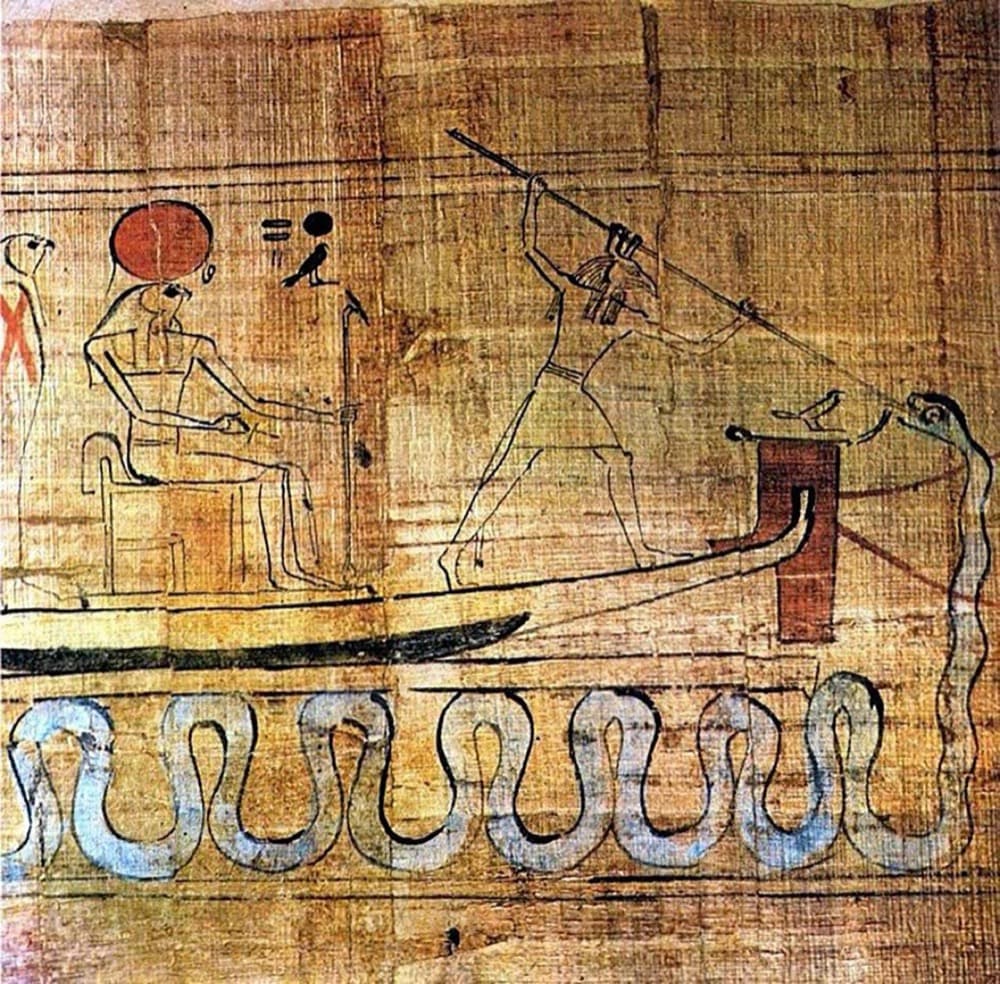
The temple of Horus at Edfu, built between 237 and 57 BCE under the Ptolemies and the best-preserved temple in Egypt, carries wall reliefs of the annual sacred drama in which Horus harpoons Set in hippopotamus form.