THE STORY & ITS AFTERLIVES
Rakshasas are the ogres of Hindu myth: fangs bared, claws hooked, eyes like burning coals, able to change shape at will—into a beautiful woman, into invisibility, or into a bulk vast as a hill. Weak by day and mighty by night, fiercest under the new moon, they delight in hurling blood and carrion onto the altars of sacrificing sages. The Atharvaveda already carries spells to drive them off; the Ramayana's last book says that when the first beings were created to guard the primordial waters, those who cried 'we shall guard' (rakshama) were named rakshasas, and those who cried 'yakshama' became the yakshas.
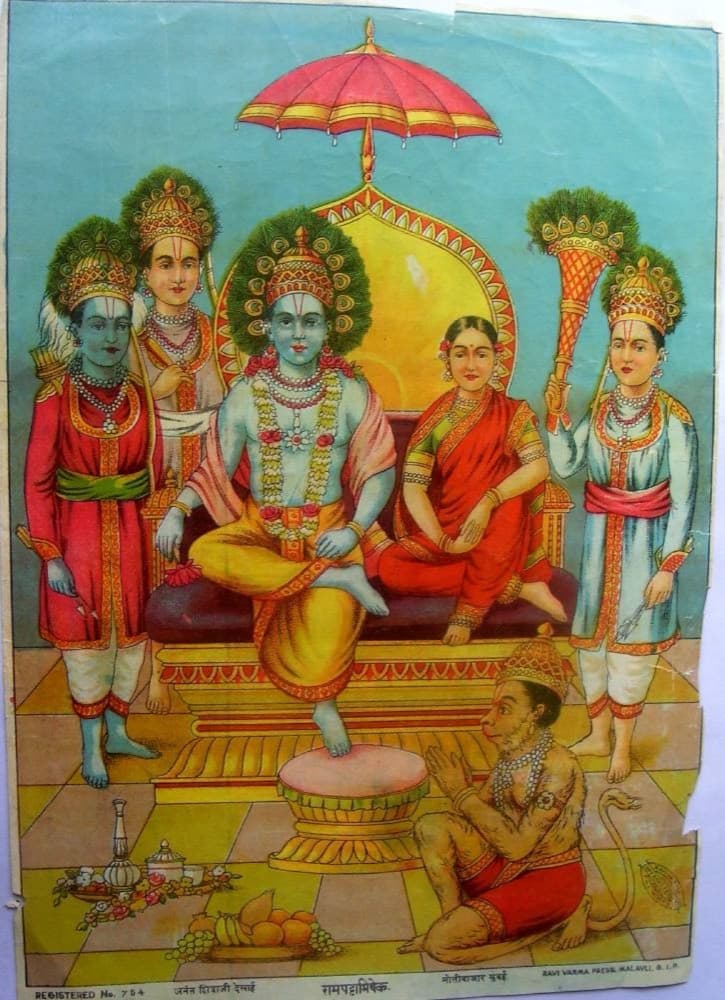
The Ramayana is their great stage. Ravana, ten-headed and twenty-armed, rules the golden city of Lanka at the head of a rakshasa host. His brother Kumbhakarna, mountainous in size, sleeps six months and wakes for a single ravenous day; his sister Shurpanakha, spurned by Rama and mutilated for her advances, sets in motion the abduction of Sita and the war that follows. Yet not all rakshasas are wicked: Ravana's youngest brother Vibhishana, failing to persuade the king to return Sita, crosses over to Rama and is crowned lord of Lanka after the war, and in the Mahabharata the half-rakshasa Ghatotkacha, son of Bhima, dies fighting for the Pandavas.
Through Buddhist translation the word entered Chinese as luocha, a general term for man-eating fiends—Princess Iron Fan of Journey to the West bears the title 'Rakshasa Woman'—and the fanged, round-eyed rakshasa mask survives in the dance dramas of Sri Lanka and Java.