THE STORY & ITS AFTERLIVES
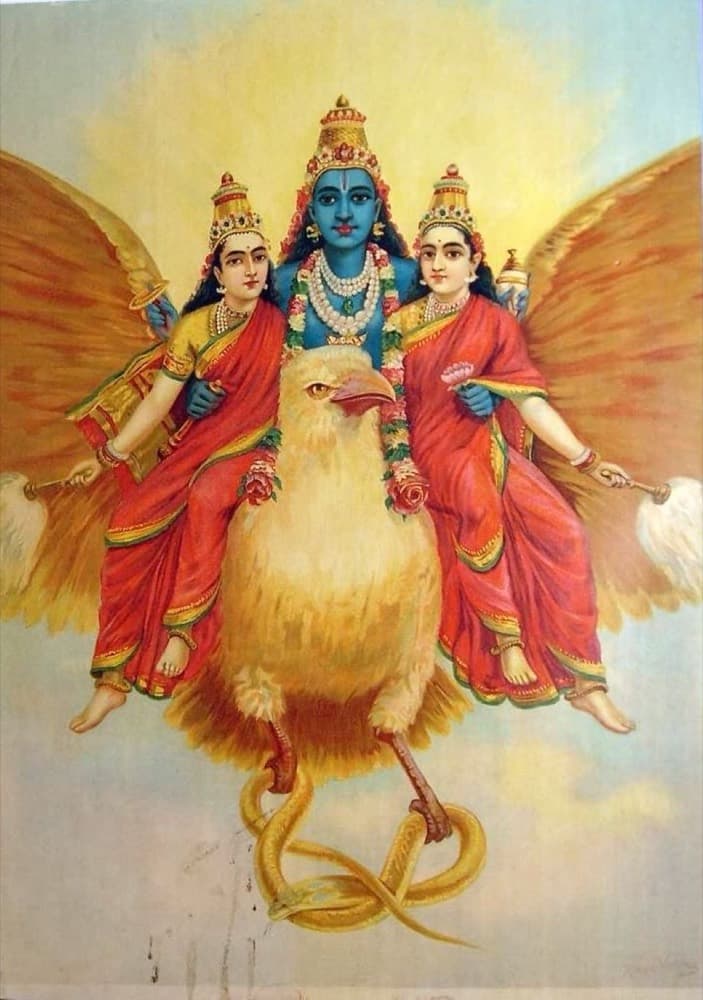
The nagas are a race of divine serpents, pictured either as great hooded cobras with many heads or as human above the waist and snake below. The thousand children of the serpent mother Kadru, they dwell in Nagaloka in the seventh world beneath the earth, where palaces glow with gemlight and the jewel on a naga king's hood stands for inexhaustible wealth. They command the waters and the rains, guard buried treasure, and can bless as readily as poison.
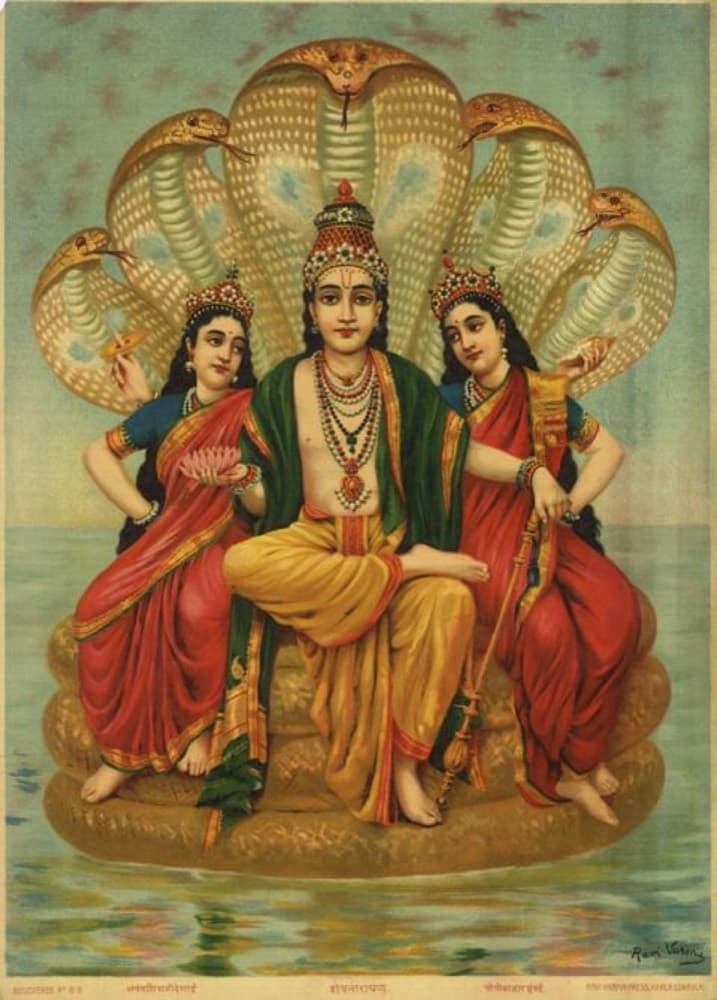
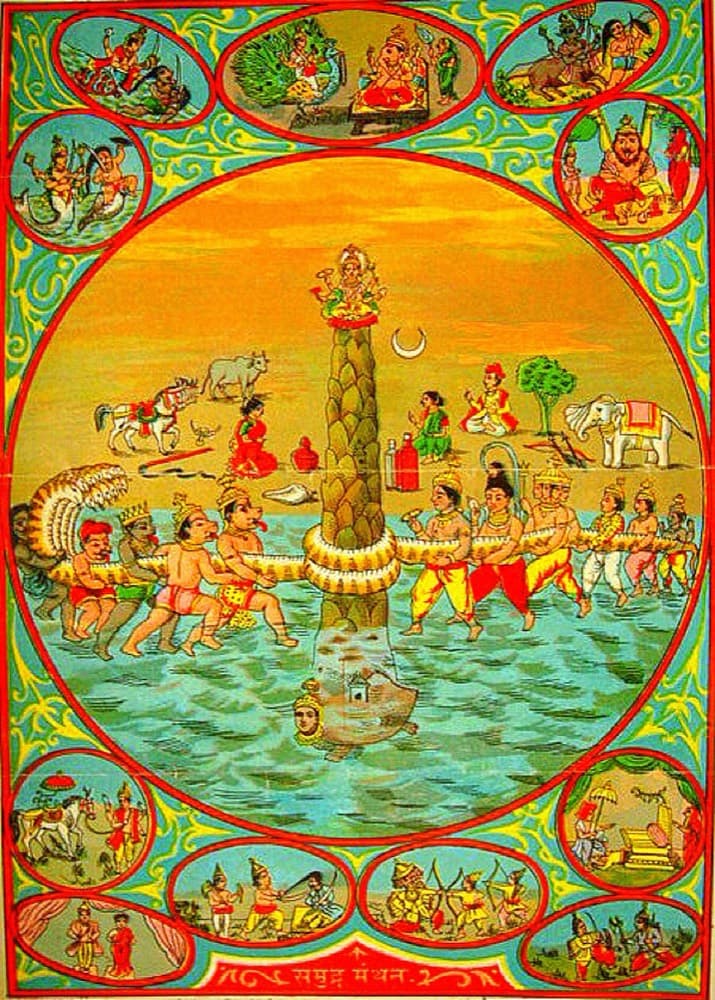
Three serpent kings dominate their lore. Shesha, also called Ananta, 'the Endless,' bears the earth on his thousand heads, and Vishnu sleeps on his coils between the ages of the world. Vasuki was wound around Mount Mandara as the rope when gods and asuras churned the ocean of milk, and afterwards became the serpent at Shiva's throat. Takshaka killed King Parikshit, heir of the Pandavas, with his bite; the king's son Janamejaya answered with a sacrificial rite that drew serpents by the thousand into the flames until the youth Astika talked him into mercy—and it was at that snake sacrifice that the Mahabharata itself was first recited in full.
Naga worship remains a living tradition. On Nag Panchami, in the monsoon season, devotees across India and Nepal offer milk to snakes. In Buddhism the naga king Mucalinda sheltered the meditating Buddha under his sevenfold hood; Chinese translators rendered naga as 'dragon,' making them the dragon legion of the eight classes of protectors. The Khmer royal house traced its descent from a naga princess, and the balustrades of Angkor are the bodies of giant serpents.