THE STORY & ITS AFTERLIVES
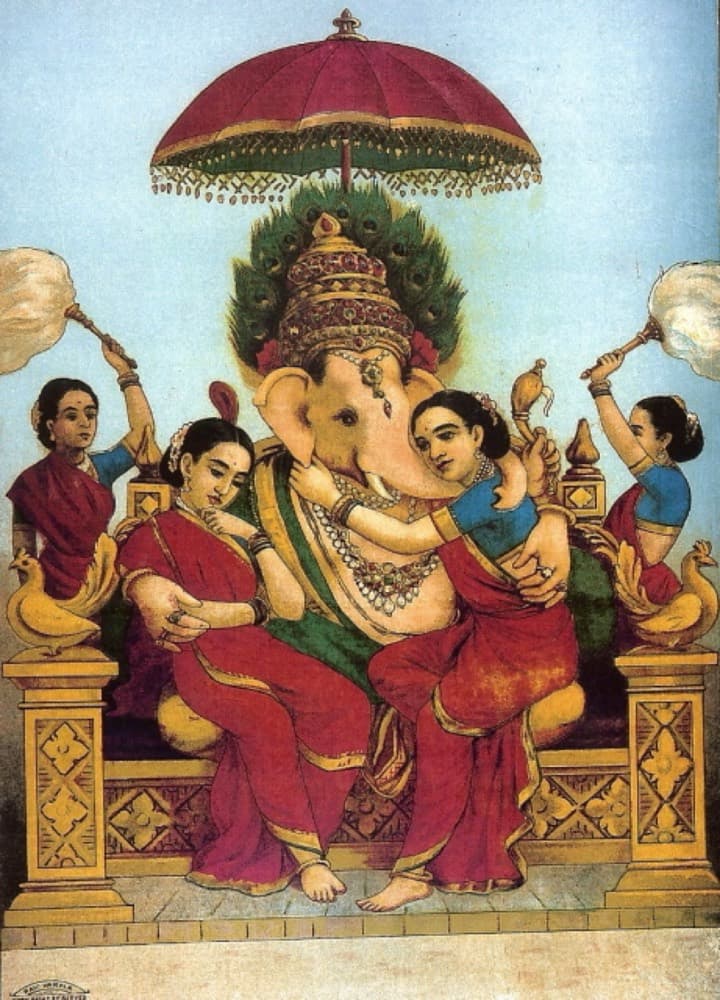
Shiva wears the guise of an ascetic: his pale body smeared with cremation ash, a cobra coiled at his throat, a tiger skin about his waist, a crescent moon in his matted hair, through which the Ganges falls from heaven. A third eye stands upright on his brow; its fire once burned Kama, god of desire, to ash. His throat is dark blue—when the poison halahala rose from the churning ocean and threatened the three worlds, he swallowed it and held it there, earning the name Nilakantha. He carries the trident, sounds the damaru drum, rides the white bull Nandi, and dwells on Mount Kailash with his wife Parvati and their sons Ganesha and Kartikeya.
His Vedic ancestor is Rudra, the feared storm god of the Rigveda. As Nataraja, Lord of the Dance, he dances within a ring of flame, one hand drumming creation into being, another bearing the fire of dissolution, one foot pressing down a dwarf who embodies ignorance. The Chola bronzes of south India (9th–13th century) fixed this image as one of the most celebrated forms in Indian art.
Shiva is chiefly worshipped as the linga, an upright stone pillar. Twelve Jyotirlinga temples, among them Kashi Vishwanath at Varanasi, form the great pilgrimage circuit of Shaivism, and on the night of Maha Shivaratri devotees keep vigil bathing the linga until dawn.