THE STORY & ITS AFTERLIVES
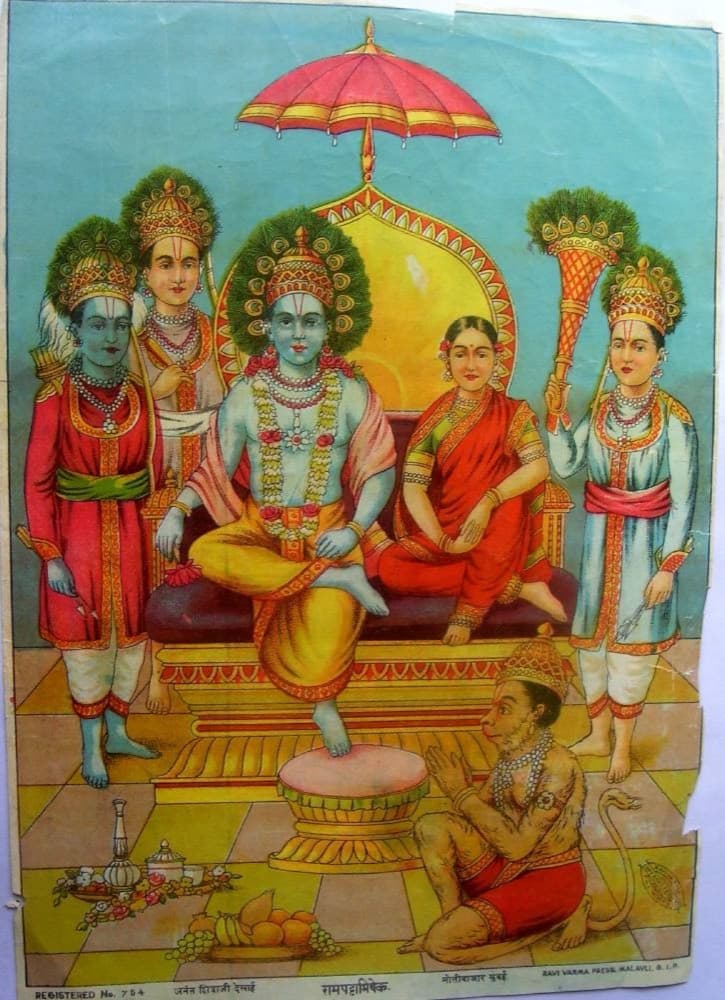
Hanuman is the son of Vayu, god of wind, by the monkey lady Anjana; he can grow or shrink at will and fly through the air. As an infant he took the rising sun for a ripe fruit and leapt for it; Indra's thunderbolt struck his jaw—hanu—giving him his name. When the wind god held his breath in protest and the three worlds began to suffocate, the gods appeased him with boons that left the child all but invulnerable.
He is the soul of the later books of the Ramayana. When Ravana carried Sita off to the island of Lanka, Hanuman crossed the hundred-league sea in a single bound, found her in the ashoka grove and gave her Rama's ring as a token. Captured, his tail wrapped in oiled cloth and set alight, he broke free and raced the flames across the rooftops until Lanka burned. Later, with Lakshmana dying of an arrow wound and the healing herb needed before dawn, Hanuman flew to the Himalayas, could not tell the herbs apart, and simply carried the whole mountain back to the battlefield in his palm.
Revered as the embodiment of strength and selfless devotion, Hanuman is counted among the chiranjivi, the undying. The Hanuman Chalisa, a hymn composed in Awadhi by Tulsidas in the 16th century, remains one of the most widely recited prayers in India; colossal Hanuman statues tens of metres tall rise across the country, and wrestlers honour him as their patron. Since the scholar Hu Shih, a long debate has weighed his possible influence on Sun Wukong, the Monkey King of the Chinese novel Journey to the West.