THE STORY & ITS AFTERLIVES
Maat is a seated or standing goddess marked by a single upright ostrich feather on her head, sometimes with winged arms. Her name is itself the central term of Egyptian thought: maat covers truth, justice, balance, and the cosmic order fixed at creation, opposed to isfet — chaos, falsehood, violence. That the sun rose on time, that the Nile flooded on schedule, that lawsuits were justly settled: all were signs that maat was being upheld.
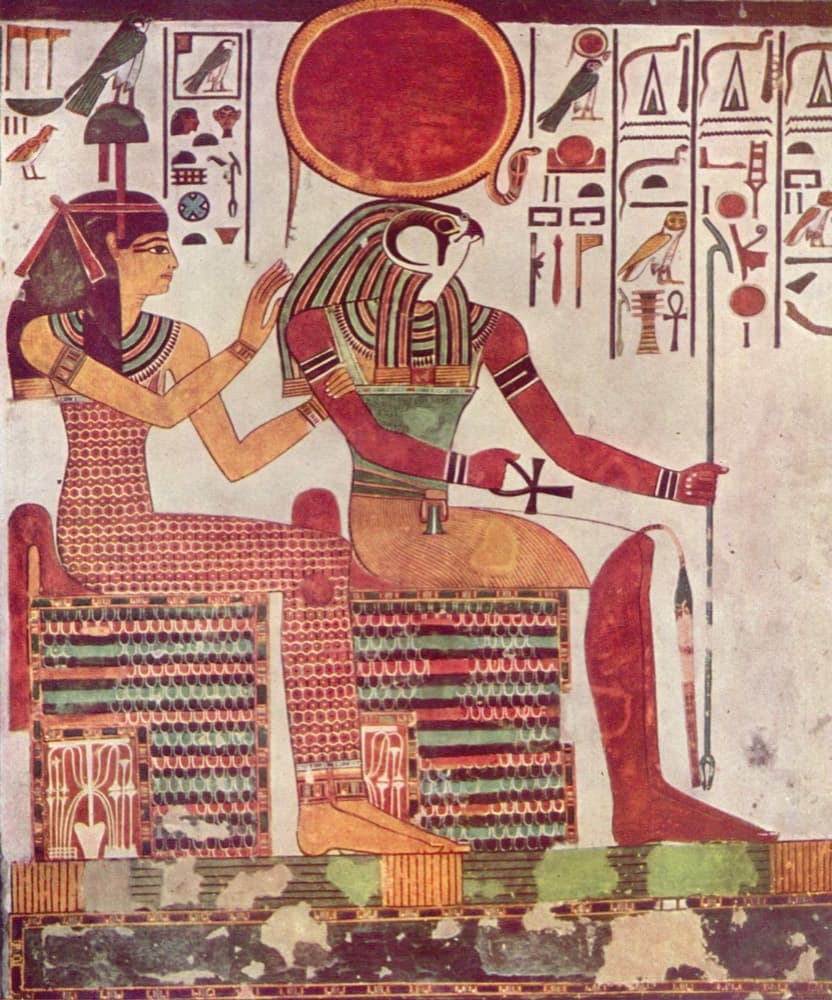
She was called the daughter of Ra and rode in the solar barque. Upholding maat was the charter of royal legitimacy, and the most common royal offering scene on temple walls shows the pharaoh presenting a palm-sized seated figurine of Maat to a god, a declaration that his rule kept the world in order. Judges bore the title 'priest of Maat,' and the vizier wore her image when sitting as chief magistrate. In the Middle Kingdom classic 'The Eloquent Peasant,' the wronged commoner's refrain is precisely that officials must 'do maat.'
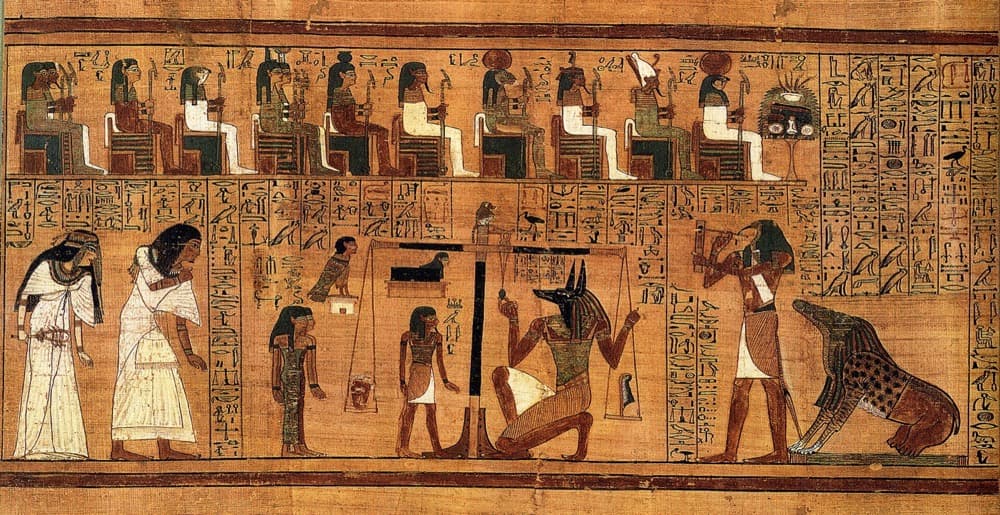
In the judgment described in Book of the Dead spell 125 she is everywhere: the tribunal sits in the Hall of the Two Maats, forty-two assessor gods hear the deceased deny a list of sins, and on the scales the heart is weighed against nothing other than the feather of Maat. If the heart is no heavier than the feather, the dead person is declared 'true of voice' and passes to the Field of Reeds.