THE STORY & ITS AFTERLIVES
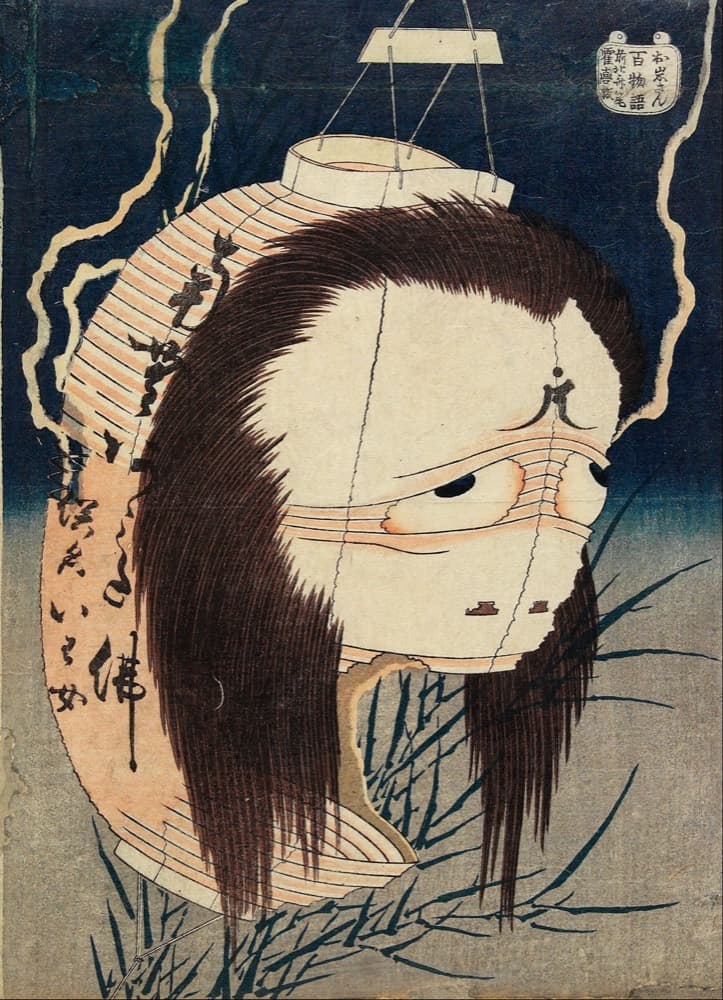
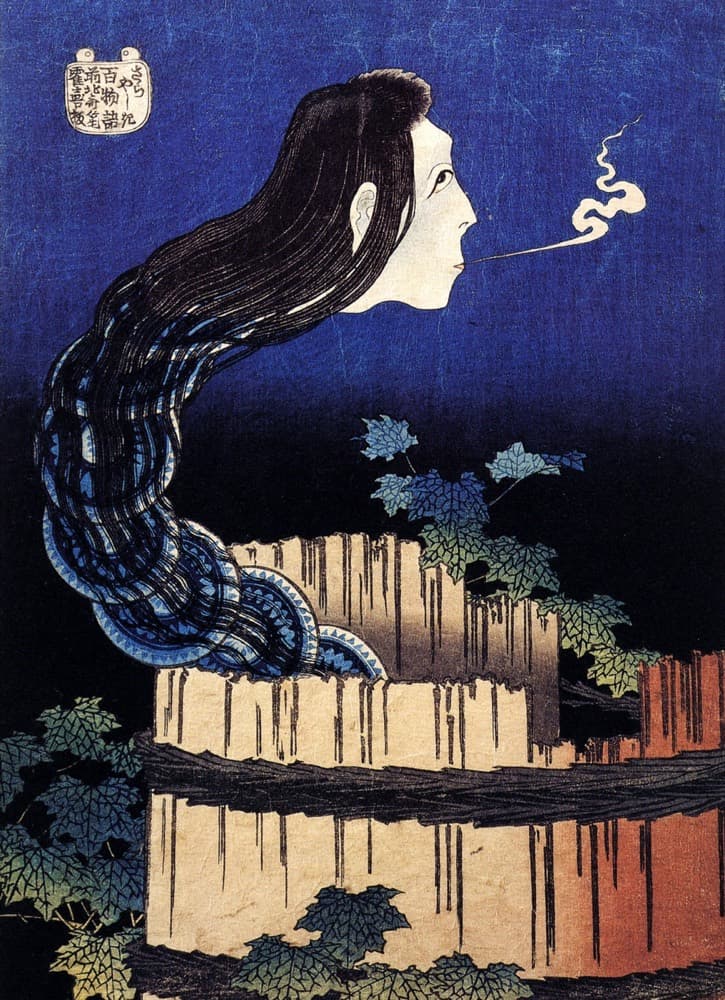
Kasane was a farm woman of Hanyu village in Shimosa province, present-day Joso, Ibaraki, born with a disfigured face and a lame leg. Her adopted-in husband Yoemon, who despised her, drowned her in a deep pool of the Kinugawa river in 1647 on the pretext of a river crossing. His later wives died one after another, and in 1672 his daughter Kiku was seized by Kasane's spirit, which spoke through the girl and described the murder to the assembled village. The nenbutsu priest Yuten, later the celebrated Yuten Shonin, came to exorcise her, and the haunting opened like a nested box: before Kasane, her mother had brought to the household a boy called Suke, a stepchild with a diseased face, and he had been sunk in the same pool a generation earlier. The name Kasane, 'piled up,' already carried the verdict, sin stacked on sin. Only when both ghosts received the precepts did the possession end.
The monk Zanju wrote the case up as the Shiryo Gedatsu Monogatari Kikigaki, published in 1690, a documentary sermon-book that sold widely in Edo and made Kasane-ga-fuchi both a place name and a byword. The kabuki dance-drama Iro Moyo Chotto Karimame (1823), of the Tsuruya Nanboku line, stages Kasane and Yoemon's murder scene among night reeds; San'yutei Encho's late-Edo rakugo epic Shinkei Kasane-ga-fuchi respun the karma into a new family saga, its title punning 'true view' against 'nerves' in an age told that ghosts were all in the mind.
The graves of Kasane's family survive at Hozoji temple in Hanyu, and a marker stands by the Kinugawa where the pool once ran deep.