THE STORY & ITS AFTERLIVES
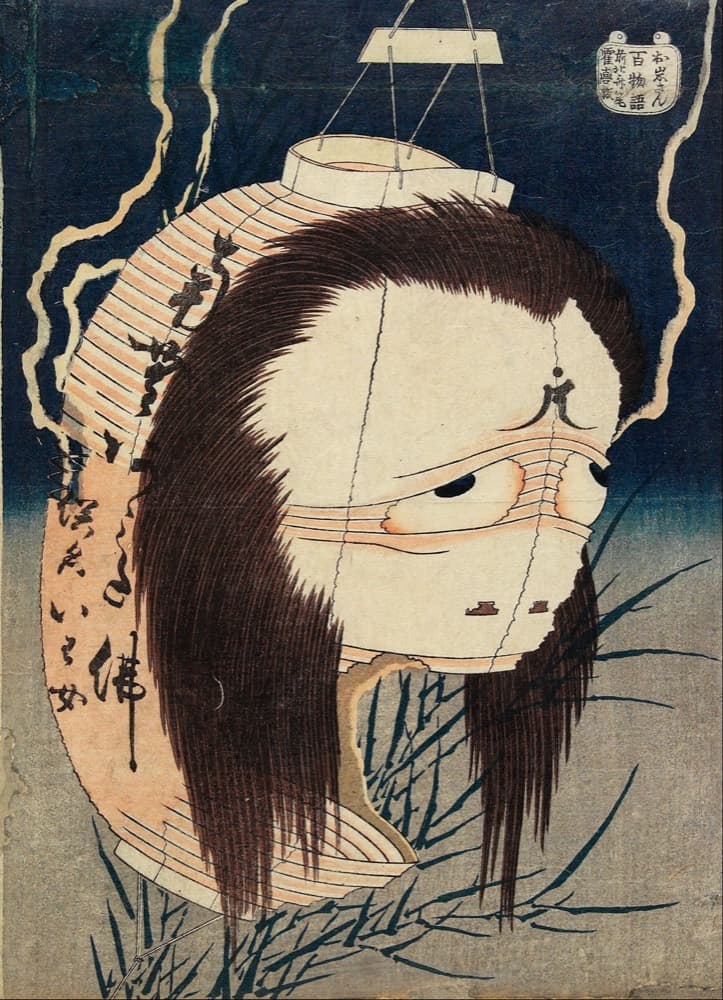
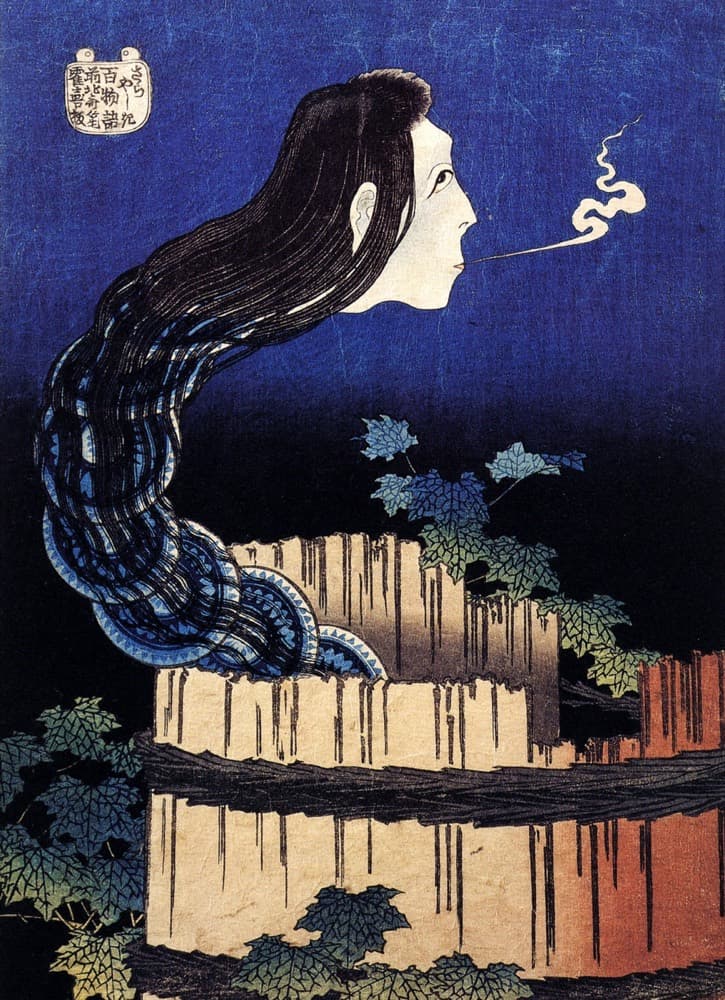
The Japanese canonical version belongs to the rakugo master San'yutei Encho. The ronin Hagiwara Shinzaburo and Otsuyu, daughter of the hatamoto Iijima Heizaemon, fall in love at a single meeting; Otsuyu pines and dies, followed by her maid Oyone. During the Bon festival of the dead, Shinzaburo hears the karan-koron clack of geta: Oyone approaches carrying a lantern hung with peony blossoms, leading Otsuyu to his door, and the lovers meet night after night. The neighbor Tomozo peeps through a wall and sees that what Shinzaburo embraces in the lamplight is a skeleton. A diviner and a priest seal the house with sutra-slips and a gold image of the Buddha Kaion Nyorai; the ghosts, unable to enter, call plaintively from outside until they bribe Tomozo with a hundred gold ryo to peel the wards away. At dawn Shinzaburo lies dead with the bones in his arms. The tale's second half follows the corrupting gold as retribution overtakes Tomozo and his wife.
The root text is 'Mudan deng ji' in Qu You's Ming-dynasty collection Jiandeng Xinhua (c. 1378); Asai Ryoi's Otogi Boko (1666) transplanted it to Japan. Encho expanded it into a serial rakugo around 1861, and the 1884 shorthand transcription by Wakabayashi Kanzo became Japan's first stenographic book, a landmark of the movement to write as people speak. A kabuki version by Kawatake Shinshichi III followed in 1892, and the karan-koron of ghostly geta has been the sound of a dead lover's visit ever since.