THE STORY & ITS AFTERLIVES
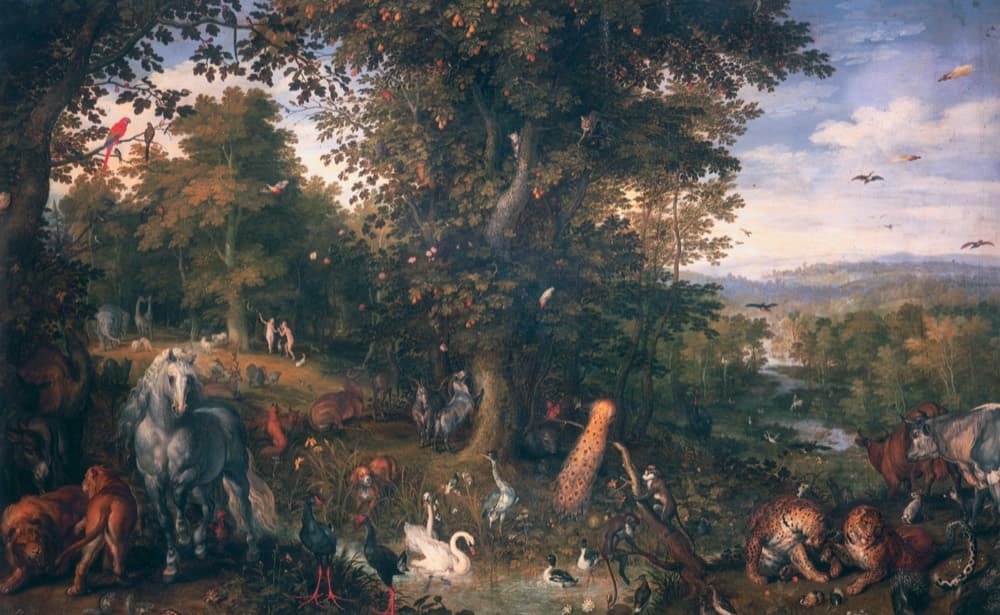
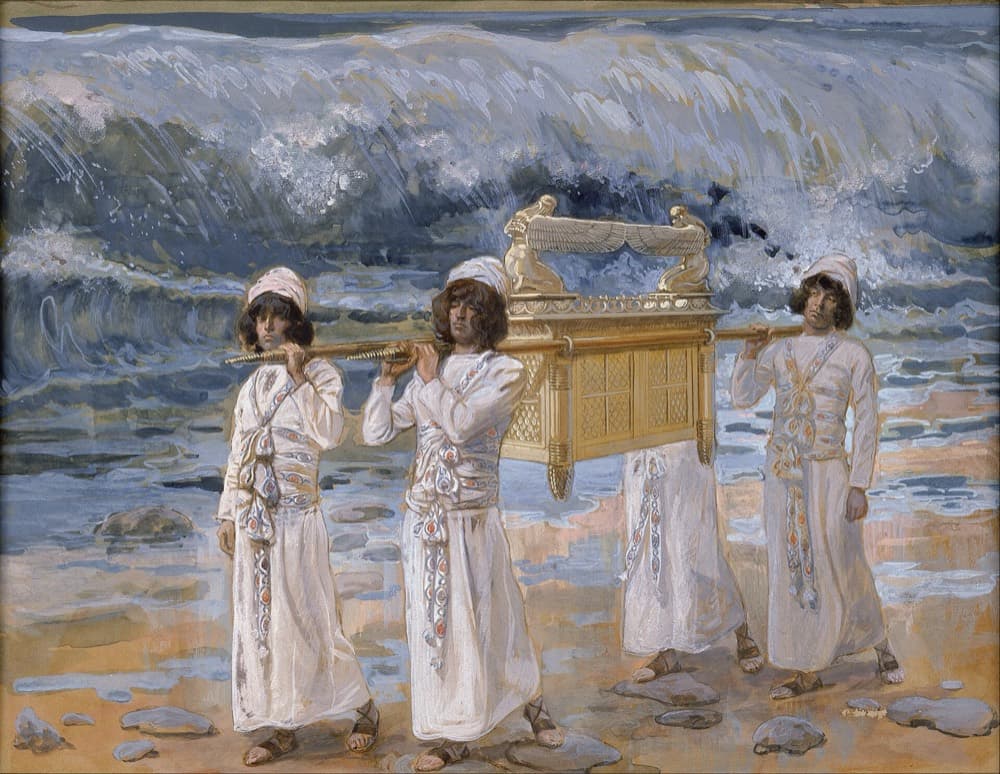
Cherubim (singular kerub) are the winged beings of the biblical tradition who guard sacred ground and bear the throne of God. They first appear in Genesis 3: after the expulsion from Eden, God stations cherubim east of the garden, with a flaming sword turning every way, to guard the road to the tree of life. Exodus 25 commands two cherubim of hammered gold for the ends of the Ark's mercy seat, facing one another, wings spread upward and overshadowing it — the Lord is repeatedly said to be 'enthroned between the cherubim.' Solomon's temple added two colossal cherubim of gilded olive wood in the inner sanctuary, each ten cubits tall, their outstretched wings spanning the room from wall to wall.
Ezekiel 1 and 10 give the strangest description. By the river Chebar the prophet sees four living creatures, each with four faces — of a human, a lion, an ox, and an eagle — four wings, straight legs with hooves like a calf's, gleaming like burnished bronze, each accompanied by a wheel within a wheel, its rim full of eyes; chapter 10 identifies the creatures as cherubim, the throne of God moving above the firmament stretched over their heads. Scholars generally connect the figure with the winged guardian beasts of Mesopotamian palace gates, such as the lamassu; the Akkadian karibu names an interceding protective spirit.
The later history of the image is a curious inversion: Renaissance painting turned the cherub into the putto, a plump winged infant, far from the four-faced colossi that flattened prophets in fear. In modern English 'cherub' has become an endearment for a chubby child.