THE STORY & ITS AFTERLIVES
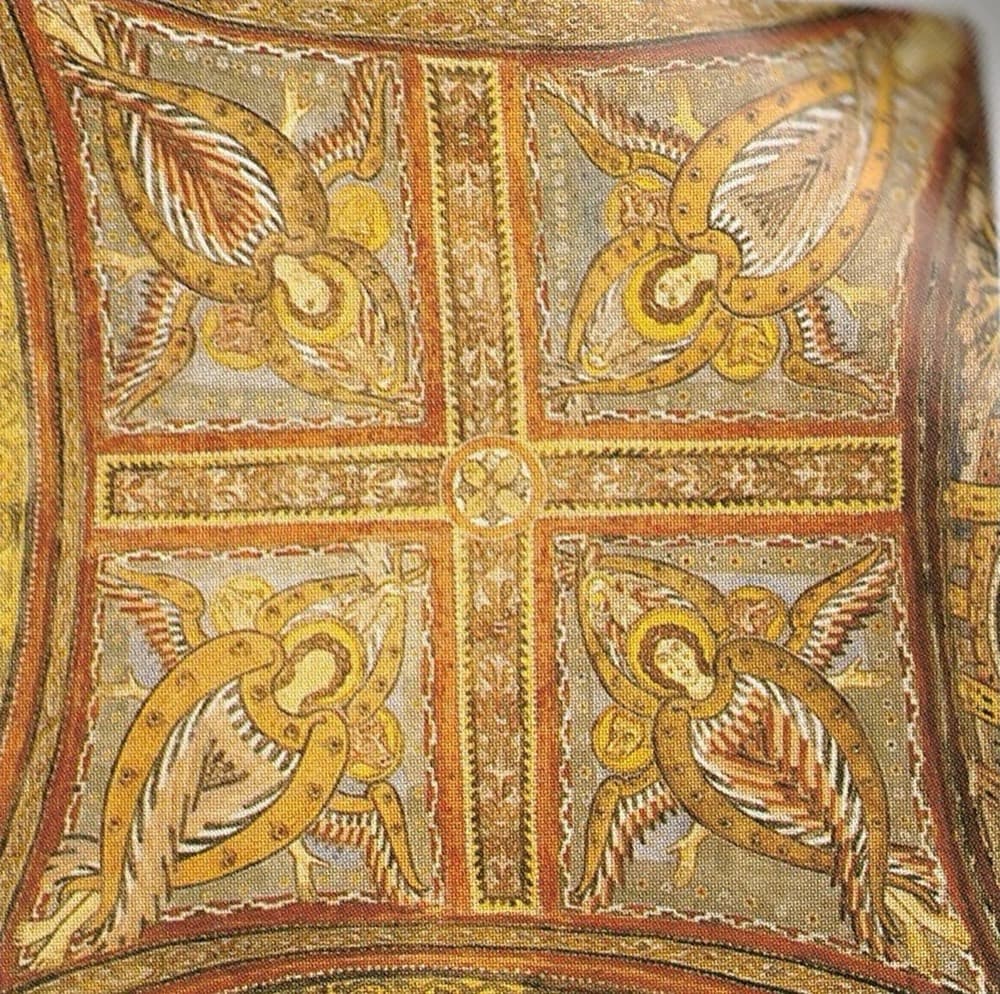
Exodus 25 records the specifications the Lord gave Moses on Sinai: a chest of acacia wood, two and a half cubits long, a cubit and a half wide and high, overlaid with pure gold inside and out, with gold rings at its four feet for gilded carrying poles that were never to be withdrawn; within it, the tablets of the law. Upon it sat the kapporet, the mercy seat, with two cherubim of hammered gold facing one another, wings spread upward to overshadow it. 'There I will meet with you,' the Lord says, 'from between the two cherubim.' Hebrews 9 adds, in retrospect, a golden jar of manna and Aaron's rod that budded.
The Ark was the central sacred object of Israel's wanderings and wars. When the priests bearing it stepped into the Jordan, the river was cut off; carried around Jericho for seven days, it preceded the fall of the walls. 1 Samuel 4-6 tells of its capture by the Philistines: set in the temple of Dagon, it was found the next morning with Dagon's image fallen before it, and the morning after with the idol's head and hands broken off on the threshold; plague struck every town that housed it, and after seven months the Philistines sent it back on a new cart. David danced with all his might before it as it entered Jerusalem — on the way, Uzzah was struck dead for putting out his hand to steady it, the text underscoring that the holy thing could not be touched. Solomon installed it beneath the wings of the great cherubim in the Holy of Holies, entered only by the high priest, once a year, on the Day of Atonement.
After the Babylonians burned the temple in 586 BCE, the Ark appears in no inventory of plundered vessels, and its fate became a standing riddle. 2 Maccabees preserves a tradition that Jeremiah hid it in a cave on Mount Nebo; the Ethiopian church, in the epic Kebra Nagast, holds that it had long since been carried to Aksum by the son of Solomon and the Queen of Sheba, where a single guardian keeps it to this day, seen by no one. It remains popular culture's most famous lost relic, fixed in the modern imagination by the 1981 film Raiders of the Lost Ark.