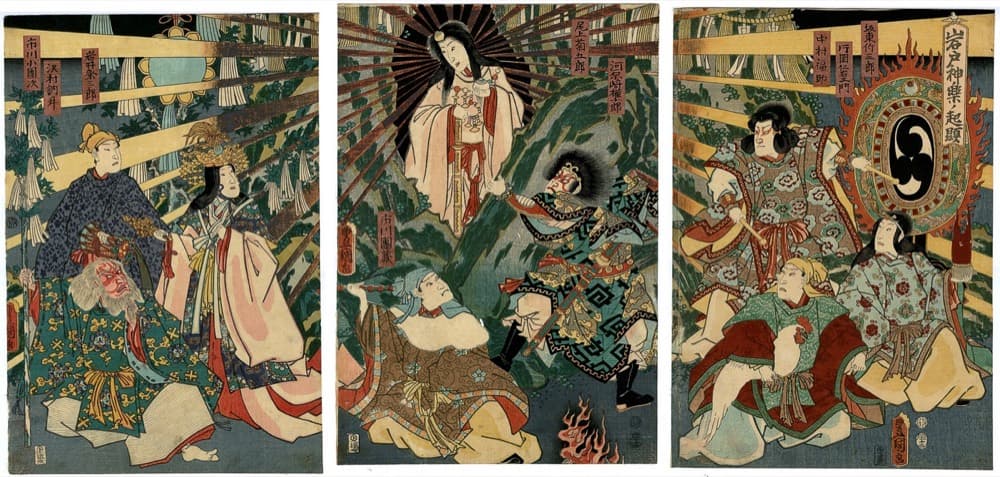
 № 001
№ 001Japanese
Ama-no-Iwato
Ancient
天岩户
The Myth of the Heavenly Rock Cave
Divine lineages · 10
The skeleton of Japanese mythology comes from two court-commissioned histories of the eighth century, the Kojiki (712) and the Nihon Shoki (720), known together as the Kiki. Their opening books run from the parting of heaven and earth: Izanagi and Izanami churn the sea into islands, the three noble children take the sun, the moon, and the sea, the heavenly gods of Takamagahara contend with the earthly gods of Izumo, and the cycle closes with the heavenly grandson descending to rule, splicing the imperial line onto the family tree of the gods. The provincial gazetteers and the Man'yoshu anthology preserve local variants the official books left out.
Alongside the myths runs the yokai tradition. Tengu, kappa, oni, and fox spirits step out of medieval tale collections and picture scrolls: the Konjaku Monogatarishu has tengu beguiling monks, the Oeyama scroll shows the demon king losing his head, and Muromachi storybooks carry Tamamo no Mae from the palace to the moors. In the Edo period Toriyama Sekien organized the creatures of hearsay into illustrated catalogues, and in 1910 Yanagita Kunio's Tono Monogatari wrote down the kappa and house spirits of northern villages as the villagers told them. Yokai live at the edges of the human world, at mountain passes, riversides, and parlors of old houses, making bargains, wrestling, playing pranks, and sometimes moving house along with the family.
The system has no omniscient overlord. The eight million gods each keep their own seat, the line between god and monster stays porous, and a sword, a stone, or an old room may hold a spirit. A millennium of Shinto-Buddhist fusion left fallen monks, continental star-omens, and the archipelago's own mountain and river spirits sharing one genealogy. The twenty-year rebuilding of Ise, the night kagura of Takachiho, and the smoke-breathing serpent of Iwami kagura still perform these stories for the living.
Opening the origin story…
№ 001Japanese
天岩户
The Myth of the Heavenly Rock Cave
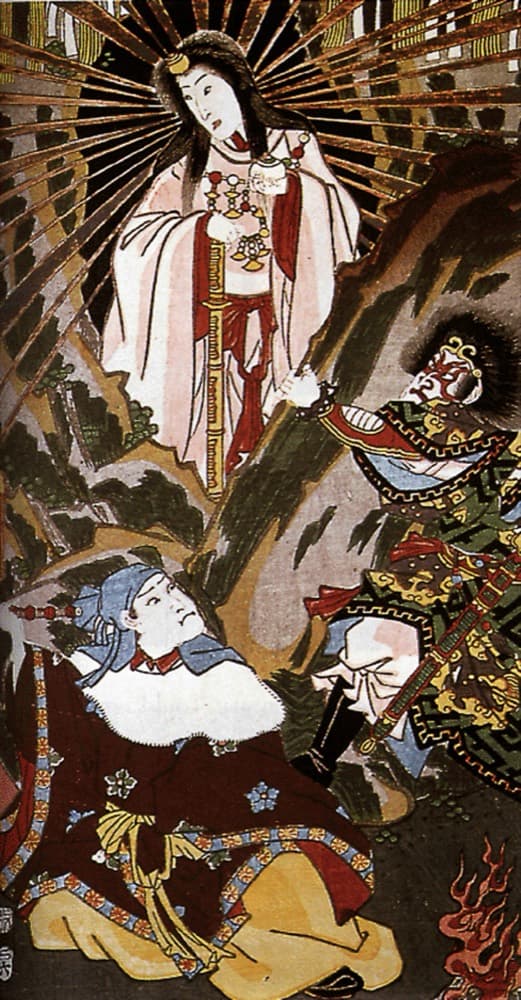 № 002
№ 002Japanese
天照大神
Sun Goddess, Ruler of the Plain of High Heaven
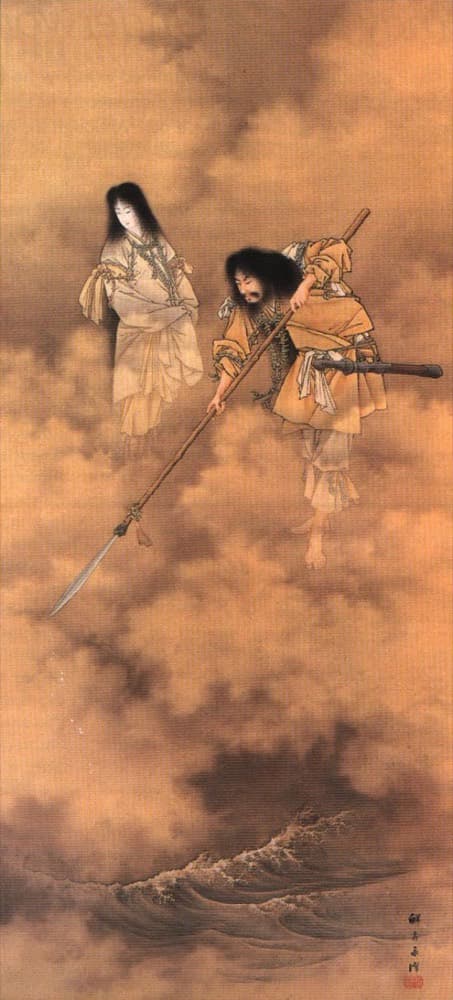 № 003
№ 003Japanese
伊邪那岐
Creator God Who Fathered the Islands and the Gods
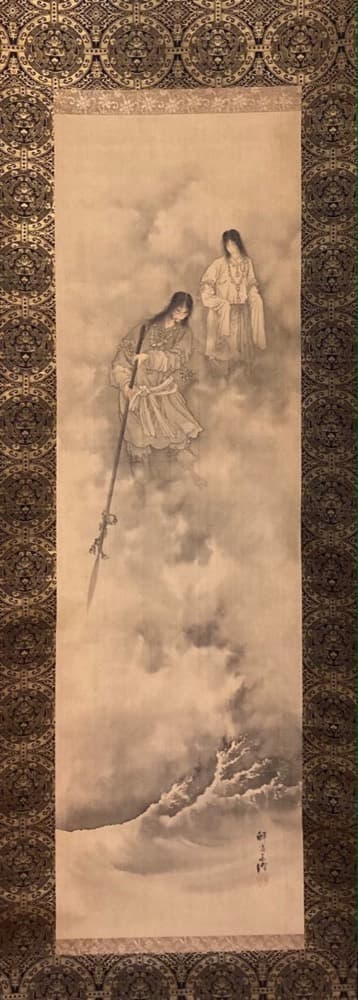 № 004
№ 004Japanese
伊邪那美
Creator Goddess Who Became Queen of the Dead
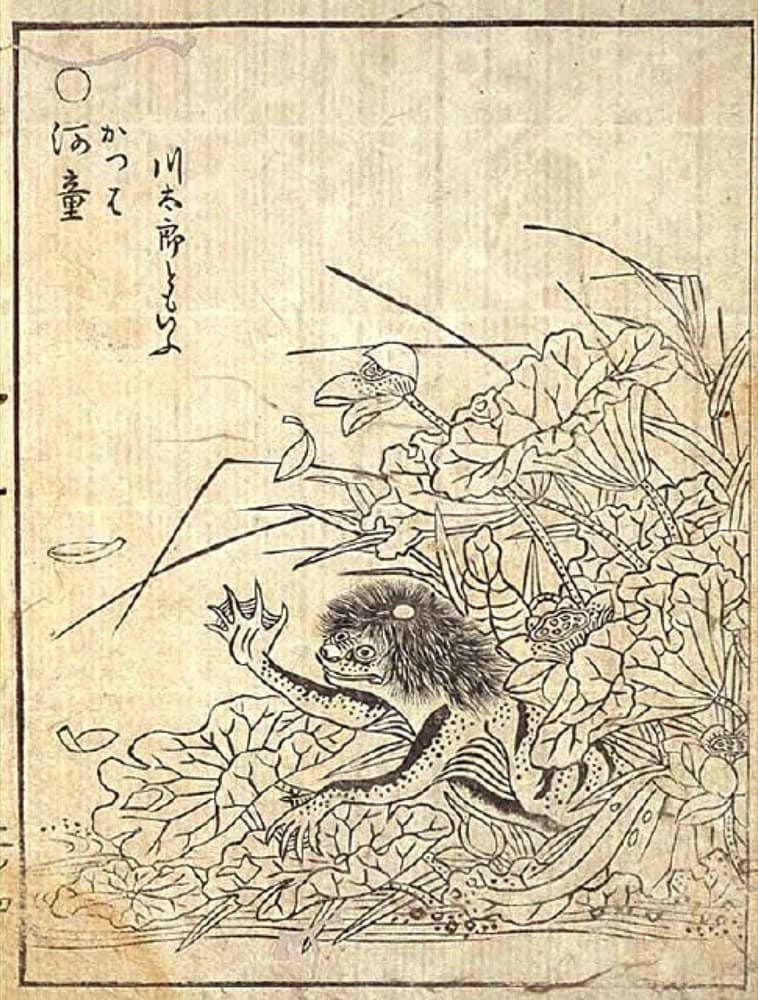 № 005
№ 005Japanese
河童
Water Imp of Rivers and Ponds
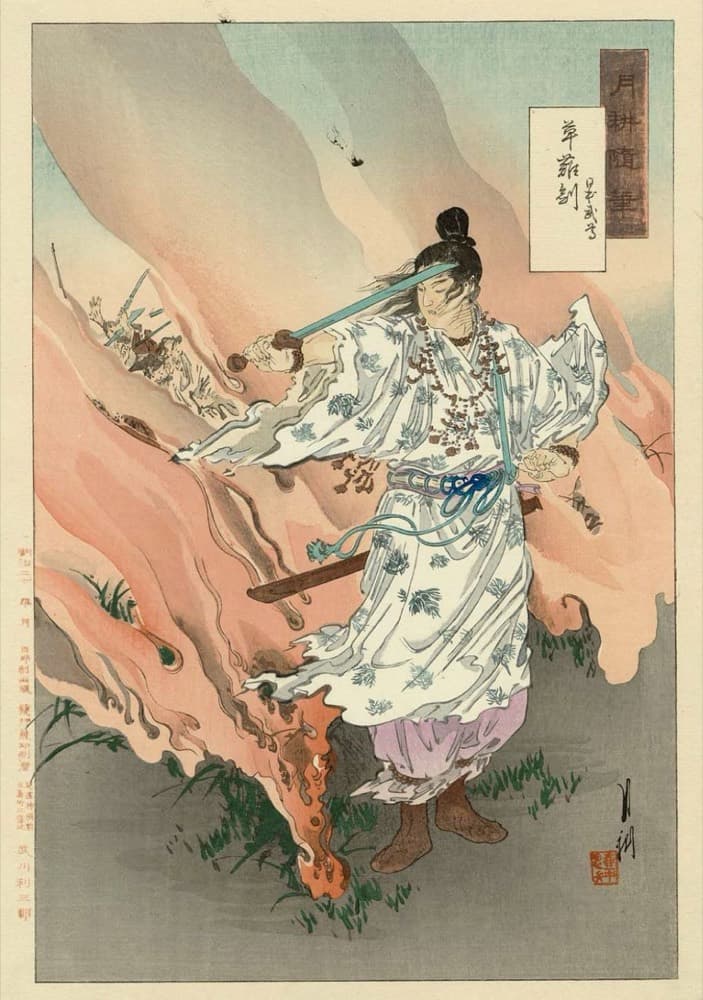 № 006
№ 006Japanese
草薙剑
The Sword of the Imperial Regalia
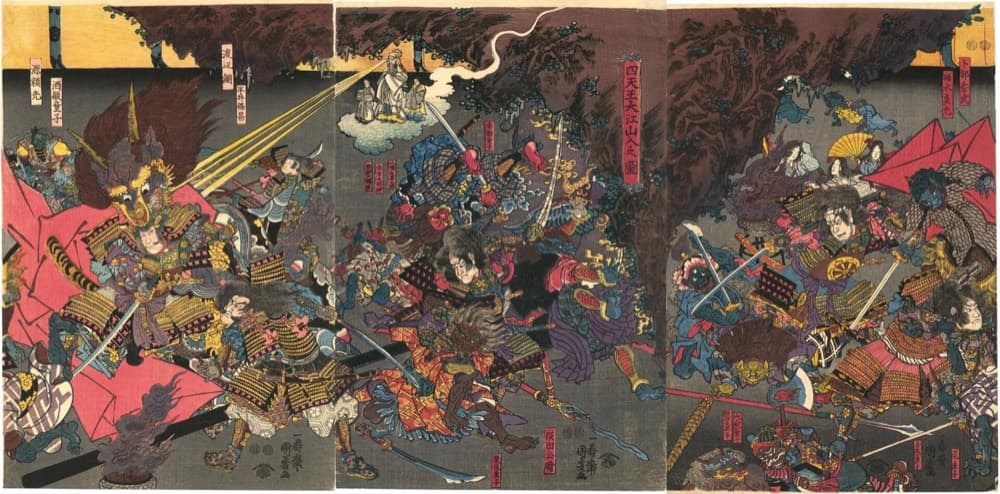 № 007
№ 007Japanese
酒吞童子
Demon King of Mount Oe
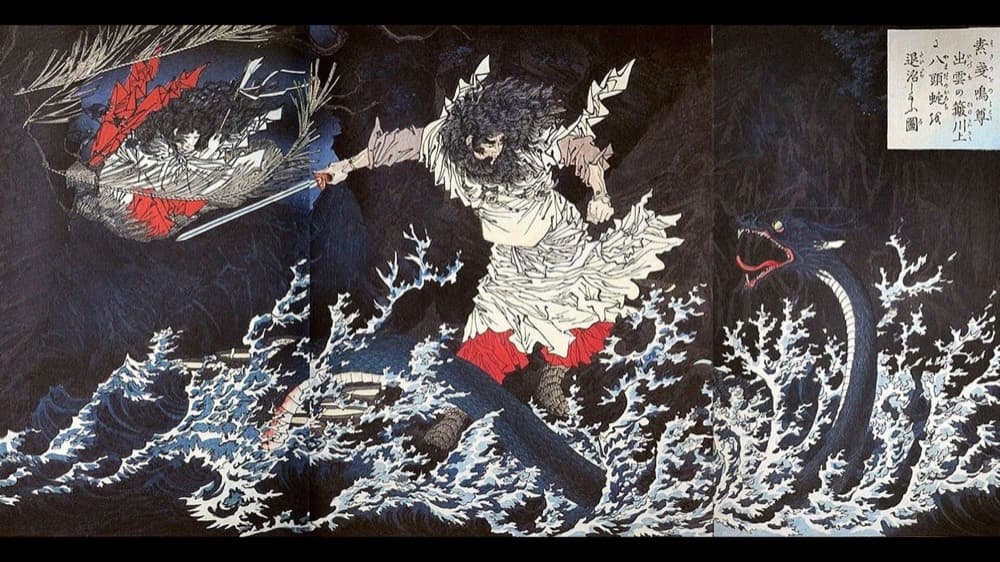 № 008
№ 008Japanese
须佐之男
Storm God Who Slew the Eight-Headed Serpent
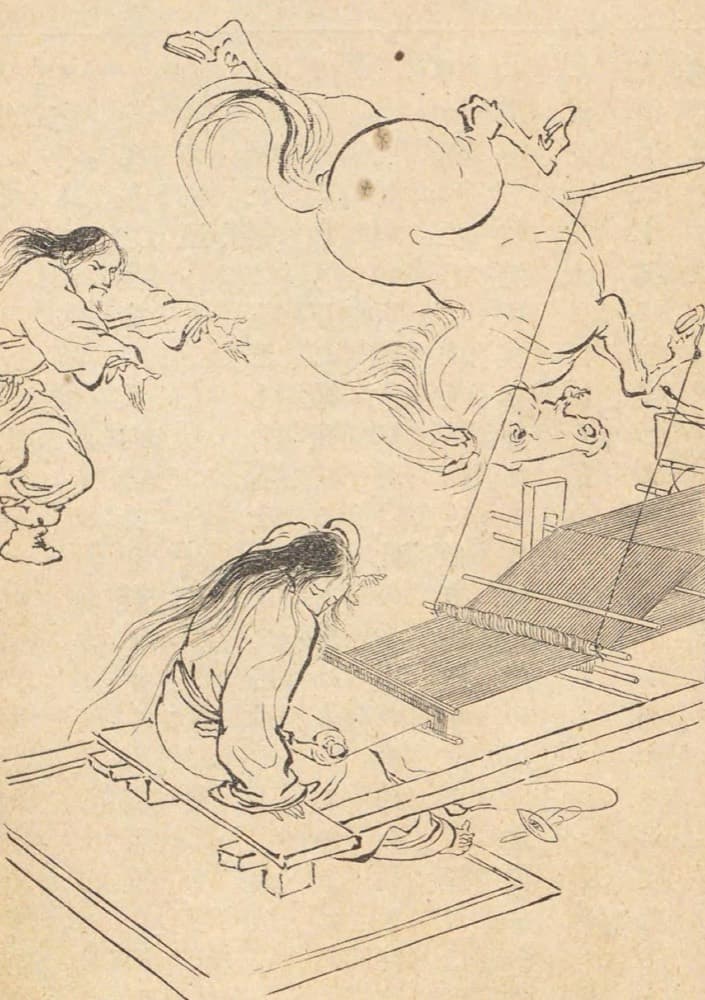 № 009
№ 009Japanese
高天原
The Plain of High Heaven
 № 010
№ 010Japanese
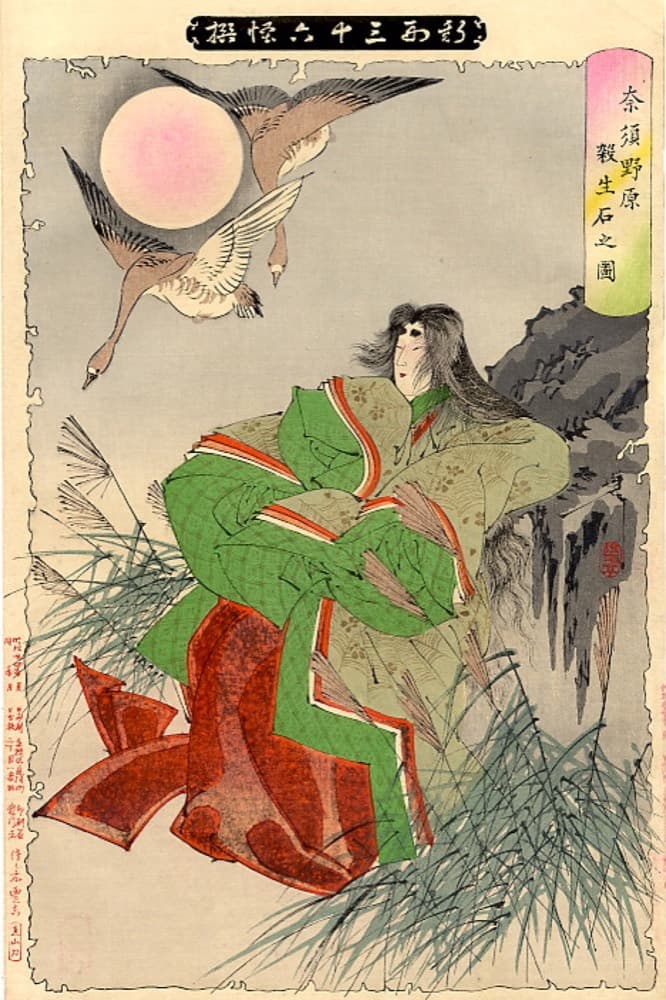
玉藻前
The Fox Courtesan Behind the Killing Stone
 № 011
№ 011Japanese
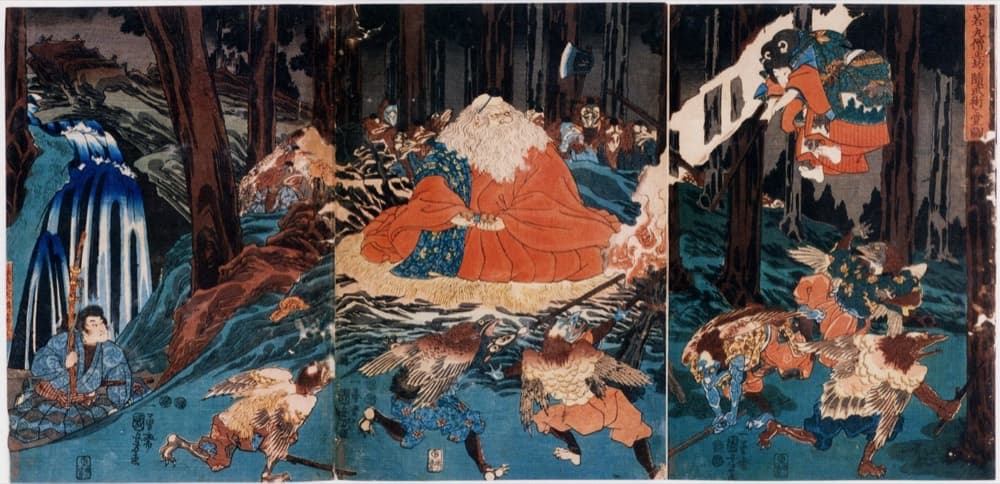
天狗
Long-Nosed Goblin of the Mountains
 № 012
№ 012Japanese
月读
Moon God, Ruler of the Night
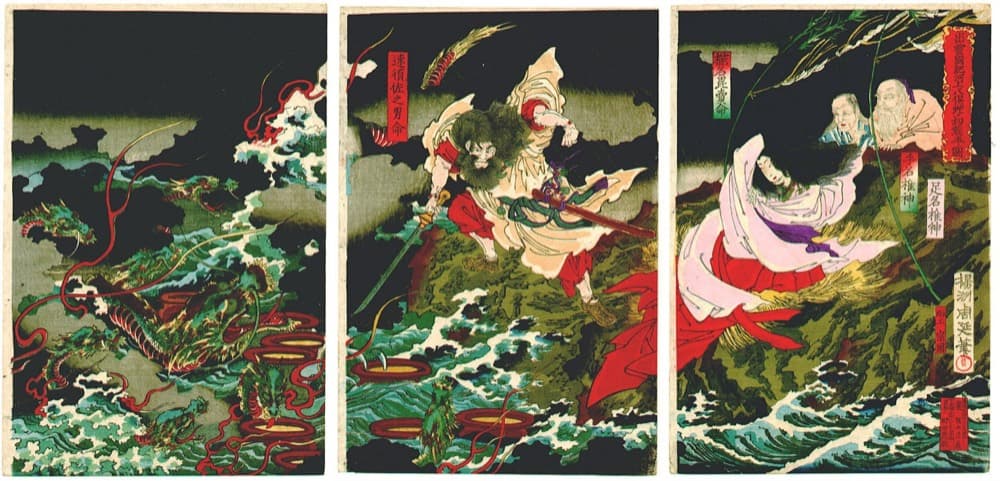 № 013
№ 013Japanese
八岐大蛇
The Eight-Headed, Eight-Tailed Serpent of Izumo
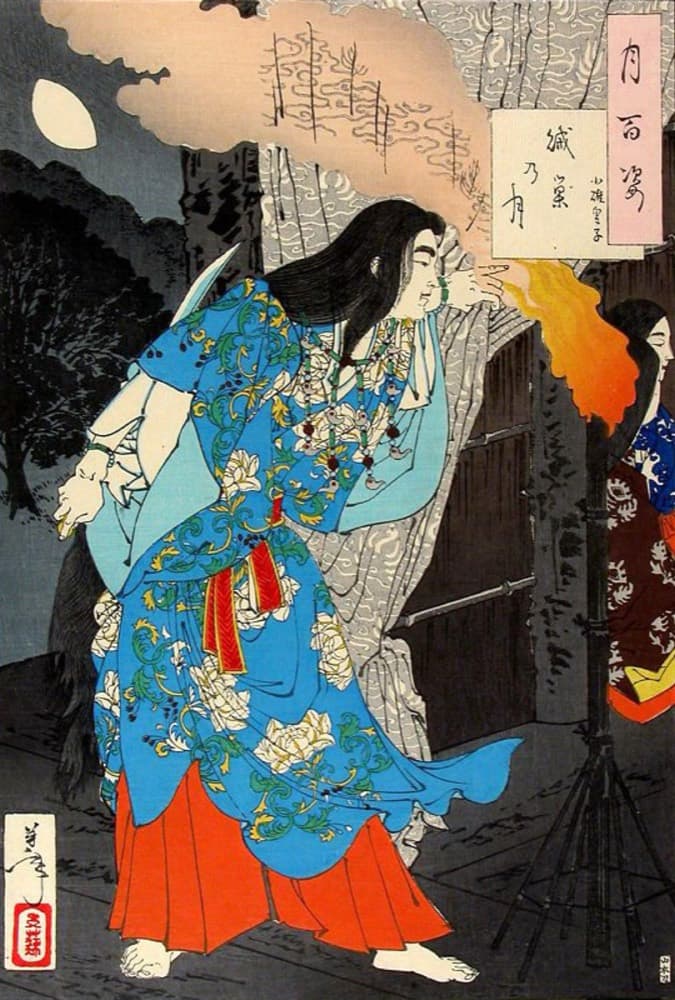 № 014
№ 014Japanese
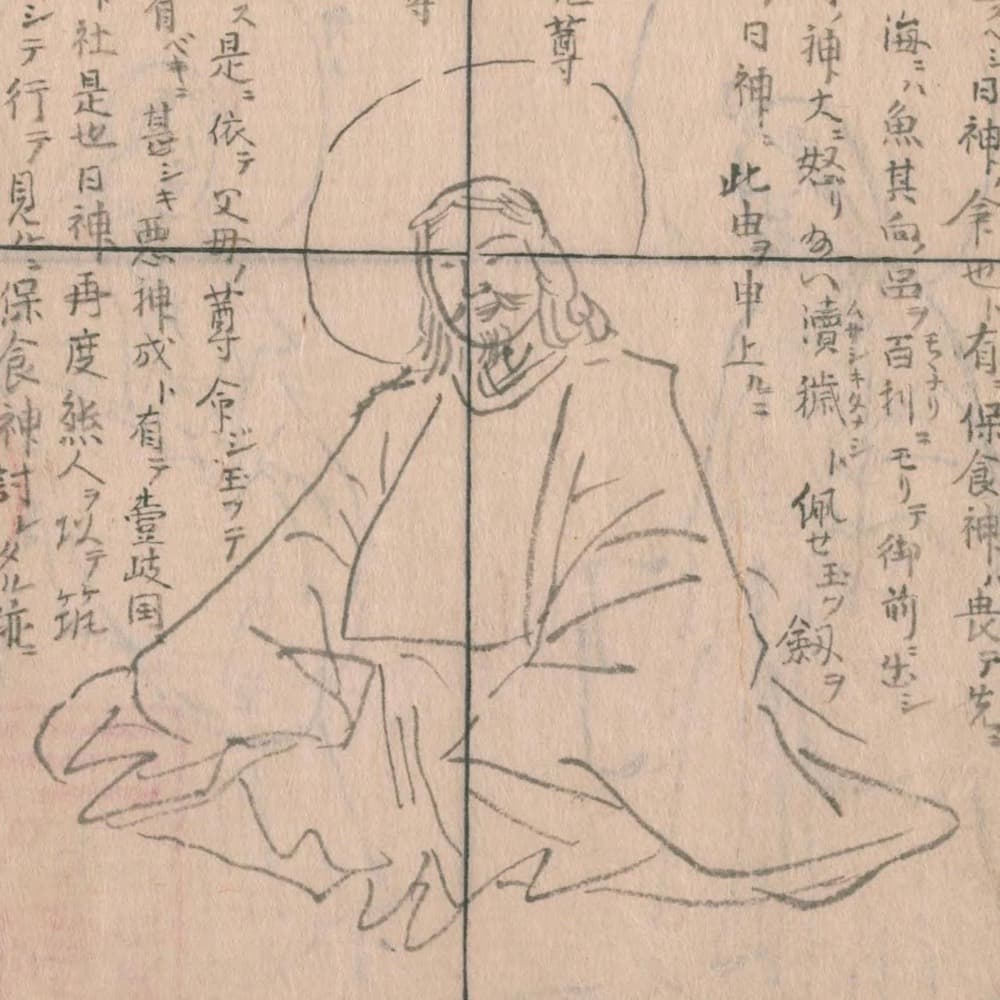
日本武尊
The Tragic Campaigner of the Chronicles
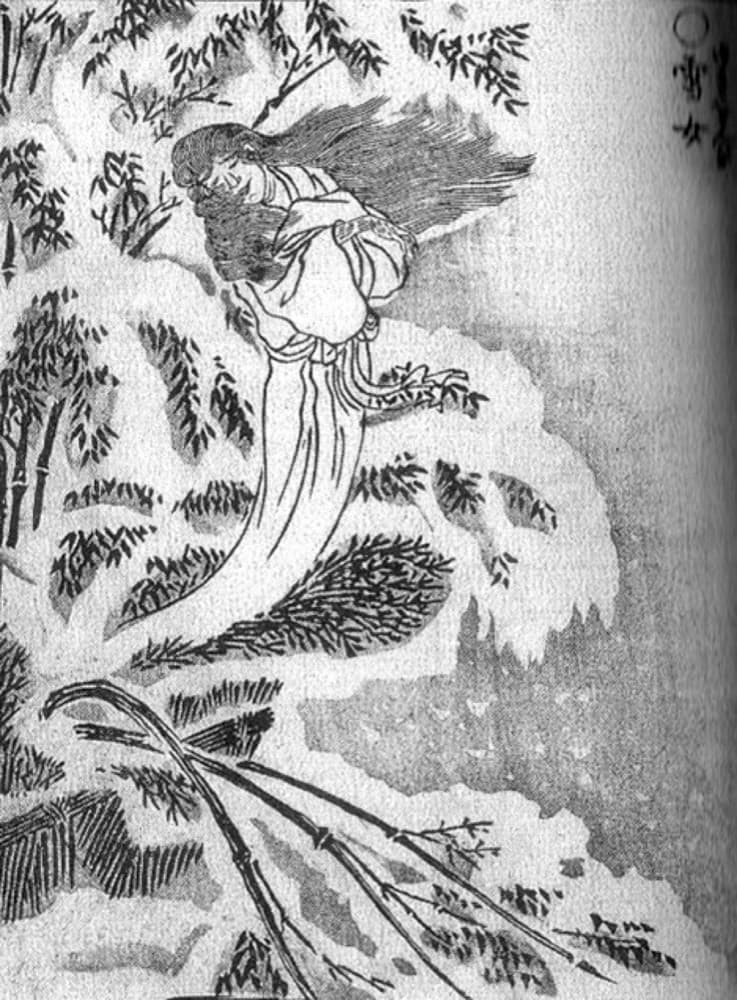 № 015
№ 015Japanese
雪女
The Snow Woman of Blizzard Nights
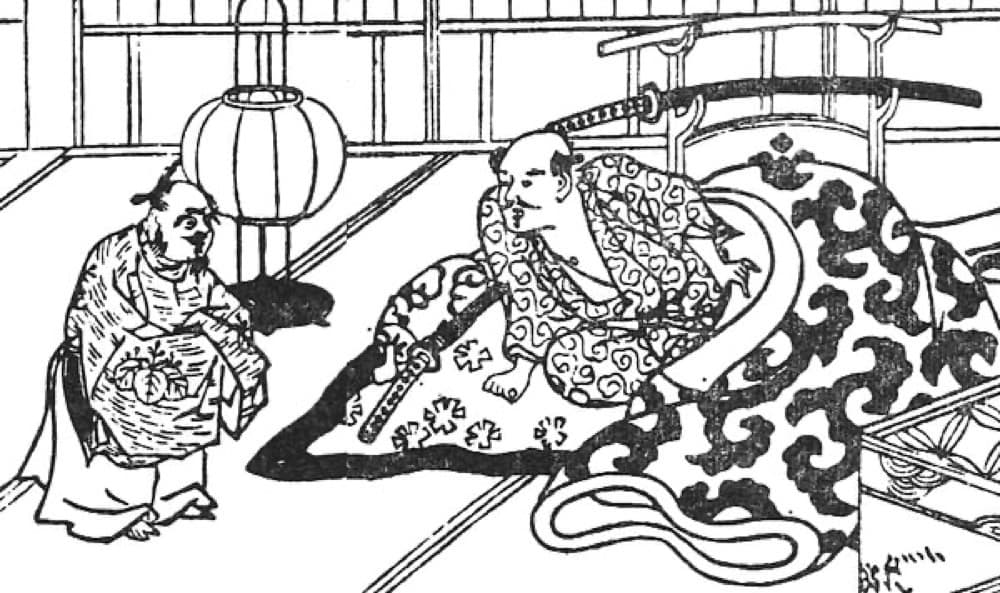 № 016
№ 016Japanese
座敷童子
The Child Spirit That Brings a House Fortune