THE STORY & ITS AFTERLIVES
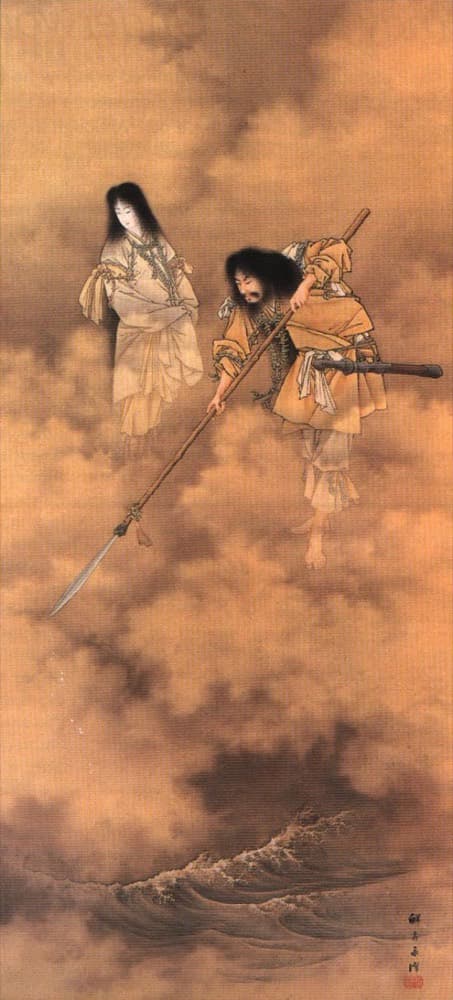
The eighth-century chronicles divide the cosmos into three tiers: Takamagahara, the Plain of High Heaven above; Ashihara-no-Nakatsukuni, the Central Land of Reed Plains, on earth; and Yomi and the Root Land below. Takamagahara is the seat of the heavenly gods, where the primordial deities of the Kojiki's opening lines came into being. Its landscape mirrors a magnified countryside: the rice fields tended by Amaterasu, the sacred weaving hall, and the dry bed of the Ame-no-Yasukawa, the Tranquil River of Heaven, where the eight million gods gathered in council. The Floating Bridge of Heaven linked it to the world below, and the Rock Cave of Heaven lay within its bounds.
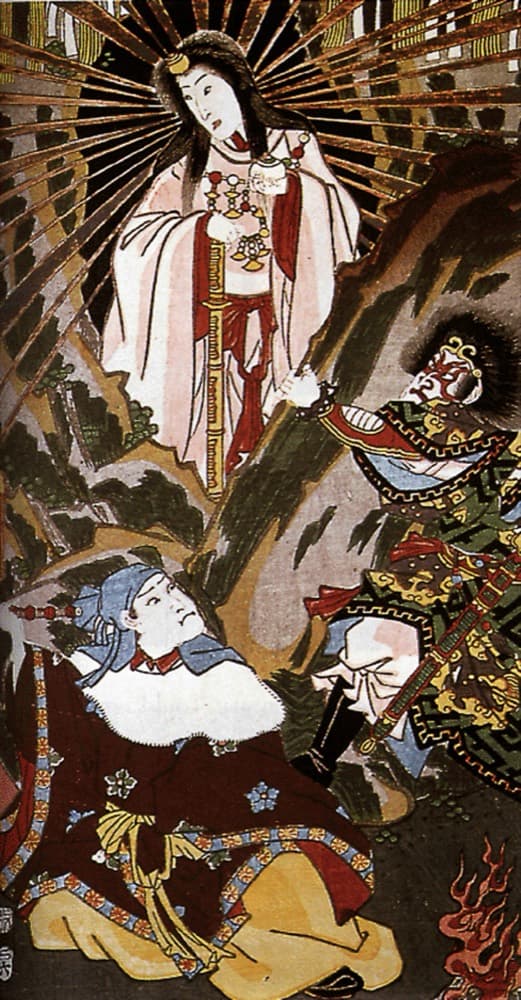
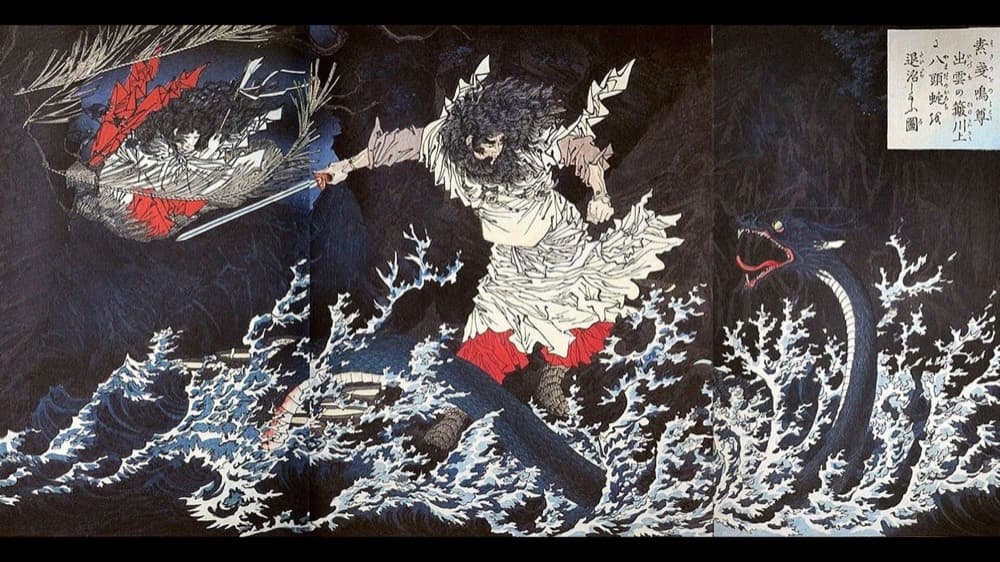
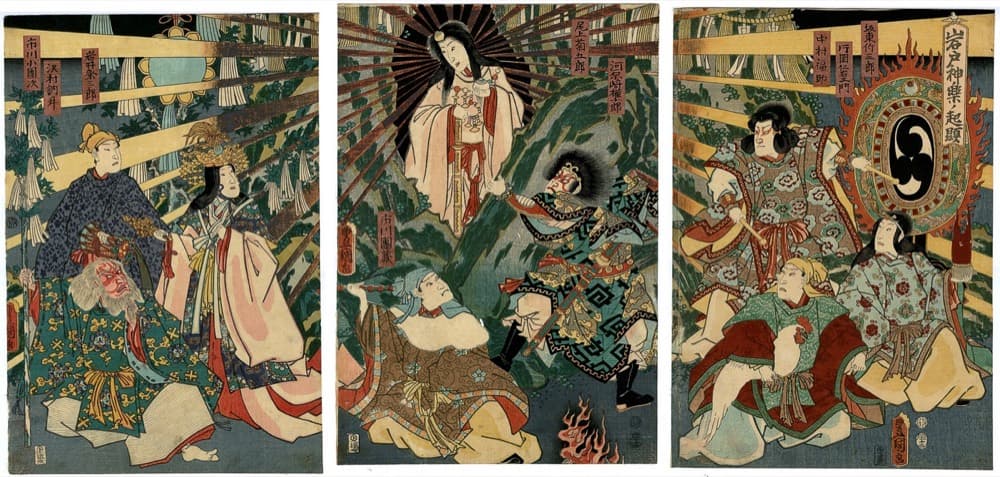
Nearly every great event of the first age plays out here: Susanoo's thunderous ascent and Amaterasu meeting him armed for war, the vow-contest across the river, the darkness of the Rock Cave, and the long deliberations over subduing the land below, ending when the thunder god Takemikazuchi forced Okuninushi to cede it. The account closes with the heavenly descent, Ninigi parting the eightfold clouds to alight on the peak of Takachiho in Hyuga, bearing the three regalia.
Where Takamagahara might be has been argued since early modern times. The scholar Motoori Norinaga insisted in his Kojikiden that it was literally heaven and no place on earth, while local traditions claim it anyway: Takachiho in Miyazaki and the Kirishima peak dispute the descent, and the Katsuragi highlands of Nara keep a shrine, Takamahiko Jinja, on ground long identified with the heavenly plain.