THE STORY & ITS AFTERLIVES
Tir na nOg, 'the Land of Youth', is the best known of the Irish otherworld realms, lying beyond the western sea, off every human map. Time there runs apart from mortal time: no one ages or sickens, the feasting and music do not end, and the trees carry blossom and fruit together. It belongs to a wider family of such countries: the eighth-century Voyage of Bran sails to the Land of Women and to Emain Ablach, the isle of apples, and other texts name Tir Tairngire, the Land of Promise. Tradition holds that after the Tuatha De Danann lost Ireland to the sons of Mil, part of the god-race withdrew into the hollow hills and part across the sea to realms like this.
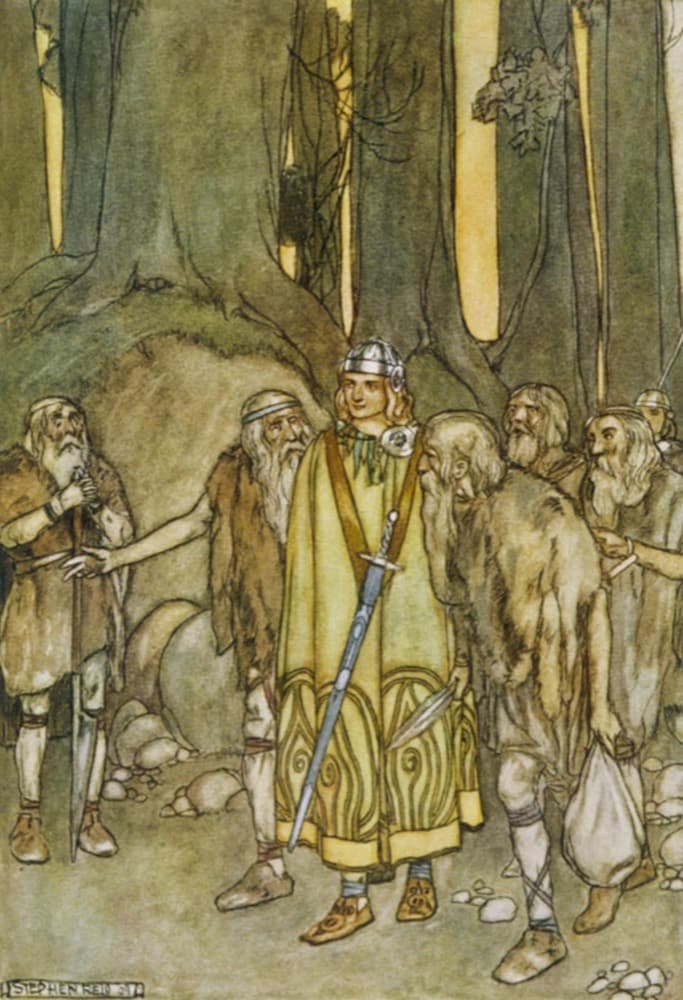
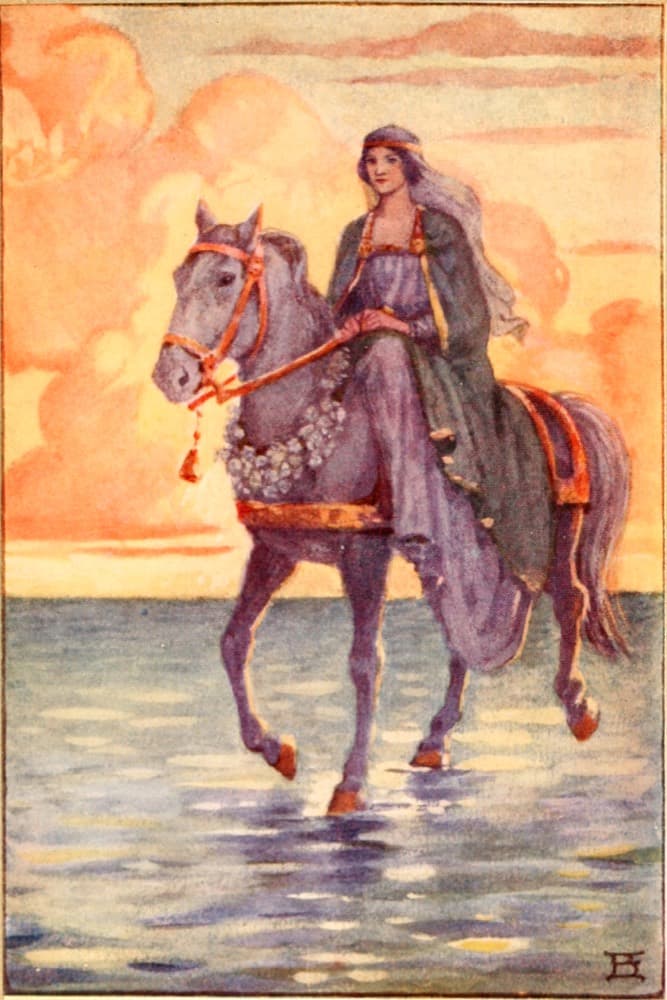
Its defining story is that of Oisin and Niamh. Niamh of the Golden Hair rides out of the surf on a white horse and asks the poet of the Fianna to come to her father's kingdom. Oisin marries her there, and what he takes for three years passes as three hundred in Ireland. Homesick, he rides back on her white horse under one condition: his feet must not touch the ground. In the glen of Gleann na Smol he leans from the saddle to help men move a stone, the girth snaps, and he falls; three centuries overtake him where he lands, leaving a blind and withered old man to tell St Patrick of the Fianna. The full tale is Micheal Coimin's Irish poem 'Laoi Oisin ar Thir na nOg' of about 1750; the frame of aged Oisin conversing with Patrick is already in Acallam na Senorach, around 1200.
In Irish-language culture the name now serves almost as the word for paradise, borrowed by naiscoileanna and youth clubs across the country, while the deathless land and the price of touching home soil remain among the most rewritten of Celtic motifs.