THE STORY & ITS AFTERLIVES
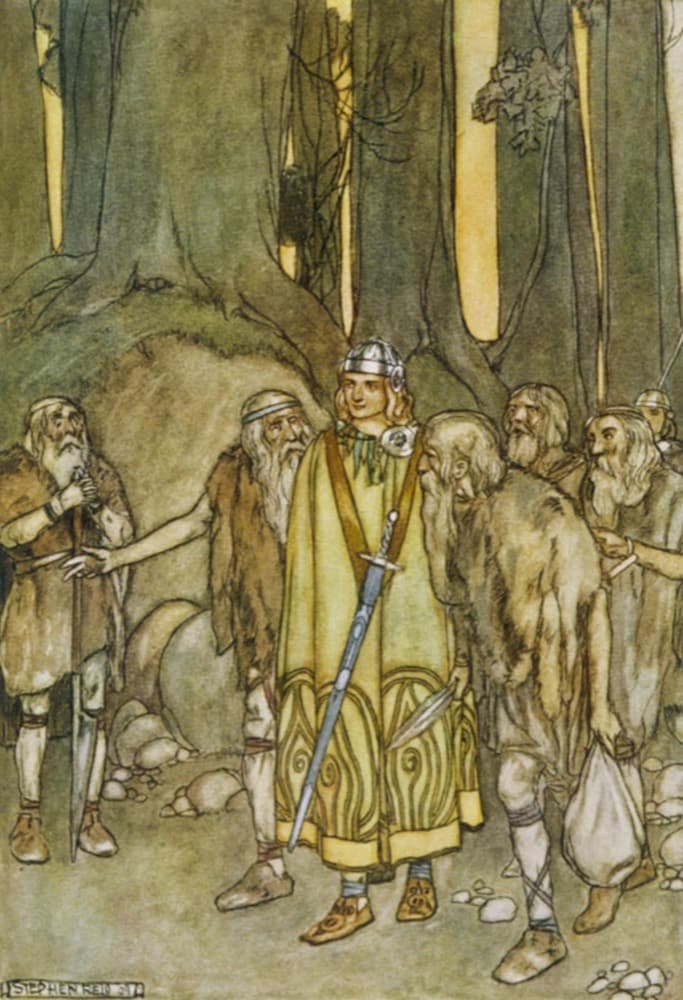
Oisin is the son of Fionn mac Cumhaill and the poet of the Fianna. His name means “little deer.” Tradition tells that his mother Sadb had been changed into a doe, and that the child carried in his name the trace of that animal fate. In medieval Fenian literature he hunts, feasts, and fights beside his father. The Acallam na Senórach, or Colloquy of the Ancients, gives the vanished landscapes, graves, and battles of the Fianna to the voices of survivors who speak with Saint Patrick; Oisin belongs to this company of witnesses even where another old warrior carries much of the dialogue.
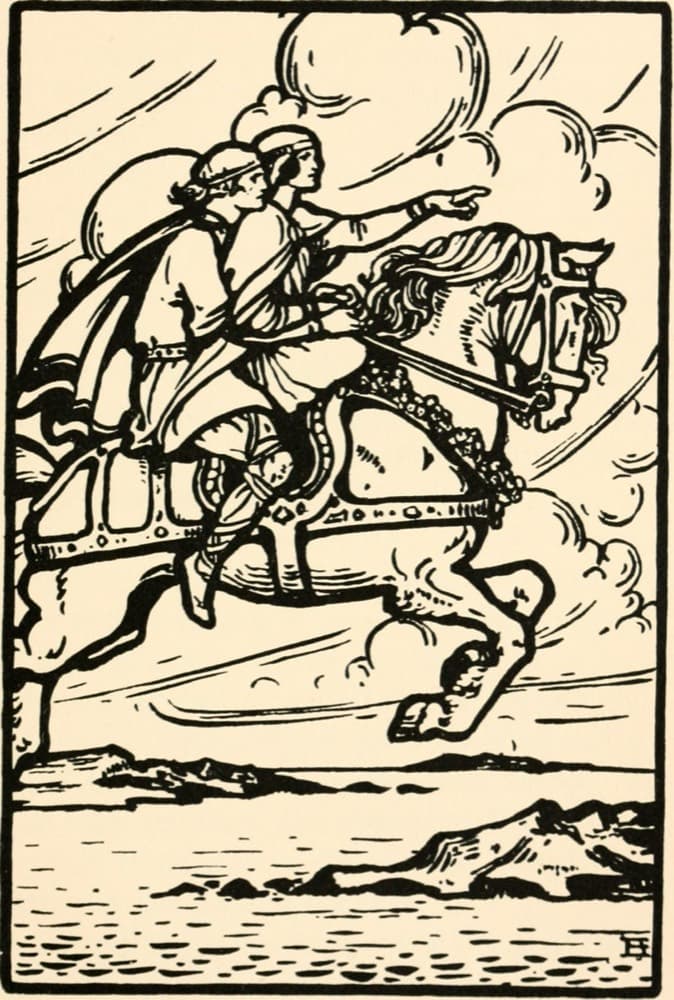
His most famous journey comes from later ballad tradition. Golden-haired Niamh crosses the sea on a white horse and invites him to Tir na nOg, where flowers do not fade, wounds heal, and youth has no ending. After what seems three years, homesickness draws him back. He may ride the white horse to Ireland, but his feet must never touch the ground. No one there remembers Fionn or the Fianna. When Oisin bends to help men move a stone, the saddle-girth breaks; he falls, and three hundred years descend upon his body at once, leaving him blind and ancient as the horse runs back into the sea.
The dialogues of Oisin and Saint Patrick grew through centuries of oral and written transmission. The saint speaks for the Christian present; the old poet refuses to let his companions be dismissed or forgotten. The familiar Tir na nOg episode belongs chiefly to late ballad tradition and should not be presented as though every detail stood in the earliest medieval manuscripts. Its power nevertheless fits Oisin's enduring role: the man who returned, outlived his world, and was compelled to give the lost age a voice.