THE STORY & ITS AFTERLIVES
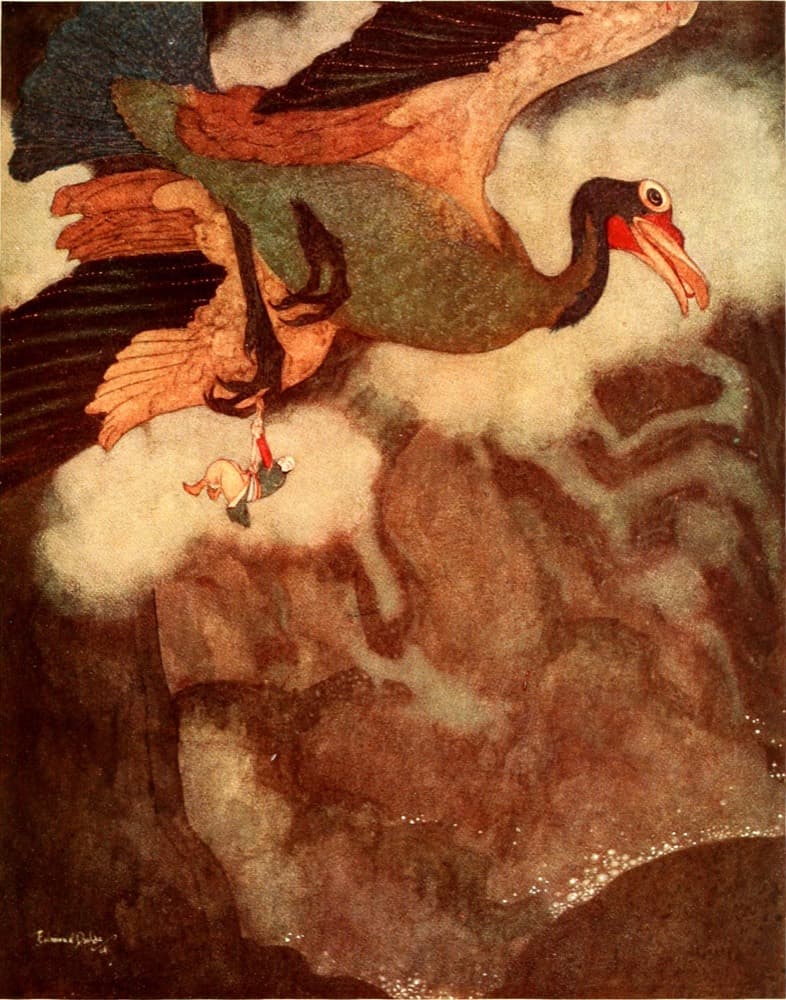
The cycle opens with two men of the same name. Sinbad the porter, dead poor, rests at the gate of a Baghdad mansion and laments the injustice of fortune; the master of the house — Sinbad the sailor — invites him in and over seven evenings recounts his seven voyages, paying a hundred gold pieces per night. On the first, the crew kindle a fire on a low island that dives: it was the back of a whale. On the second, marooned, he ties himself to a roc's leg and is dropped into a valley floored with diamonds and serpents, escaping by the merchants' trick of meat thrown down to stick the gems. Later voyages bring a man-eating black giant, a kingdom that buries the living spouse with the dead, and the Old Man of the Sea who mounts his shoulders and will not climb down — until after the seventh voyage he swears off the sea for good.
After each return he gives alms, settles down, and then the old craving stirs again; the twin appetite for wind and profit is the cycle's honest engine. Beneath the marvels lies the real Indian Ocean trade of the Abbasid age, when ships out of Basra ran to India, Ceylon and beyond. Tenth-century compilations of sailors' reports such as the Book of the Wonders of India already teem with giant birds, whale-islands and cannibal coasts, and the Sinbad tales are read as that lore worked into an Odyssey-shaped romance.
The cycle circulated independently; Galland translated it before he knew of the Nights at all, then folded it into his French version from 1704, binding Sinbad to Scheherazade's frame ever since. Ray Harryhausen's stop-motion film trilogy made the name a franchise of adventure cinema, turning a medieval merchant with a genius for cutting losses into an all-purpose sword-swinging hero.