THE STORY & ITS AFTERLIVES
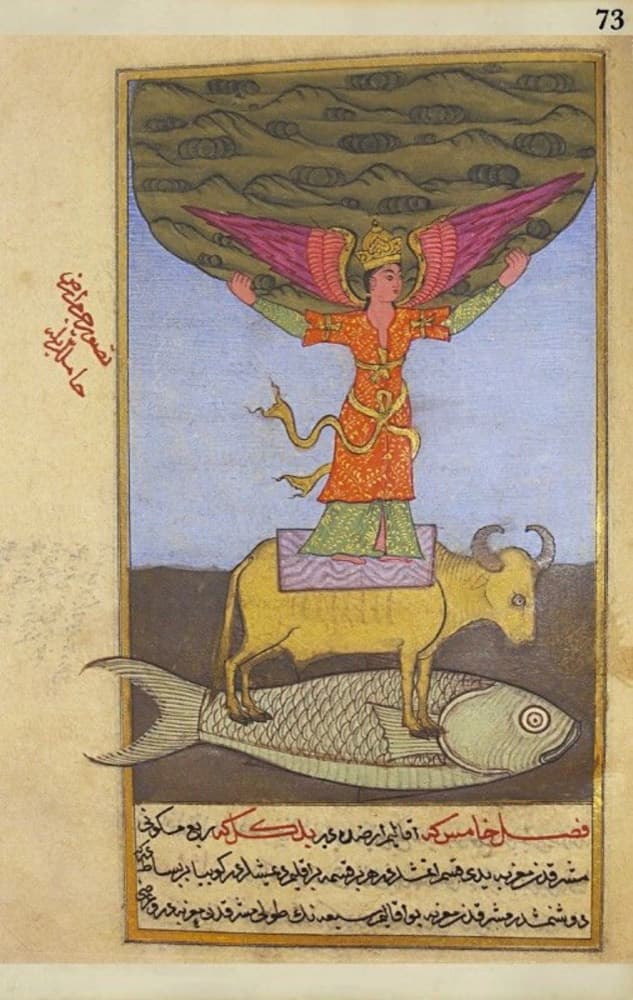
Medieval Islamic cosmography drew the inhabited world as a disc of land ringed by an impassable ocean — and beyond the ocean, a ring of mountains: Qaf. Cosmographers such as al-Qazwini describe the range as made of green emerald, whose reflection gives the sky its colour. It is the mother of mountains: the roots of every mountain on earth run underground to join it like veins, and when God wills an earthquake he shakes the root that leads there. No traveller reaches Qaf on foot; the encircling sea cannot be crossed, and months of darkness lie beyond it. Some early commentators took the single letter Qaf that opens the fiftieth surah of the Quran to name the mountain, an identification later scholarship treated with doubt.
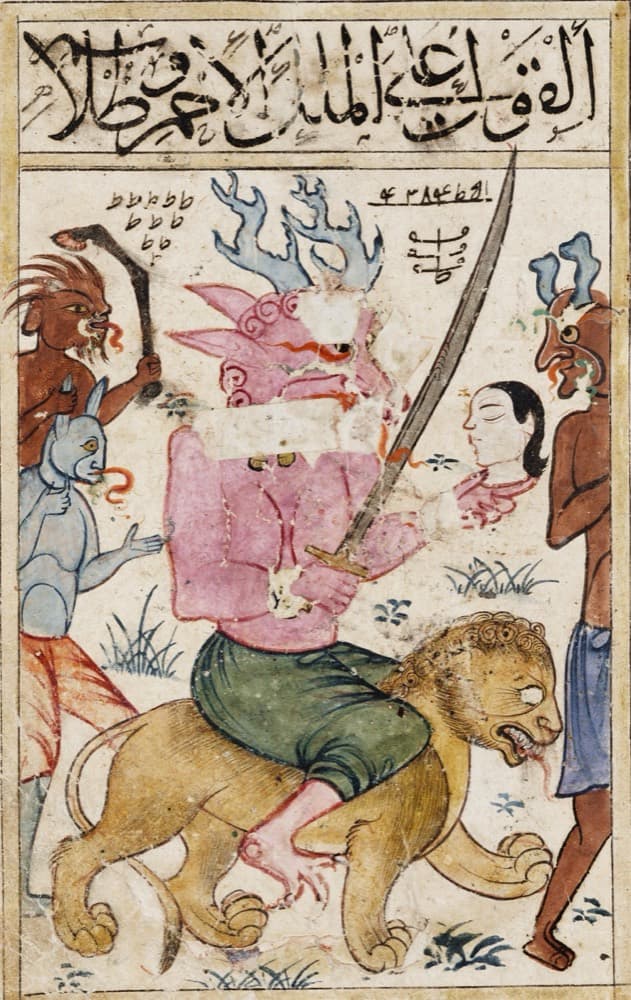
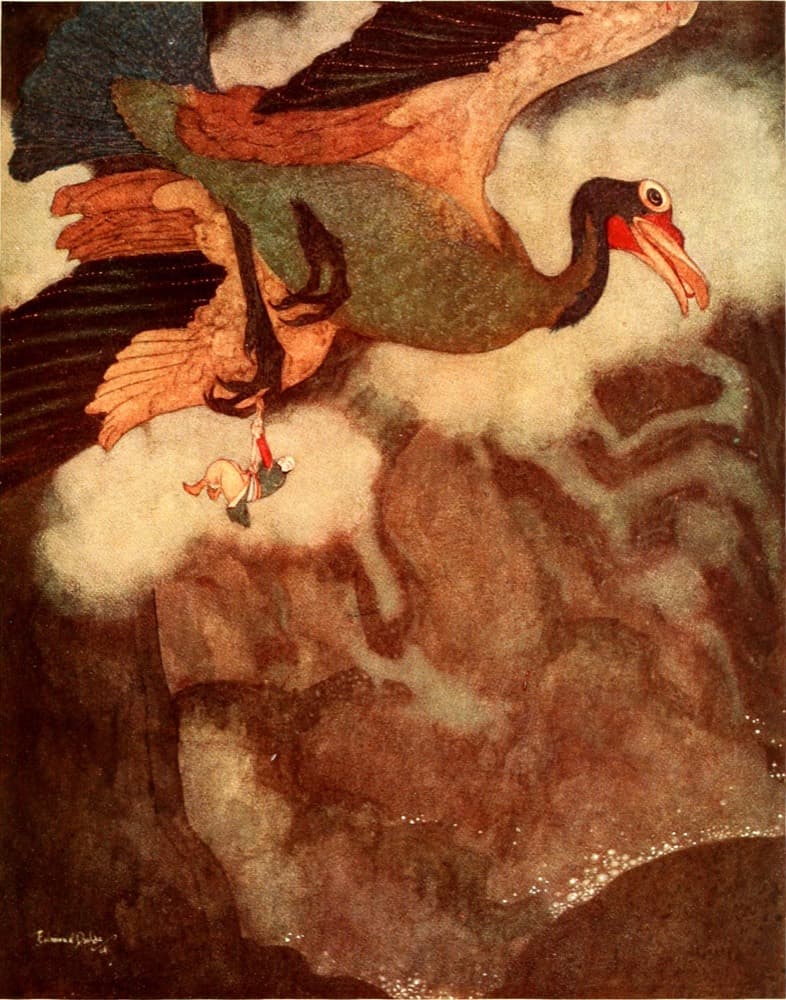
Qaf's enduring role is as the frontier between the human world and the world of spirits. Beyond it, or within it, lie the kingdoms of the jinn; spirits in the Thousand and One Nights routinely claim it as home, and long tales such as that of Hasan of Basra place their furthest wonderlands past Qaf. Persian tradition perches the divine bird Simurgh on its summit — Attar's poem The Conference of the Birds (c. 1177) sends the birds across seven valleys to seek it there. In Persian and Arabic idiom, 'from Qaf to Qaf' means the whole world.
As for a real-world shadow, scholars point to the Caucasus, whose Arabic name is entangled with Qaf's; early geographers did set the world's edge-wall among the mountains beyond the Caspian. The more the world was mapped, the further Qaf receded into pure legend, until it became simply a name for the end of the earth.