THE STORY & ITS AFTERLIVES
The qilin heads the Four Numinous Beasts; qi names the male and lin the female. The Shuowen Jiezi defines it as the 'benevolent beast', with the body of a deer, the tail of an ox, and a single horn — a horn tipped with flesh, the commentators add, a weapon carried but never used. It walks without crushing a blade of living grass or a single insect, falls into no pit and springs no snare, its call matching the pitch-pipes and its gait the compass and square. It shows itself only when a sage rules and the world is at peace, which made it the highest omen of all.
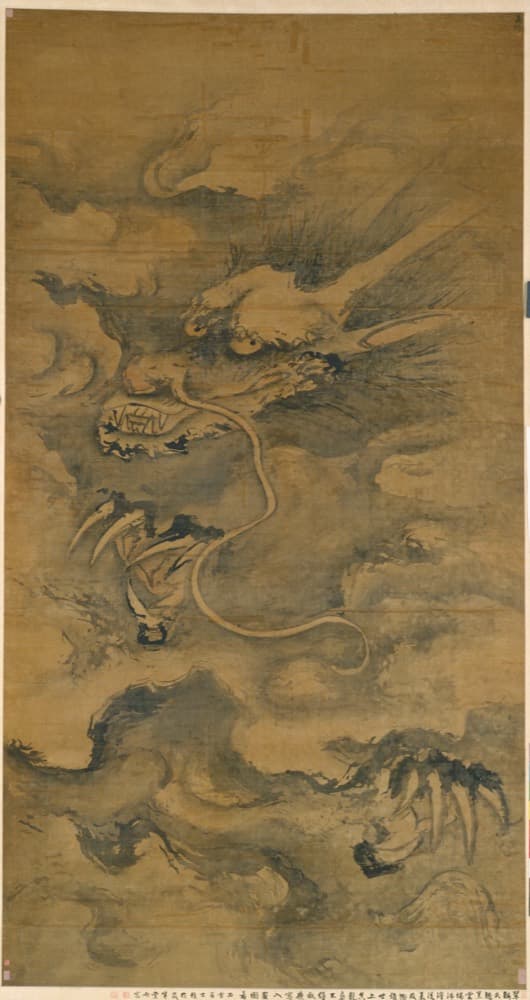
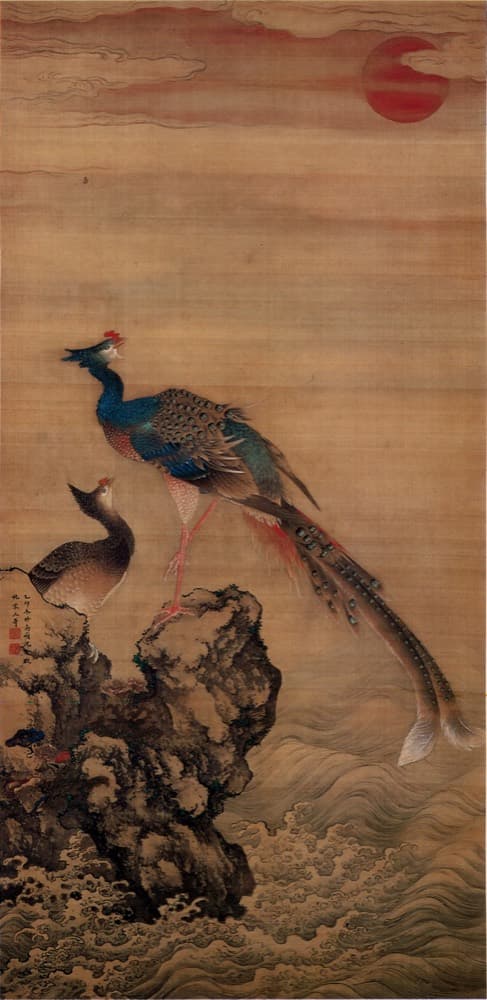
Its most famous appearance closes the Spring and Autumn Annals: in the spring of the fourteenth year of Duke Ai, 'in a hunt to the west, a lin was taken'. The Gongyang commentary describes Confucius wiping his face with his sleeve, tears soaking his robe: 'My way has run its course.' The benevolent beast had come in the wrong age and been captured, and the master laid down his brush; 'the capture of the lin' has meant a great work's final line ever since. The Book of Rites lists lin, phoenix, tortoise, and dragon together as the Four Numinous Beasts.
Popular religion made the qilin a bringer of sons: New Year prints from the Song onward show an infant riding one down from heaven, and gifted children are still praised as 'qilin boys'. When a Bengali embassy presented a giraffe to the Yongle emperor in 1414, court and country hailed it as a qilin — Shen Du's commemorative painting survives — and Japanese still uses 'kirin' as the word for giraffe.