THE STORY & ITS AFTERLIVES
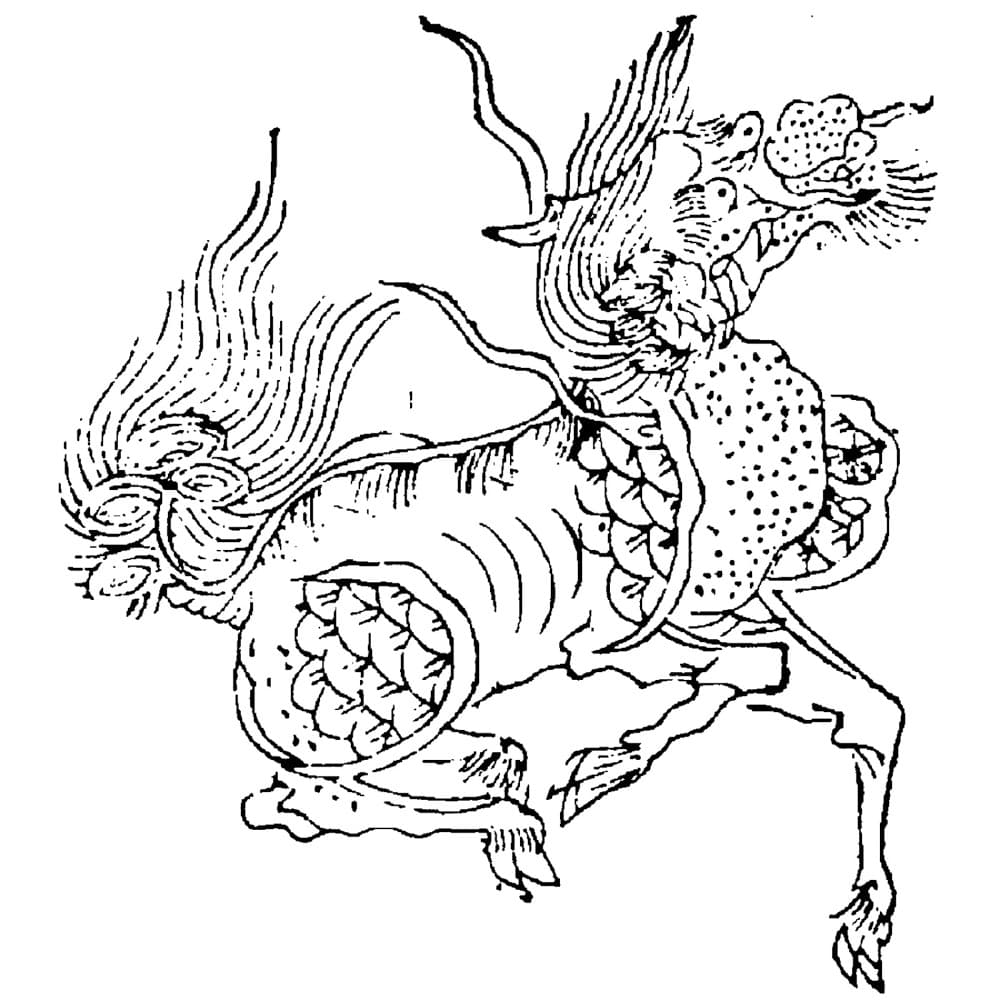
The dragon stands at the head of all scaled creatures in Chinese myth. The Shuowen Jiezi dictionary of the second century CE defines it as a being that can dim or shine, grow minute or immense, short or long, mounting to the sky at the spring equinox and plunging into the abyss at the autumn one. Song scholar Luo Yuan's Erya Yi transmits the classic 'nine resemblances': horns of a deer, head of a camel, eyes of a hare, neck of a snake, belly of a clam-monster, scales of a fish, claws of an eagle, paws of a tiger, ears of an ox — with a pearl beneath its chin and a foot-wide inverted scale at its throat that kills any who touch it.
The image is immensely old. A dragon laid out in clamshells at the Xishuipo site in Puyang, Henan, dates back some 6,400 years, and the coiled jade dragons of the Hongshan culture are over five millennia old. The Book of Changes builds its first hexagram entirely on dragon imagery, from 'hidden dragon, do not act' to 'flying dragon in the heavens'. As master of clouds and rain the dragon received prayers in every drought, a role later institutionalized in the Dragon Kings of the four seas and their temples along every waterway.
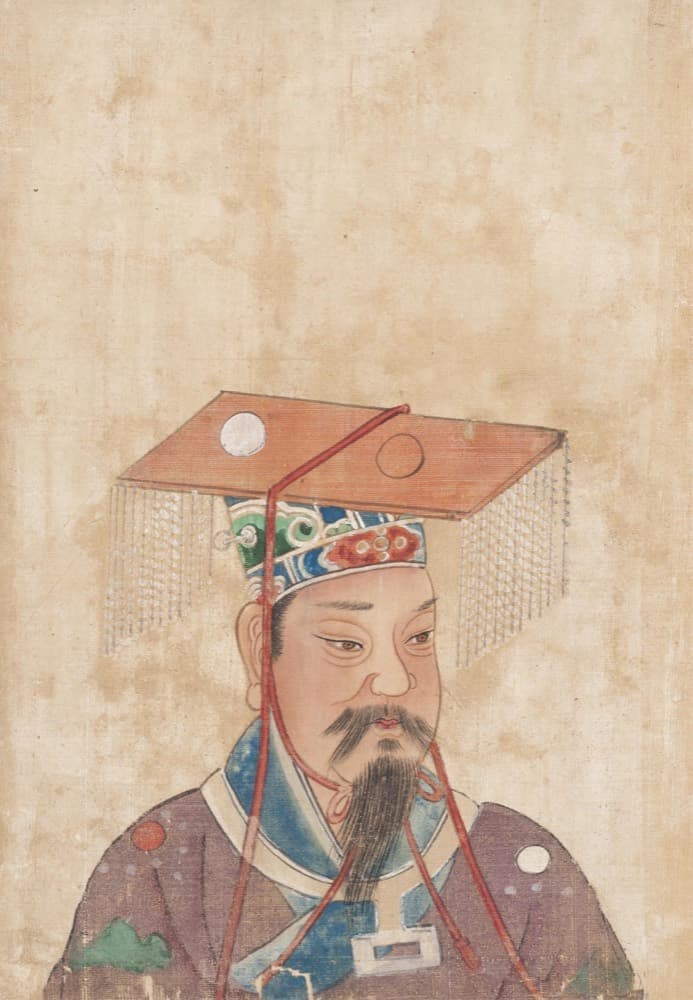
From the Han dynasty onward the beast was annexed by the throne: emperors were 'true dragons', their robes woven with five-clawed dragons chasing pearls. The only imaginary animal of the twelve-year zodiac, it still commands dragon-boat races each fifth month and dragon-lantern dances each New Year.