THE STORY & ITS AFTERLIVES
Pele's full name is Pelehonuamea, "Pele of the sacred earth"; the chants also call her "the woman who devours the land." Her home is Halemaumau, the pit crater at the summit of Kilauea on the island of Hawaii. Tradition describes her appearing as flame, as an old woman leaning on a staff, or as a beautiful young woman. The golden glass threads and teardrop beads spun from erupting lava are called Pele's hair and Pele's tears, names volcanologists still use.
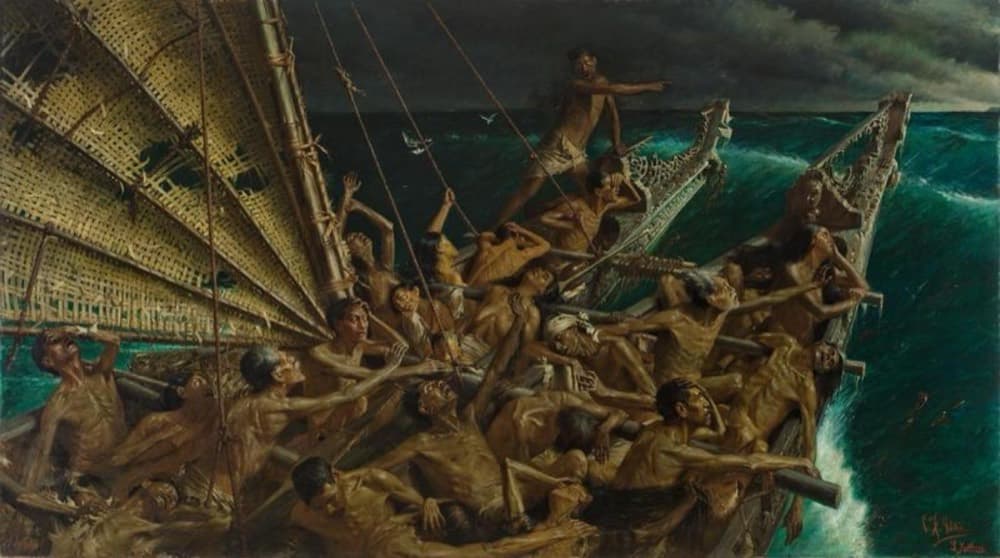
The migration chants tell how she came: born in the distant homeland Kahiki, Pele offended her elder sister Namakaokahai, a sea goddess, and fled east by canoe with her family. With her digging stick Paoa she tried island after island from the northwest, but each fire pit she opened was drowned by the sea, until at Kilauea she found a crater deep enough to keep her fires dry. Her route from Kauai down to Hawaii matches the geological aging of the chain from old to young. Another epic cycle concerns her youngest sister Hiiaka: Pele's spirit, wandering, fell in love with Lohiau, a chief of Kauai, and sent Hiiaka to fetch him within forty days. Delayed by battles with monsters, Hiiaka returned late to find Pele had burned her beloved lehua groves and killed her friend Hopoe; in answer she embraced Lohiau at the crater's rim before Pele's eyes.
Pele belongs to a living tradition. Offerings of flowers and fruit are still left at Kilauea, and the chiefess Kapiolani's public defiance of Pele's kapu in 1824 records, from the opposite side, how strong the belief then was. N. B. Emerson's Pele and Hiiaka (1915) preserves the epic chants at length.