THE STORY & ITS AFTERLIVES
Ku, with Kane, Lono and Kanaloa, is one of the four great gods of Hawaii; the name itself means "to stand upright." The name heads a whole family of Ku-gods: Kumokuhalii of the forest received the prayers of canoe builders, Kuula those of fishermen, and the most feared was the war aspect Kukailimoku, "Ku the snatcher of islands." His rites belonged to the luakini class of temple, where human sacrifice was offered, and only the highest chiefs could dedicate one.
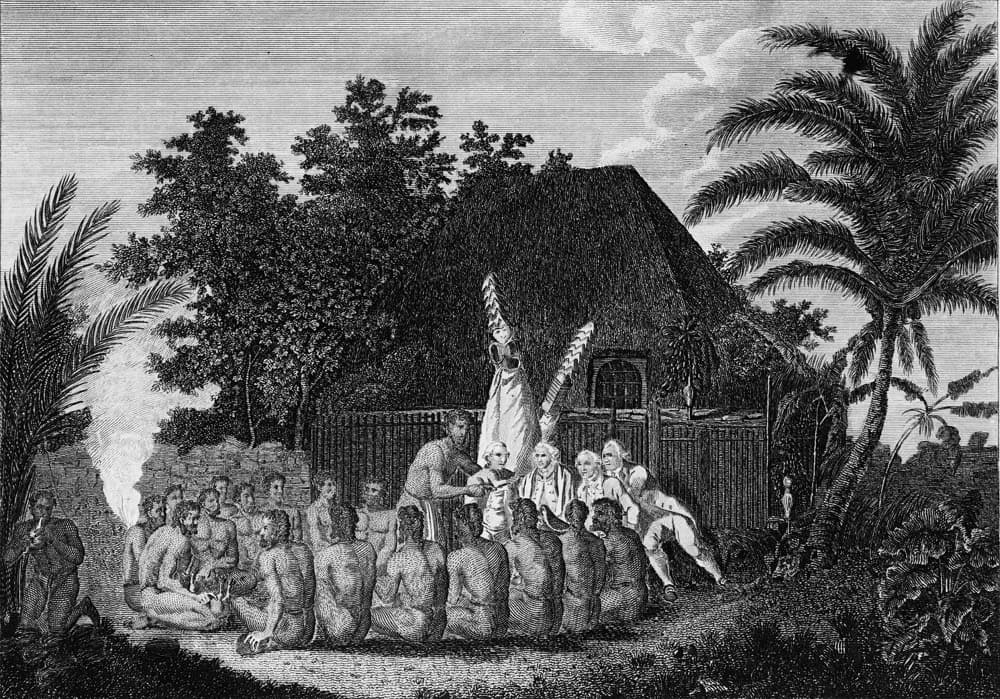
The most famous chapter of Kukailimoku's history runs through Kamehameha I. The dying high chief Kalaniopuu entrusted the war god's image to his nephew Kamehameha, who carried it through his campaigns to unify the archipelago. In 1790-91 Kamehameha built Puukohola Heiau at Kawaihae on the northwest coast of Hawaii Island for Kukailimoku, and his rival Keoua was slain at its dedication; within two decades he ruled all the islands.
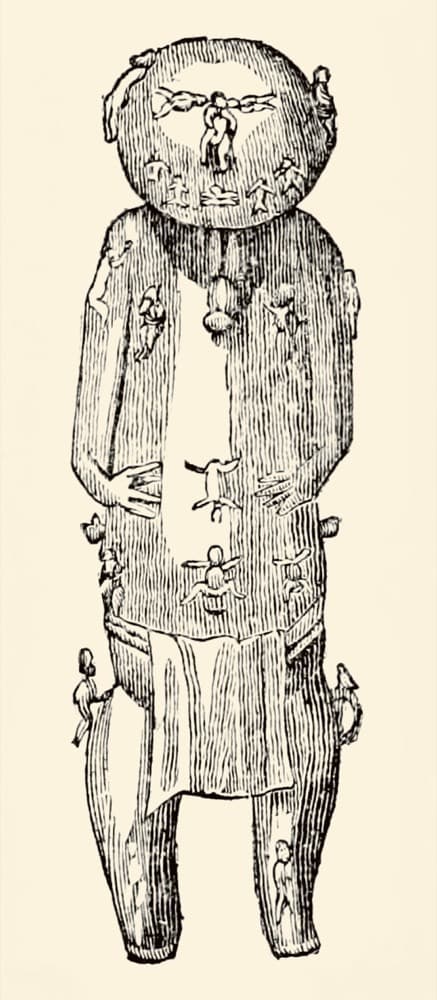
The god's images are unmistakable: a basketry skull of woven aerial rootlets covered with tens of thousands of red iiwi feathers set off with yellow, eyes of pearl shell, a wide grinning mouth set with rows of dog teeth, and human hair. Feathered war-god heads of this type survive in the Bishop Museum in Honolulu and the British Museum. After Kamehameha's death in 1819 the old temple system was abolished, Ku's rites ended, and the images passed into museums and private hands.