THE STORY & ITS AFTERLIVES
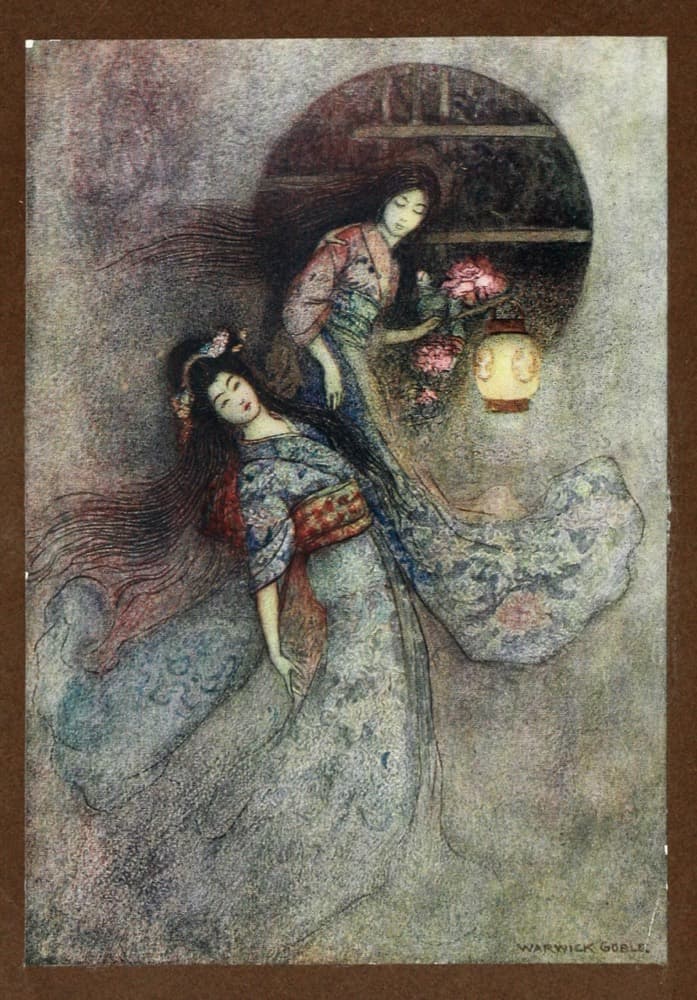
Hoichi was a blind biwa-playing lay priest lodged at Amidaji temple in Akamagaseki, now Shimonoseki, famed for his recitation of the sea battle of Dan-no-ura, where the Heike clan perished in these straits in 1185 and the child emperor Antoku drowned in his grandmother's arms. One night an armored samurai summons him to perform before a great personage. Night after night Hoichi vanishes; when temple servants finally track him with lanterns, he is sitting alone in the cemetery before the memorial tomb of Antoku, ghost-fires flickering around him, playing until his voice cracks to ranks of mossy gravestones. The nobleman's mansion is the burial ground of the Heike.
Knowing the ghosts will tear the player apart once the whole tale is sung, the head priest has the Heart Sutra written over every inch of Hoichi's body and orders him to sit motionless and silent. When the samurai returns he sees nothing in the darkness but two ears hanging in air, the one part of the body the scribe forgot. Unwilling to return empty-handed, he wrenches them off. Hoichi endures without a sound, survives, and as 'Hoichi the Earless' becomes the most sought-after performer in the land.
The early-modern source is 'Biwa no hikyoku yurei o nakashimu' in the 1782 collection Gayu Kidan; Lafcadio Hearn's retelling opened his Kwaidan (1904) and carried the story worldwide. Amidaji became the Akama shrine in the Meiji era, where a small hall to Hoichi and the graves of the Heike still stand; the Hoichi episode of Kobayashi's film Kwaidan (1964) restaged Dan-no-ura as one of Japanese cinema's great set pieces.